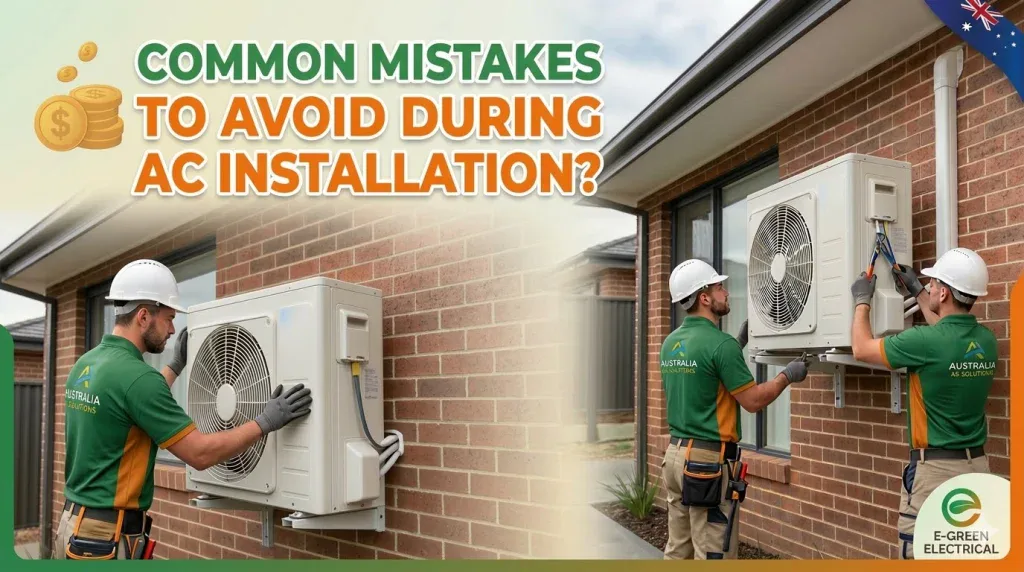
Designing a home climate system is an exercise in precision. When we talk about installing a new air conditioner, we […]

Normal Range: $1,850 – $30,000
Air conditioning and climate control service costs in Australia depend heavily on your specific project, dwelling type, and location. Whether you are prepping for a sweltering Queensland summer or a bracing Melbourne winter, checking with a local ARCtick-licensed pro is the first step for any specific job.
National Average: $6,250
Maintaining a reliable climate control system is essential for Australian living. In 2026, homeowners can expect the total cost for air conditioning replacement to sit between $1,850 and $30,000, with most standard residential projects averaging approximately $6,250.
Your final quote will be determined by the system’s kilowatt (kW) capacity, the complexity of existing ductwork modifications, and current labour rates in your specific state.
This guide breaks down the essential cost factors you need to consider before hiring a technician.
In Australia, we primarily utilise “Reverse Cycle” technology, which provides both refrigerated cooling and high-efficiency heating.
The cost of purchasing a new unit will depend on the type you choose and the size of your home.
For example, a single wall-mounted split system is less expensive than a whole-home ducted system since it is smaller and less complex to install.
| Type of New AC Unit | Average Unit Cost (AUD) | Average Installation Cost (AUD) |
| Portable AC Unit | 400 – 1,300 | 0 (DIY) |
| Window/Wall Unit | 500 – 2,900 | 450 – 1,000 |
| Split System (Wall) | 1,500 – 5,500 | 800 – 2,200 |
| Multi-Head Split | 3,000 – 12,000 | 3,000 – 7,500 |
| Ducted System | 9,000 – 20,000 | 5,000 – 14,000 |
| Evaporative Cooling | 2,800 – 5,500 | 1,800 – 4,000 |
“Damian from the local E-Green Electrical was incredibly professional. He gave me a very fair price on a Mitsubishi Electric split system. Within 24 hours, he had done his inspection and given me a fixed quote. It’s the first time I talked to a tradie in Sydney who didn’t make me feel like I was getting overcharged. He took lots of photos of the old roof unit and explained why the ducting had perished. He completed all the work in one day, and the house has never been cooler.”
— Sarah M., Review of E-green Electrical, NSW
In Australia, we do not use “Tonnage.” We measure cooling capacity in Kilowatts (kW).
As expected, larger AC units come with a higher initial cost.
But it’s important not to choose a unit that’s too small, or it will run 24/7 without ever reaching the set temperature.
On the other hand, choosing an air conditioner that’s too big (oversizing) can lead to “short-cycling,” which increases your electricity bill and reduces comfort.
Capacity and Installation Cost Guide
| Capacity (kW) | Recommended Area (m2) | Average Installed Cost (AUD) |
| 2.5kW | 10 – 20 m² (Bedroom) | $1,550 – $2,600 |
| 3.5kW | 20 – 35 m² (Study/Master) | $2,000 – $3,200 |
| 5.0kW | 35 – 50 m² (Small Living) | $2,600 – $4,200 |
| 7.0kW | 50 – 70 m² (Large Living) | $3,200 – $5,800 |
| 10.0kW+ | 70 m² (Open Plan/Whole Home) | $11,500 – $28,000+ |
Pro Tip:
Many Australians are tempted to buy larger units for faster cooling, but the result is often a humid room and higher bills. You should always let your HVAC contractor calculate the correct size based on your wall orientation (West-facing rooms get much hotter), window size, and whether you have insulation or “Batts” in your roof.
Installing a new AC unit involves high-voltage electricity and pressurised refrigerant gases, making it a high-risk job. You must hire an ARCtick-licensed professional to prevent injuries and keep your home insurance valid.
In Australia, HVAC technicians generally charge between $50 and $150 per hour for labor. Most residential projects average $80 to $110 per hour, including GST, though commercial rates often jump to $80–$140 per hour.
Key Labour Cost Breakdown (Inc. GST):
While most projects are handled by the AC company from start to finish, some jobs require specialist trades:
In Australia, location dramatically affects price. Labor rates are generally higher in major metros like Sydney and Melbourne, but regional areas may incur “travel fees” if specialized technicians are scarce.
Furthermore, the climate in Darwin requires much more robust “tropicalized” hardware compared to Hobart.
| Location | Average AC Unit Installation Price (AUD) |
| Sydney, NSW | 6,800 |
| Melbourne, VIC | 6,400 |
| Brisbane, QLD | 5,900 |
| Perth, WA | 5,600 |
| Adelaide, SA | 5,400 |
| Darwin, NT | 7,500 |
| Hobart, TAS | 6,100 |
The cost of replacing your air conditioner varies on a state level due to different energy regulations and consumer demand.
An AC unit malfunctioning in the dead of a January heatwave is a nightmare. The more urgent your request, the higher the “emergency call-out” fee.
During peak seasons (December to February), many Australian technicians charge an emergency premium of 15% to 25% or simply cannot take on new jobs for 2-4 weeks.
In Australia, units are rated by the Zoned Energy Rating Label (ZERL). This ratio measures an AC unit’s efficiency across three climate zones (Hot, Average, and Cold). While a 7-star unit may cost $800 to $1,500 more upfront, it can save you thousands over the unit’s 10-year lifespan.
If you are installing a ducted system, you don’t want to cool the whole house at 2:00 AM if you are only in the master bedroom.
If you’re replacing a 20-year-old ducted system, your old ducts are likely “leaky” or poorly insulated.
Installing new, R1.5 or R2.0 rated insulated ductwork costs between $3,000 and $7,500, depending on the number of outlets.
Don’t assume the old unit just “disappears.” Decommissioning and removing an old system requires a licensed professional to safely reclaim the refrigerant gas (as per ARCTICK regulations).
While your installer’s labour makes up the bulk of the cost, these specific regulatory and compliance fees are often itemised or built into your quote.
| Fee Type | Description | Cost (AUD) |
| Refrigerant Handling (RHL) | Mandatory license for any tech handling gas (1-year fee) | AUD 89 |
| Trading Authorisation (RTA) | Required for businesses to buy/sell refrigerant (1-year fee) | AUD 280 |
| Compliance Certificate | Formal certification of installation (VIC/NSW/QLD typically) | AUD 30 – 60 |
| Council Permit | Required for heritage zones or aesthetic changes | AUD 140 – 300 |
| Body Corporate Fee | Administrative fee for apartment/townhouse access | AUD 50 – 150 |
Licensed technicians must decommission old units to ensure fluorocarbon refrigerants are not emitted into the atmosphere, as required by the Ozone Protection Regulations.
Pro Tip: Always ask your installer for their LHL (Licence Number). If they cannot provide a valid ARC license number, they are operating illegally, and your manufacturer’s warranty will be voided immediately, potentially costing you thousands in future repairs.

Hiring an AC replacement pro in Australia is not just a choice; it’s often a legal requirement.
Here is why it’s ideal to work with a pro:
In Australia, the federal government does not offer a direct “Tax Credit,” but there are numerous state-based incentives that provide upfront discounts through accredited installers.
AU 2026 State-by-State AC Incentive Summary
| State | Program Name | Typical Rebate / Discount | Key Eligibility / Requirement |
| VIC | VEU | $1,000 – $3,000+ (Splits) $7,000 – $8,000 (Ducted) | Mandatory co-payment ($200 split / $1,000 ducted). Replacing gas heating pays the most. |
| NSW | ESS | $550 – $1,000 | Must use an Accredited Certificate Provider (ACP). Discount based on unit efficiency (6kW+). |
| SA | REPS | $250 – $1,400 | Discount varies by energy retailer. Priority groups (concessions) get significantly higher subsidies. |
| ACT | HESP / SHS | Up to $5,000 (Rebate) $15,000 (Loan) | 50% rebate for concession holders. 0%–3% interest-free loans are available for all households. |
| QLD | Closed | $0 (Cashback ended) | PeakSmart program ended Dec 2025. Check for local “Climate Smart” appliance loans. |
In 2026, the cost for air conditioning replacement in Australia sits within a normal range of AUD 1,850 to AUD 30,000. The final price depends heavily on whether you are doing a simple unit “swap” or a comprehensive system overhaul.
| Project Type | Cost Range (AUD) | Key Requirements |
| Simple Unit Swap | AUD 1,850 – AUD 8,500 | Assumes existing ducting and electrical are compliant and reusable. |
| New Split System | AUD 1,500 – AUD 6,000 | New indoor head and outdoor compressor with standard back-to-back piping. |
| Full HVAC Overhaul | Up to AUD 30,000 | Includes new high-efficiency unit, new R1.5/R2.0 ductwork, and smart zoning. |
To ensure your installation goes smoothly and you get the most accurate quote, follow these steps:
Pro Tip: Always get at least three quotes and ensure they all itemise the ARC compliance fees and license numbers mentioned earlier. This allows you to compare “apples with apples” regarding the quality of the unit and the installer’s expertise.
Use the “50% Rule”: If your AC is over 10 years old and the repair quote (for a compressor or motor) is more than 50% of the cost of a new unit, replacement is the better investment. While a repair might cost AUD 800 – 1,500, a new 2026 model provides a fresh 5-year warranty and up to 40% better energy efficiency.
Unlike a new install, a replacement requires a licensed technician to “decommission” the old unit. By law (ARC regulations), the refrigerant gas must be reclaimed rather than vented. This specialized labor and the environmentally safe disposal of the old hardware typically adds AUD 200 – 500 to your total quote.
In most cases, no. Older units often used R-22 gas, while 2026 models use R-32, which runs at much higher pressures. Residual oil from the old system can contaminate the new gas and destroy your new compressor. Replacing the copper piping usually costs approximately AUD 80 per metre.
Likely. Modern high-efficiency systems often require a dedicated circuit and modern safety switches (RCDs) to meet current Australian standards (AS/NZS 3000). If your home is 15+ years old, you should expect an electrical upgrade fee ranging from AUD 800 to 1,800 for a standard residential board replacement.
In 2026, state-based programs (like the NSW ESS or VIC VEU) offer significant incentives for upgrading. You can often save AUD 550 – 1,000 on split systems, and up to AUD 5,000+ if you are replacing an old, inefficient gas ducted heater with a modern reverse-cycle electric system.
Yes. They are designed as a “matched set.” Attempting to connect a new 2026 outdoor unit to an old indoor head will cause communication errors, mechanical failure, and will void the manufacturer’s warranty immediately.
A replacement takes slightly longer due to the “deconstruction” phase.
Split System Swap: 4 – 6 hours.
Ducted System Swap: 1.5 – 2 full days (especially if old ductwork needs to be removed and replaced with new R1.5 or R2.0 insulated ducts).
Pro Tip: When reviewing your replacement quote, ensure it includes a “Nitrogen Flush” if the installer claims they can reuse your old pipes. This process is essential to remove contaminants that would otherwise kill your new system within the first year.
We provide the most accurate cost data by analysing thousands of real Australian quotes from trades platforms and consumer reports. We pair this with research from the Australian Bureau of Statistics and the Australian Refrigeration Council to ensure our prices reflect real-world projects in 2026.
Designing a home climate system is an exercise in precision. When we talk about installing a new air conditioner, we […]
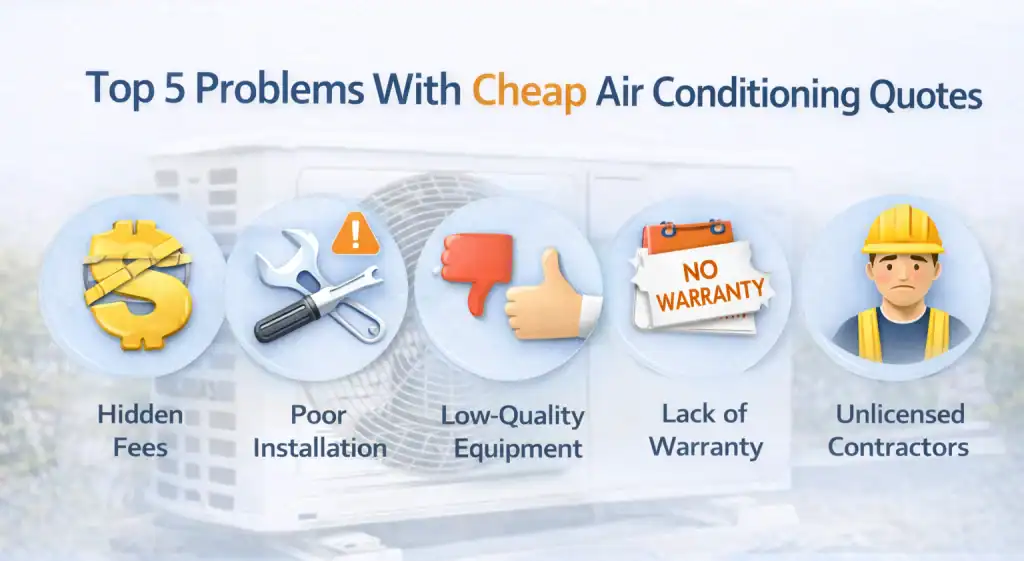
Cheap air conditioning quotes have a strange pull. You see a low number and feel relief straight away. With summers […]
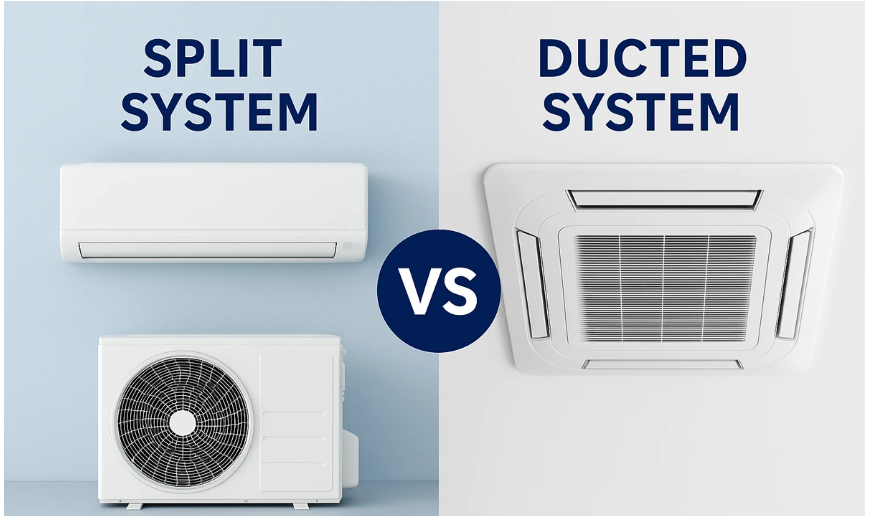
When it comes to keeping your home comfortable, the air conditioning choice is a big one. The main reason is […]
Same Name, Different Game: Which One Keeps Its Cool? 1. The Tale of Two Titans (Mitsubishi Electric vs Mitsubishi Heavy […]





Our energy efficiency experts are here to answer all your questions and guide you through the products, rebates, and installation process.

Upgrade now, pay later with