For many Australians, air conditioners are a fundamental necessity rather than a luxury, as the nation continues to face record-breaking […]
After reviewing the top 7 Mitsubishi air conditioner models for 2026, here are five key takeaways:
Unlike old-school “on/off” air conditioners that waste power by constantly restarting the compressor, Mitsubishi uses Inverter Technology. Think of it like cruise control for your car; the system slows down once the room reaches the desired temperature rather than stopping entirely.
This prevents those massive spikes in your electricity bill and keeps the room at a perfectly steady temperature.
Almost all modern Mitsubishi ACs have switched to R32 gas. The benefit for you is twofold: it carries heat more effectively, meaning the unit doesn’t have to work as hard to cool your home, and it has a much lower environmental impact.
It’s simply a “thirstier” sponge for heat, making the whole process faster and cheaper.
Many Australian energy providers offer incentives if your AC is DRED compatible. Mitsubishi split air conditioning systems are built to communicate with the power grid.
During peak demand events (like a sweltering Tuesday afternoon when everyone is home), the grid can signal your AC to run in a slightly more limited, power-saving mode. You’ll barely notice the difference, but the grid stays stable, and your bill stays lower.
Australian coastal air is salty and corrosive. Mitsubishi aircons feature Blue Fin anti-corrosion treatment on their outdoor heat exchangers. This stops the “rust rot” that kills cheaper units, ensuring the system stays efficient for 10 to 15 years rather than failing after 5.
By keeping the coils clean and intact, the unit can breathe easily and transfer heat without struggle.
Features like the 3D i-See Sensor (on the LN series) or Motion Sensors (on the Avanti Plus) mean the unit is smart enough to know if anyone is actually in the room.
If you leave the lounge to go to bed and forget to turn the AC off, the system will automatically throttle back to an “Eco” level. You benefit from never paying to cool an empty room.
To check how efficient a Mitsubishi split AC system is, you need to look at the Zoned Energy Rating Label (ZERL). Since 2020, Australia has used a “zoned” system because a Mitsubishi AC that’s efficient in Brisbane might struggle in Hobart.
Here is exactly how to read the label on a Mitsubishi unit to see what it will cost you:
The label has a map of Australia with three colored zones. You benefit most from looking only at the stars for your specific area:
Mitsubishi aircons usually have two sets of stars. More stars mean the unit is more efficient and will cost less to run in that climate:
This number tells you the power of the unit. A higher kW means it can cool or heat a larger room faster. However, for efficiency, make sure the kW matches your room size; if it’s too big, it will cycle on and off and waste power.
Next to the stars, you’ll see a kWh figure per year. This is the estimate of how much electricity the unit will actually consume over the course of a year.
The Pro Tip: To find your actual yearly cost, multiply this kWh number by the “usage rate” on your latest power bill (e.g., 355 kWh × 0.30 = 106.50 per year).
At the bottom of the label, you’ll see a speaker icon with a dB number. This gives you the benefit of knowing how loud both the indoor unit (for your sleep) and the outdoor unit (for your neighbours) will be.
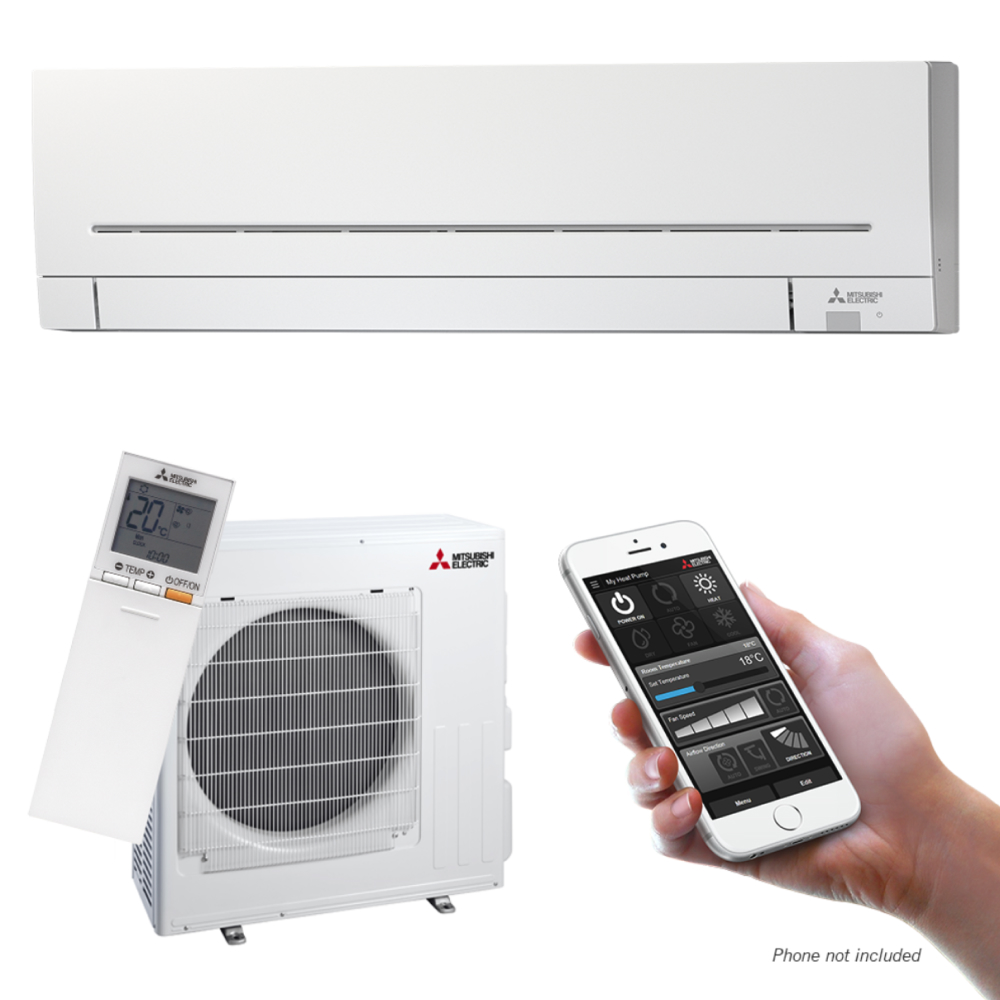
If you are looking for the best split Mitsubishi air conditioner for your bedroom or any other space where silence is valued, the MSZ-AP is a favourite pick. It runs at 18 dB, making it harder to notice any distracting hum, and this means you can concentrate on your work while enjoying a controlled climate.
Other than being silent, this best Mitsubishi split air conditioner in Australia offers a clean, natural white finish that blends into your decor without looking like a bulky appliance.
It’s simply designed to handle the harsh Australian heat without losing its cool.
Reason to Buy: This is the most reliable “set and forget” unit for bedrooms where silence and air purity are your top priorities.
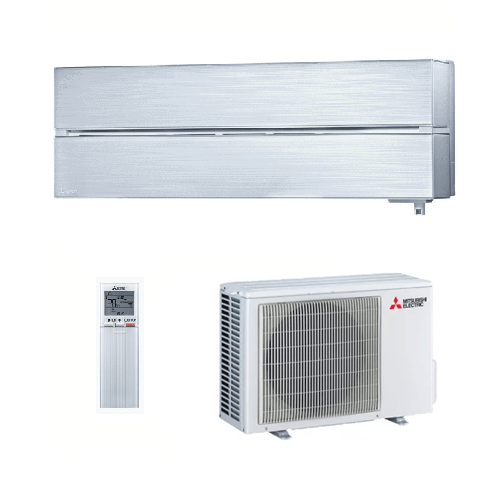
Best For: Designer living rooms and homes in freezing southern climates.
The MSZ-LN is where luxury meets high-end tech. It comes in premium finishes like Ruby Red and Onyx Black, giving you the benefit of a split Mitsubishi AC that looks like a piece of art.
The HyperCore technology is the real deal here, as it ensures this best Mitsubishi Air Con keeps pumping out heat even when it is -15°C outside. This makes it the perfect match for the freezing winters in Tasmania or the Victorian High Country, where regular units often freeze up and stop working when you need them most.
Reason to Buy: Choose this if you want a premium designer look and need a high-performance heater that won’t quit during a frosty Australian winter.
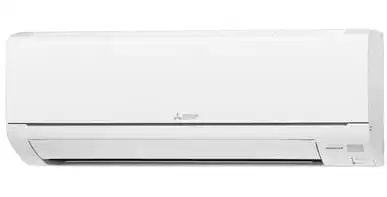
Best For: Rental properties and budget-conscious homeowners.
The MSZ-GL Mitsubishi AC is the classic “old faithful” of the Mitsubishi range. It offers the benefit of a lower upfront cost while still delivering the long-term reliability the brand is known for.
It’s a straightforward unit that doesn’t overcomplicate things with too many gadgets, making it a dream for landlords or for a spare room that only gets used occasionally.
You can think of it as a proven workhorse that provides consistent comfort without any unnecessary bells and whistles.
Reason to Buy: This is the best value-for-money option for those who want a long-lasting, reliable AC without paying for high-end sensors.
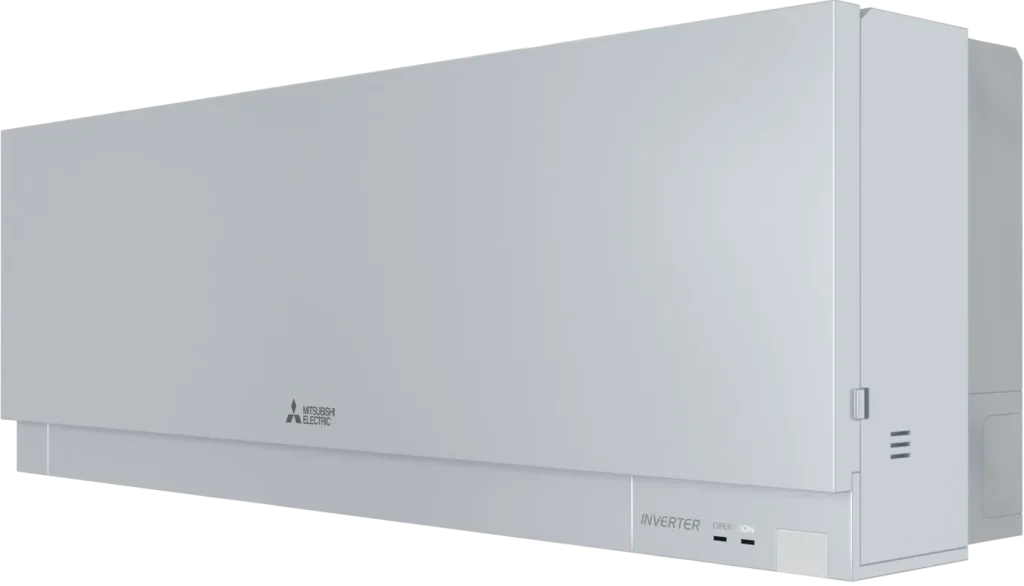
Best For: Modern apartments and people who hate the look of bulky ACs.
The MSZ-EF Mitsubishi AC is built with a super-slim chassis that doesn’t stick out from the wall, so you won’t feel like a giant plastic box is looming over you while you’re sitting on the couch.
Users like it thanks to the front panel staying flat and not popping open when it starts. This means it collects way less dust on top, thus you won’t have to get the ladder out to clean it nearly as often.
Best still, this best Australian Mitsubishi AC comes in finishes like Matte Silver and Black, making it easy to match with your TV or furniture so the AC actually disappears into the room instead of being an eyesore.
Reason to Buy: This is the best split Mitsubishi AC to get if you want a powerful cooler that looks like a piece of high-end tech and stays quiet enough to forget it’s even there.
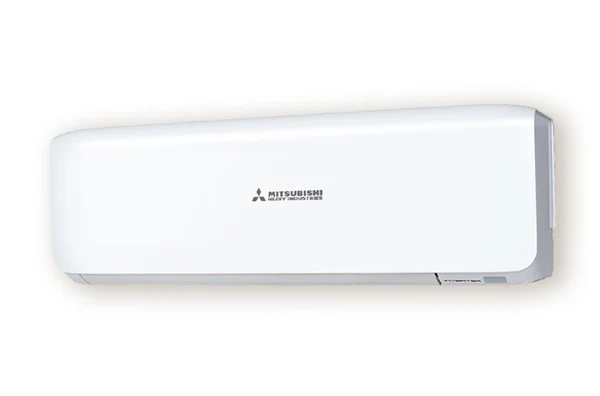
Best For: Main bedrooms and average-sized living areas.
The Avanti is a favourite Mitsubishi air conditioner for Australian homes because it uses Jet Air Tech to move a massive amount of air very quickly, which means the room reaches your target temperature in minutes rather than waiting an hour to feel the relief.
It has a rounded, compact shape that is much smaller than most units, so it can fit easily into those tight spots above bedroom doors where other systems simply won’t fit.
Finally, this best Mitsubishi AC Australia is a tough, reliable machine that keeps things simple, meaning you get award-winning performance without having to learn a complicated remote.
Reason to Buy: Buy the Avanti Mitsubishi air conditioner if you want a fast-cooling, award-winning unit that is small enough to fit anywhere and won’t wake you up at night.
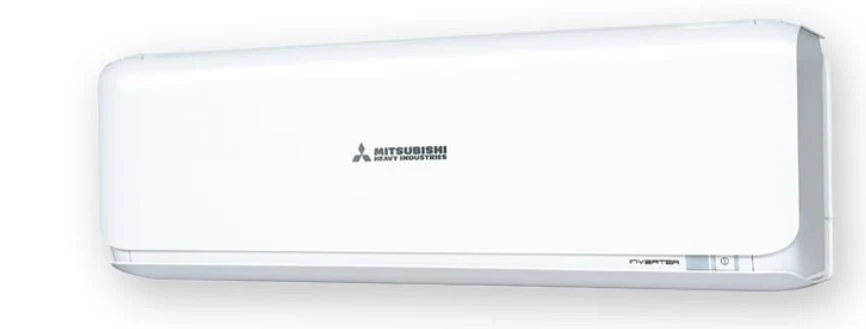
Best For: Families who want the lowest running costs and best tech.
The Avanti PLUS is the “smart” version that uses an Infrared Motion Sensor to track movement, meaning it will automatically turn itself off if someone/kids leave the room and forget to switch it off.
With one of the highest energy ratings in the country, this Australian-made Mitsubishi air conditioner uses significantly less electricity than a standard unit, which helps the machine pay for itself through lower monthly bills.
Most users refer to it as the ultimate “set and forget” unit for a busy house, giving the peace of mind that you aren’t wasting money cooling empty rooms throughout the day.
Reason to Buy: This is the smartest investment for anyone who wants the best possible tech to keep their electricity bills as low as possible.
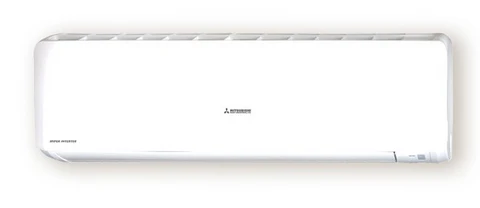
Best For: Large, open-plan Aussie living and dining zones.
The Bronte is a powerhouse with an 18-meter long-reach airflow, which means it can throw cold air from one side of a massive lounge room all the way into the kitchen.
You won’t have to buy two separate units for a big open space, so you save money on both the machine and the installation.
It’s built specifically for the big “Great Rooms” in modern Australian homes, giving you enough capacity to keep the whole family cool even when the oven is on, and the sun is hitting the windows.
Reason to Buy: This is the only unit to get if you have a massive open-plan living area and need one machine that is strong enough to reach every single corner.
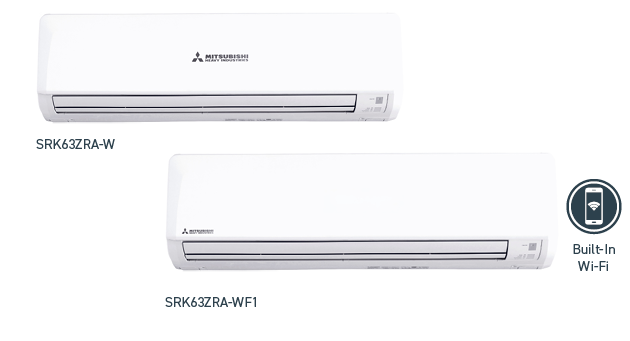
For most Australian homes in 2026, the Mitsubishi Heavy Industries Bronte Series is the standout recommendation for large living zones.
While it’s often too powerful for a small bedroom, it has been voted the best split system for seven years (2020 -2026) running because it solves the biggest cooling challenge in Aussie floor plans: the massive open-plan living area.
Thanks to its advanced fan blades, the Bronte can throw air up to 18 meters, meaning one single unit can cool your lounge, dining room, and kitchen all at once. This gives you the financial benefit of only needing to buy and install one high-capacity machine rather than two smaller ones.
And since it features the new WF1 Wi-Fi technology, you can also track your energy usage in real-time, which helps you tweak your habits to keep your electricity bills as low as possible.
| Brand & Model | Best For | Standout Human Benefit | Key Efficiency Factor |
| ME MSZ-AP | Bedrooms & Nurseries | Ultra-Quiet (18 dB): You get a peaceful sleep without any distracting hums. | R32 Refrigerant: Moves heat faster so your power bills stay low. |
| ME MSZ-LN | Cold Climates & Designer Rooms | HyperCore Tech: Keeps your family warm even when it is -15°C outside. | Occupancy Sensor: Switches to Eco Mode when you leave, so you don’t waste money. |
| ME MSZ-GL | Rentals & Budget Buyers | Old Faithful: A low upfront cost with legendary durability that lasts for years. | Econo Cool: Adjusts airflow to feel cooler, which lowers your total power usage. |
| ME MSZ-EF | Modern Apartments | Slim Profile: Sits flat against the wall so it doesn’t look like a bulky eyesore. | High-End DC Motor: Sips electricity so you can leave it on all day in an office. |
| MHI Avanti® | Main Bedrooms | Jet Air Tech: Reaches your target temp in minutes so you get instant relief. | Economy Mode: Limits the power draw so the meter doesn’t spin out of control. |
| MHI Avanti PLUS® | Eco-Conscious Families | Motion Sensor: Automatically turns off if the kids leave the room, saving you a fortune. | 6-Star Rating: One of the highest in Australia, meaning the lowest possible bills. |
| MHI Bronte® | Large Open-Plan Areas | 18m Air Throw: Cools the lounge and kitchen at once, so you only need one unit. | Smart Compressor: Handles massive spaces without chewing through extra power. |
Choosing E-Green Electrical for a Mitsubishi installation is the smartest move for anyone looking to turn a simple home upgrade into a long-term investment.
They aren’t just another installation crew; they are Sydney’s energy-efficiency specialists who actually care about a homeowner’s hip pocket and the planet.
Since the team understands the local climate inside out, E-Green ensures every new unit is positioned perfectly to cool the home faster while using less power.
They even take the stress out of the process by handling all the complex government rebate paperwork, so that users get the biggest possible savings without the headache.
By partnering with these experts, homeowners benefit from a professional, honest service that delivers a cool, cost-effective, and environmentally friendly home for years to come.
They are separate companies. Mitsubishi Electric specializes in quiet units for bedrooms and high-tech sensors. Mitsubishi Heavy Industries focuses on high-capacity power with a long “air throw” (up to 18m), making it better for large, open living areas.
Common issues include clogged drain lines, causing water leaks, and dusty filters, leading to reduced cooling. In coastal areas, salt air can corrode internal boards if they aren’t protected. Most error codes usually point to a lack of regular cleaning.
Expect 15 to 20 years of use. This is significantly higher than budget brands. Regular filter cleaning and annual professional checks are required to reach the two-decade mark.
Panasonic leads in air purification technology for removing odours and bacteria. Mitsubishi leads in durability and silent operation. Choose Mitsubishi for longevity and Panasonic for high-end air scrubbing.
Daikin is a specialist in ducted systems for entire homes. Mitsubishi is often preferred for split systems due to easier maintenance and better spare part availability across Australia. Both are premium, but Mitsubishi is generally more user-friendly for single rooms.
“Dry Mode” is best because it removes moisture that triggers mould and dust mites. Keep the temperature around 23°C. Avoid “Turbo” or extremely cold settings, as freezing air can cause airway constriction.
No. They use Inverter Technology to maintain temperatures without constant starting and stopping. High-efficiency models cost roughly 0.15 to 0.25 per hour to run, making them some of the most cost-effective units in 2026.
For many Australians, air conditioners are a fundamental necessity rather than a luxury, as the nation continues to face record-breaking […]

Designing a home climate system is an exercise in precision. When we talk about installing a new air conditioner, we […]

Normal Range: $1,850 – $30,000 Air conditioning and climate control service costs in Australia depend heavily on your specific project, […]

Cheap air conditioning quotes have a strange pull. You see a low number and feel relief straight away. With summers […]





Our energy efficiency experts are here to answer all your questions and guide you through the products, rebates, and installation process.

Upgrade now, pay later with