Air conditioning rebates in New South Wales are often misunderstood. Many people assume they work like traditional government grants: apply, […]
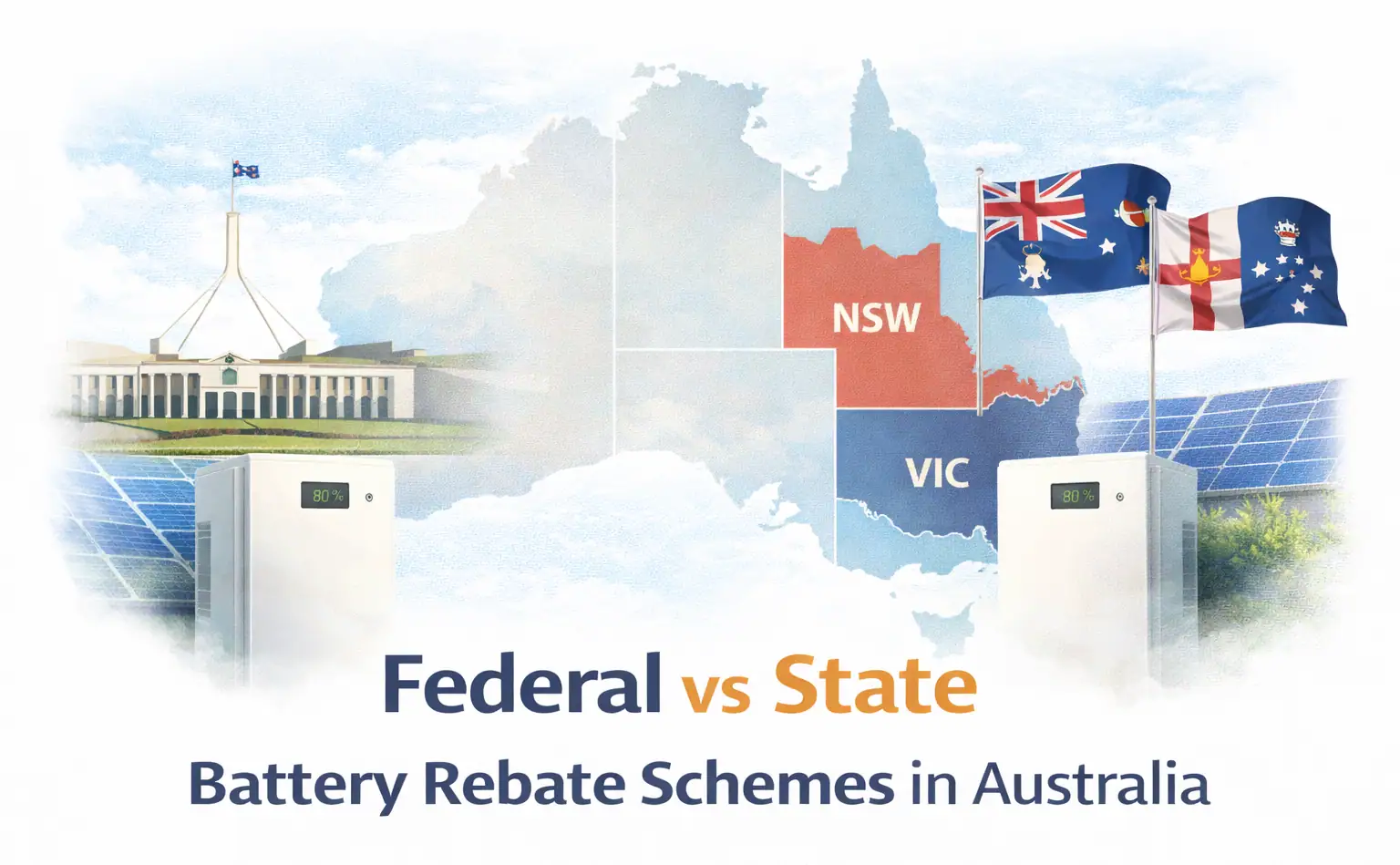
Home batteries are becoming an increasingly common part of Australian households. When paired with solar, they help you store excess energy for later use, cut electricity bills, and reduce stress on the grid during peak periods.
Yet, batteries remain expensive.
That’s why the government offers support through rebates and incentives. There’s a federal battery rebate available nationwide and, in many states, additional local incentives that can stretch your savings even further.
This article breaks them down in a simple, clear way so you can see what’s available and how it all works together.
The Cheaper Home Batteries Program is Australia’s main federal support for residential battery storage. It sits under the Small-scale Renewable Energy Scheme (SRES) and is designed to make battery systems more affordable by reducing the upfront cost.
This support applies across all states and territories, giving homeowners a consistent baseline rebate no matter where they live.
Lower entry cost
Rebates and loans reduce the cash needed upfront. This helps households act sooner rather than waiting years.
More control over energy use
Batteries let you decide when to use your solar energy. That control matters during peak pricing.
Reduced electricity bills over time
Even loan-based support can lead to net savings once the system settles into daily use.
Better use of rooftop solar
Storing excess solar beats exporting it cheaply. Especially in the evening.
Grid support during peak demand
Incentivised batteries ease pressure on the network. This helps everyone, not just battery owners.
The rebate value is designed to reduce over time as battery costs fall. That means waiting too long could result in smaller support even if battery prices stay high.
State and territory incentives vary widely. They differ in:
These incentives are separate from the federal rebate and, in many cases, can be combined with it, but not always. Each state sets its own rules.
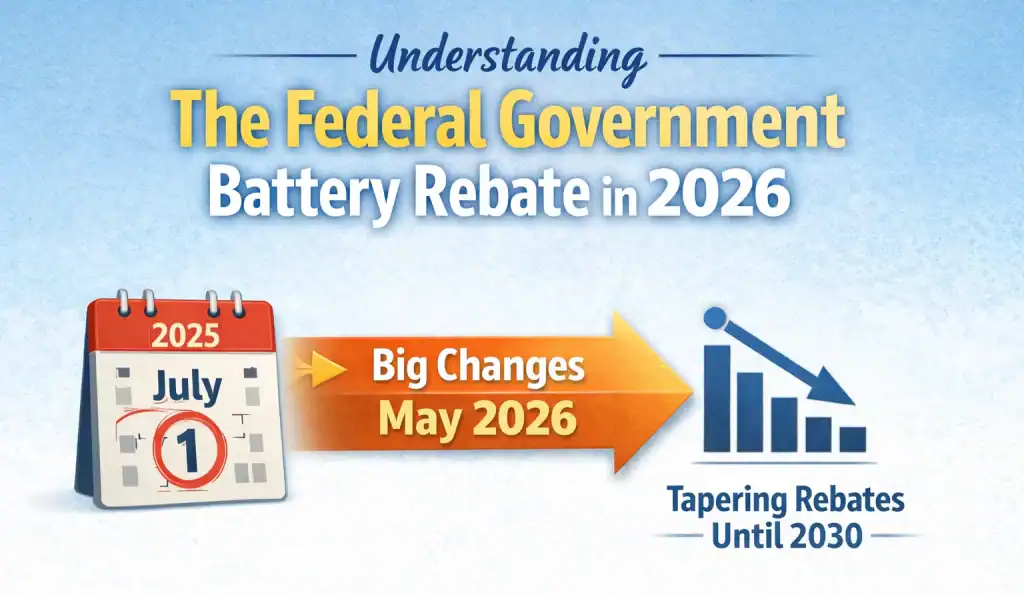
Rebates scale with battery size (approx. $302–$311 per usable kWh until May 2026). This is a uniform federal discount from the Cheaper Home Batteries Program applied by your installer to instantly lower your purchase price.
A one-off payment for connecting your battery to a Virtual Power Plant (VPP). Small systems (6–9 kWh) typically receive around $300–$450, while larger systems can reach the $1,500 cap.
Earn around $300 every year in bill credits or direct payments by selling your battery’s extra energy back to the grid. This recurring reward helps you pay off your solar panels and battery faster.
Zero-interest finance via NSW-partnered providers like Brighte spreads the cost over several years. This reduces upfront cash flow pressure while your energy savings help cover the repayments.
Tasmania’s approach works quietly in the background. It doesn’t grab attention with big rebates. But for the right household, it still makes sense.
This is a uniform nationwide discount from the Cheaper Home Batteries Program. It scales with battery size and is applied directly by your installer to instantly lower your purchase price.
Many Tasmanian households can access zero-interest loans that cover batteries, solar, or both. You pay back only what you borrow.No added cost over time. That alone changes the maths for families watching their cash flow.
The Energy Saver Loan Scheme has now closed, effective Monday, 1 September 2025 at 11:59 pm. No further applications can be submitted. All inactive referrals have now expired.
From 1 July 2025, the Australian Government’s Cheaper Home Batteries Program offers an upfront discount of around 30% on the cost of installing a battery. This is available to households, businesses, and community organisations to instantly lower the purchase price.
Eligible businesses can receive a rebate of up to $10,000 to install energy-efficient upgrades, including batteries. This incentive from the ACT Government helps businesses reduce overheads and pay back their energy investments faster.
Under the Sustainable Household Scheme, eligible households can access low-interest loans of up to $15,000 to buy a battery. This allows residents to spread the cost over several years, using energy savings to help cover repayments.
Some energy retailers offer specialised plans that allow you to buy and sell stored energy at competitive prices. These plans are based on how much solar power you generate and use, which can further lower your power bills.
Funded by the Australian Government’s Community Solar Banks Program, this grant helps apartment buildings and strata complexes in the NT install shared battery systems. Eligible corporations can receive up to $7,500 per dwelling, covering up to 50% of the total installation costs for shared solar and battery storage.
This has now reached its $6 million funding allocation and is now closed to new grants.
This uniform nationwide discount from the Cheaper Home Batteries Program covers approximately 30% of the system cost.
In most states, you can stack the federal rebate with local incentives, meaning you reduce your battery cost in more than one way. But always check specific rules. Some programs require things like VPP participation, or they limit how rebates stack with loans.
The key is to confirm eligibility before signing a contract with your installer.
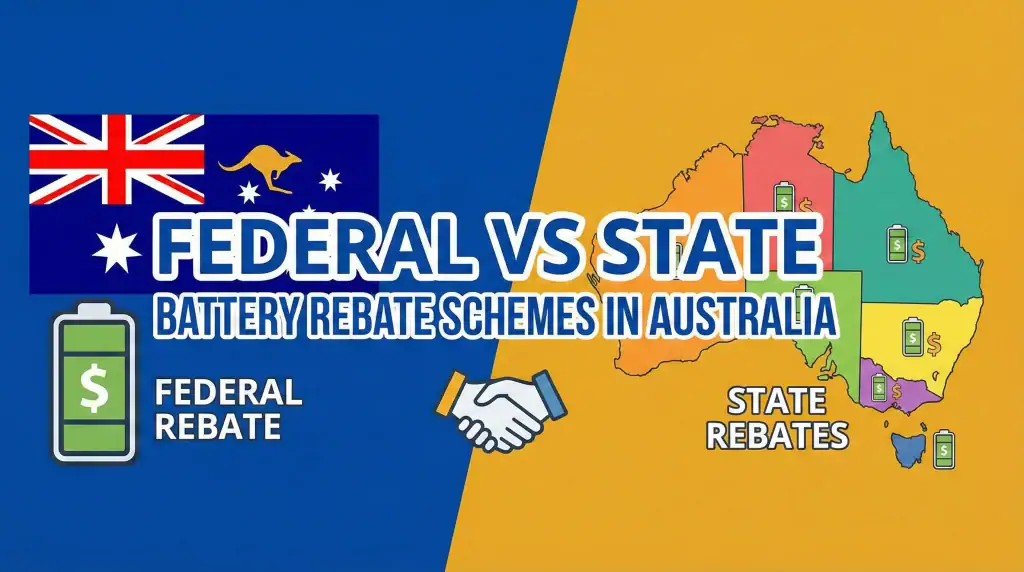
| State/Territory | Direct Rebates & Discounts | Interest-Free / Low-Interest Loans | VPP & Grid Support Incentives |
| Western Australia (WA) | $1,300 – $3,800 (Federal + Synergy/Horizon); scales with battery size. | $2,001 – $10,000 (Zero-interest); Income must be under $210k. | $300 – $1,000 for grid support during peak events. |
| New South Wales (NSW) | $3,000 – $4,500 (Federal); approx. $302–$311 per usable kWh. | Up to $30,000 (Zero-interest) via partners like Brighte. | Up to $1,500 sign-on bonus + ~$300/year passive income. |
| Victoria (VIC) | $250 – $1,400 (Solar/Efficiency upgrades); direct battery rebates are mostly closed. | Up to $8,800 (Zero-interest); repayable over 4 years. | – |
| Tasmania (TAS) | ~30% off (Federal); Energy Saver Loan Scheme is now Closed. | Up to $10,000 (Zero-interest) for solar and/or batteries. | – |
| ACT | ~30% upfront discount (Federal); Up to $10,000 for eligible businesses. | Up to $15,000 (Low-interest) via Sustainable Household Scheme. | Special retailer plans for buying/selling stored energy. |
| Northern Territory (NT) | $3,100 – $4,500 (Federal); Up to $7,500 per unit for multi-dwellings. | Home & Business Battery Scheme is now closed. | Shared battery systems for apartment/strata complexes. |
The federal battery rebate gives you a strong, predictable foundation to reduce your installation cost.
On top of that, several states and territories offer additional incentives, ranging from rebates and interest-free loans to ongoing VPP payments. Some support is direct and immediate, and others reward you over time.
If you live in WA or NSW, the combination can be especially valuable. In Victoria, support is currently more limited but still available through efficiency rebates and loans. Tasmania, the ACT, and the NT each offer their own useful pathways, too, so make sure to check them all out.
Your best approach?
Check both federal and local incentives before making a purchase. That’s how you’ll maximise your savings and make the most of clean energy in your home.
From 1 July 2025, the Australian Government’s Cheaper Home Batteries Program offers about a 30% discount on the cost of installing a solar battery, as part of the SRES expansion.
In addition, some state and territory governments and local councils provide extra rebates or low-interest loans to help homeowners add battery storage.
Change 1: The rebate now reduces faster and more often, updating every six months instead of once a year.
Change 2: The rebate varies by battery size. Full support is offered for standard household systems, while larger batteries receive a smaller discount.
Several states and territories provide extra incentives. For example, Victoria, New South Wales, Queensland, and South Australia offer rebates or low-interest loans to reduce the cost of solar batteries further.
Yes. Homeowners can often stack the federal Cheaper Home Batteries rebate with state or local incentives, lowering the overall cost significantly.
Some programs set caps on rebate eligibility, typically allowing one battery per property. Check your state’s rules to confirm.
Yes, most rebates include both the battery and professional installation, though exact coverage may vary between federal and state programs.
Eligibility usually requires the home to have existing solar panels or a compatible system. Additional criteria may include battery type, size, and professional installation.
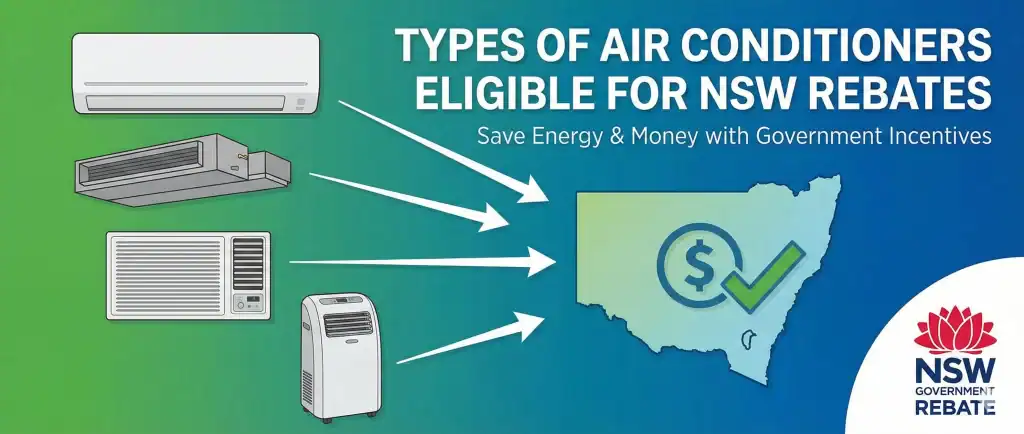
Air conditioning rebates in New South Wales are often misunderstood. Many people assume they work like traditional government grants: apply, […]
Managing the heat in New South Wales can be a struggle, especially when power bills start to rise. Air conditioning […]
Electricity prices across NSW have been rising, with some households seeing bill increases of up to 9.7%. Most people feel […]
Electricity bills continue to rise, and more Australians are looking for ways to save. One of the biggest opportunities right […]


Our energy efficiency experts are here to answer all your questions and guide you through the products, rebates, and installation process.

Upgrade now, pay later with