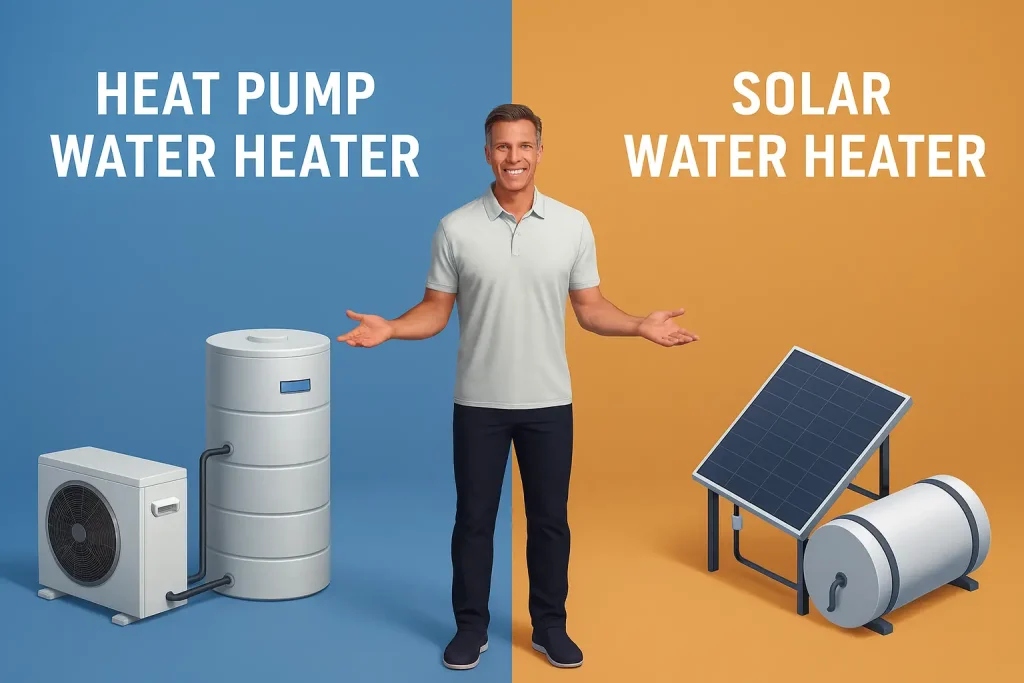
Most households use 50 to 70 litres of hot water a day, and most people don’t realise how much energy […]
Hot water usage refers to all the energy consumed to heat water for domestic purposes.
While this is often overlooked, the simple act of turning on a hot tap has a massive impact on both household finances and the nation’s environmental space.
In Australia, heating water is consistently the second-biggest part of household energy use.
On average, it accounts for 15% to 27% of a typical home’s total energy bill.
That level of demand also adds to national emissions since older systems use far more electricity or gas than new ones.
Understanding how much water you use, what drives those costs and which systems waste less energy gives you a better idea of how to manage your bills.
It also helps households to shift towards cleaner and more efficient choices.
In this article, we’ll break down the current hot water trends in Australia, the numbers behind everyday use, and much more.
The average hot water usage per household is around 142 litres per day.
These account for showers, laundry, dishwashing and general cleaning. However, this can vary depending on family size, lifestyle and location.
For example, families with multiple children or larger homes tend to use more, whereas single-person households may use significantly less.
When we look at how this water is actually used, showers take the lead.
It makes up roughly 40% of household hot water use. Laundry also accounts for around 30% while dishwashing and cooking contribute about 15%.
The remaining 15% comes from other tasks like general cleaning and tap use.
These numbers show that simple daily routines are the biggest drivers of hot water consumption and energy bills.
Colder states, such as Victoria and Tasmania, often have higher energy needs because incoming water is colder and residents tend to take hotter showers.
Conversely, warmer states like Queensland see slightly lower energy use, although laundry and kitchen activities remain consistent nationwide.
Over time, improvements in technology, such as more efficient gas systems, heat pumps, and solar water heaters, have helped reduce hot-water energy use.
For example, between 2008 and 2013, residential hot water energy consumption dropped by roughly 9%, showing that efficiency gains can make a real difference.
Besides, hot water is also heavily used for commercial purposes.
In cities like Sydney, commercial buildings and institutions use about 75 million litres of water per day, which is nearly 19% of the city’s total water supply.
Hot water systems are usually categorised into two types: Storage and continuous flow.
A storage system holds water in a tank and heats it.
Meanwhile, continuous flow systems heat water as it passes through the unit. However, within these categories, most homes use four types, as described below.
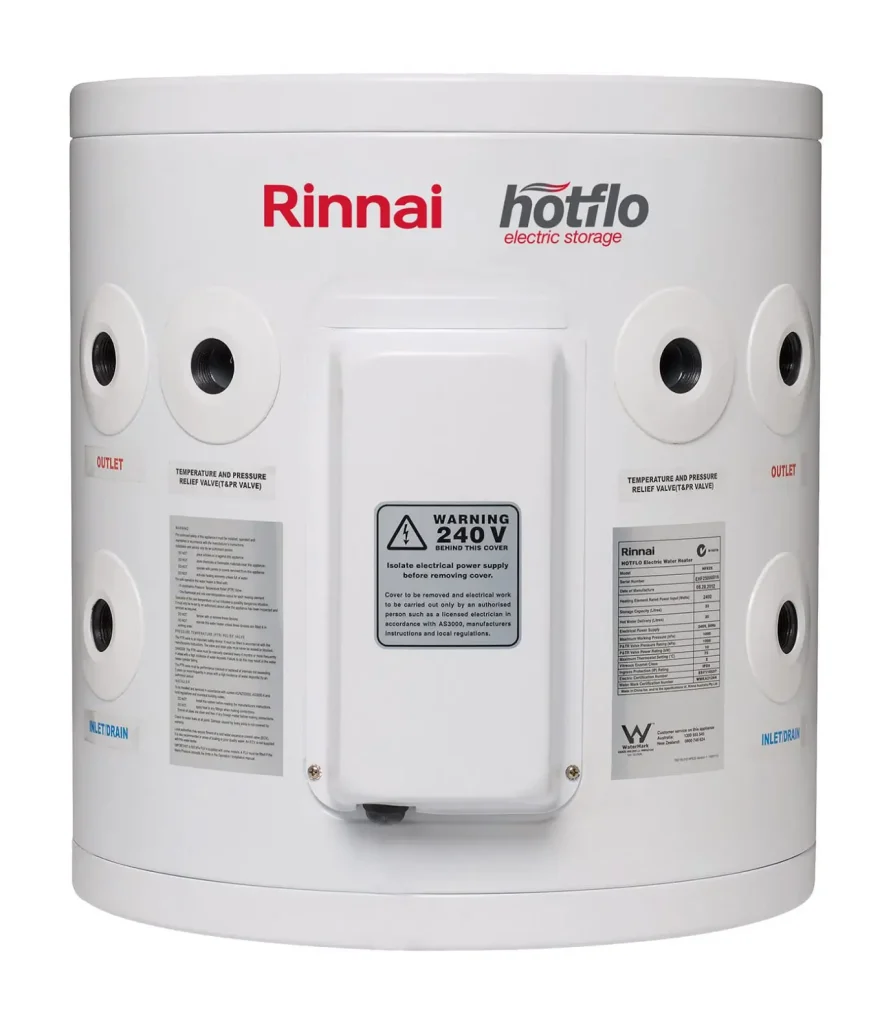
Electric storage tanks are the cheapest and easiest to install.
You can actually get one at around AUD450-AUD2,500, and that’s why 50% of Australians are using these systems.
They use an element to keep a full tank hot constantly, and this results in the highest running costs.
While affordable upfront, high energy consumption makes them inefficient.
Gas systems are almost similar to the electric ones. However, they use a gas burner instead of an element. They’re highly popular and account for about 45–50% of the market.
They cost about AUD1,200-AUD3,500. However, market growth is slowing.
Rising gas prices and state-level mandates favouring all-electric homes are driving a transition away from gas installation in new builds.
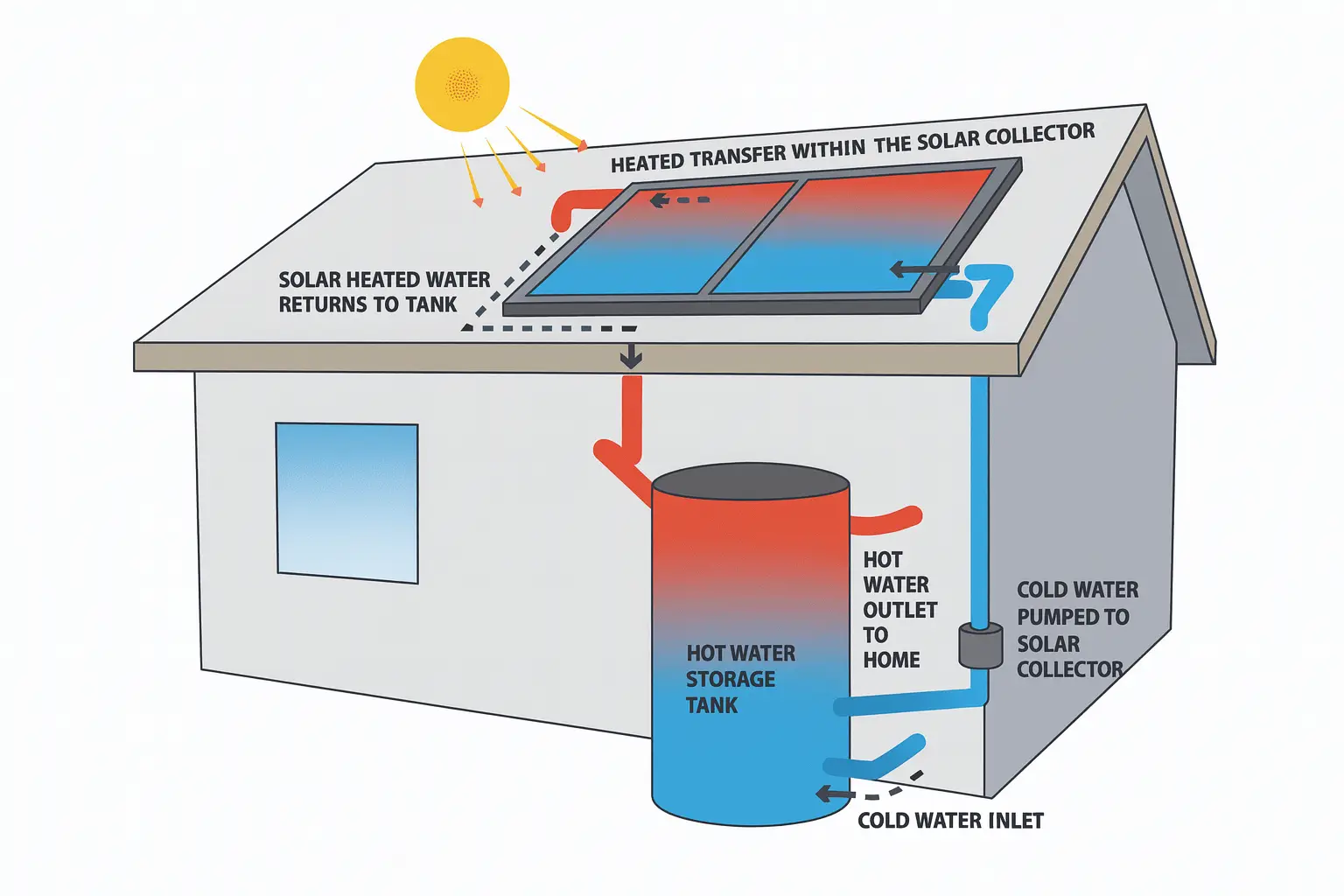
Solar systems utilise roof collectors and solar energy to heat water. This helps in reducing reliance on gas or electricity.
The good thing is that these systems can provide up to 80% of a home’s hot water needs on a sunny day.
This means minimal running costs for you. For this reason, the market for solar is expanding fast and is expected to grow at a CAGR of 13.15% from 2025 to 2029.
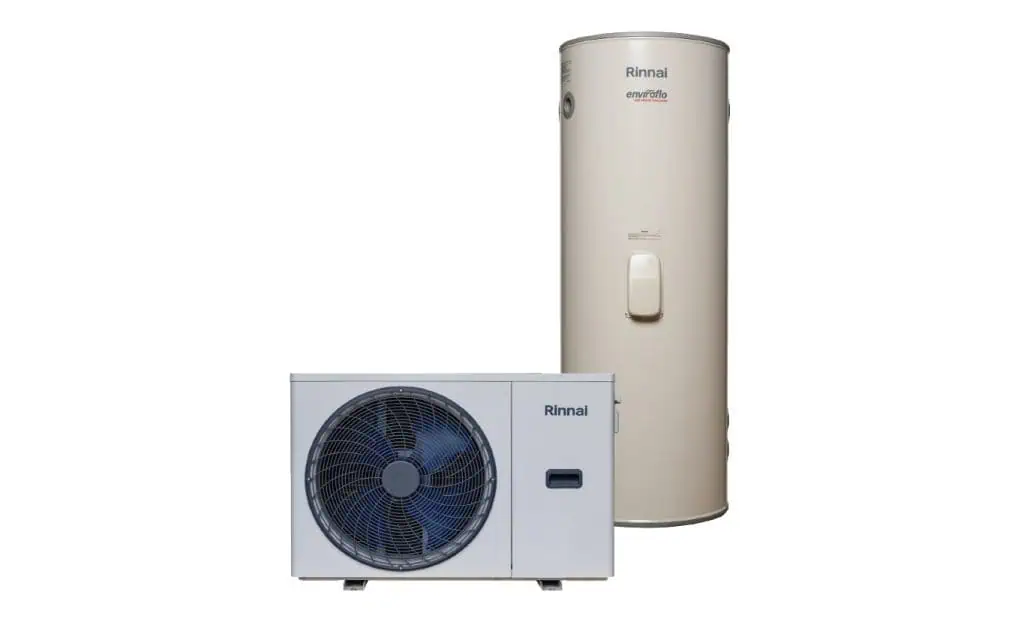
Heat pumps are the most energy-efficient option. They operate like a reverse air conditioner by pulling heat from the air to warm the water.
This usually cuts your energy use by up to 75% compared to old electric tanks. However, the installation rates surged over 70% in 2023 alone.
But high government rebates and extreme efficiency make them the top choice for new systems.
They give you the absolute lowest annual running cost available. Due to their energy efficiency, it’s projected that heat pumps will grow at a rate of 12.1% per year from 2025 to 2030.
Your location dictates your hot water energy use and your system options. Climate and infrastructure usually drastically change the costs.
Hot water uses about 18% of the energy in Victorian homes.
Gas is the main energy source here, and 68% of households have gas hot water systems. This gas reliance is even higher in Melbourne, where 76% of homes use it.
Only 2.8% of Victorian households use solar hot water.
This reliance on gas makes the state a key area for heat pump replacement programs.
NSW has a massive residential demand for hot water.
Over half of the hot water goes to the bathroom, and laundry accounts for about one-third of the use. You’ll find all four system types—electric, gas, solar, and heat pump here.
The large scale of the population makes NSW a primary target for government energy efficiency programs.
These programs aim to reduce hot water consumption across the state.
Perth residents face a major cost. Water heating consumes a high 32.7% of home energy. This makes saving energy a huge priority for WA households.
Approximately 59% and 69% of households use gas hot water systems.
Electric storage heaters also account for around 50% of existing units in Perth.
This clearly shows a significant opportunity for efficient heat pump upgrades.
Almost all Queensland houses, around 99.9%, have a hot water system. The state’s warm and reliable sunshine favours solar power greatly.
Solar hot water units here generate approximately 80% of the required heat from the sun. They need the booster only on cloudy days.
This efficiency makes solar a top economic choice for many Queensland homeowners.
Hot water accounts for about 15% of energy use in the ACT.
Tasmania is also a massive energy consumer, dedicating up to 25% of average home energy just to heating water.
This is due to very cold incoming water. In the Northern Territory, hot water can be responsible for up to 21% of the electricity bill.
Only 3% of households in South Australia use solar hot water.
Choosing a hot water system is a financial decision, not just a plumbing one. The price tag on the box is almost meaningless.
What truly matters is the ongoing cost of fueling that system for ten to fifteen years. You need to look past the sticker price.
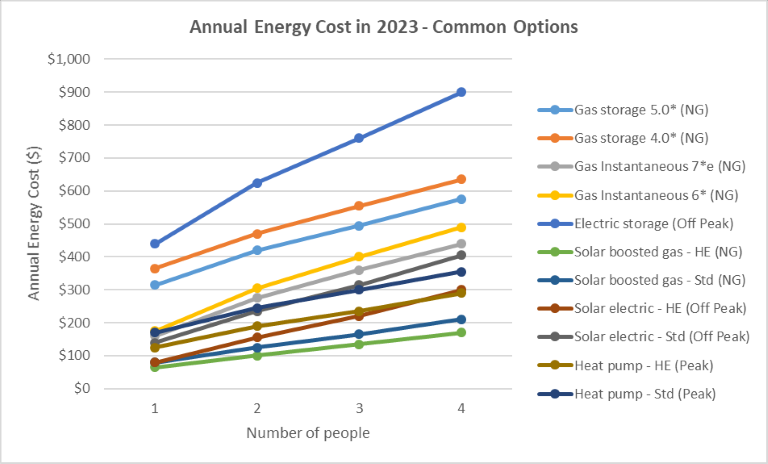
The cost difference between systems is large. An average electric storage tank might cost you about $615 per year to run. A gas heater looks cheaper at roughly $330 annually.
These numbers look simple, but they hide complex pricing changes and efficiency differences. Your usage patterns and local tariffs will shift these figures wildly.
You will see big differences in purchase prices.
Electric systems are the easiest on the wallet initially, often costing only $300 to $1,500 installed. That low price is the main reason so many people in Australia still have them.
Gas systems have a moderate upfront cost. You can buy them for AUD900-AUD2,000. Heat pump systems are higher, sitting around $2,500 to $4,000.
Solar systems are the most expensive to purchase, easily ranging from $2,000 to over $7,000.
Do not let the high purchase price scare you away from efficiency. A cheap electric system costs thousands in extra energy bills over its life.
A more expensive heat pump saves that money back and then some.
Australian households are genuinely struggling with rising energy costs. Gas and electricity prices continue to climb sharply.
Since 2020, gas prices have increased significantly, impacting the cost of heating water. Overall inflation recently pushed energy prices up an average of 22%.
This makes the choice of an efficient system more urgent than ever before.
Electricity tariffs add complexity. Your time of use changes the cost dramatically.
Peak rates can be as high as 43.65 cents per kilowatt-hour (kWh) during the busy 4 PM to 9 PM window.
The shoulder rate, from 9 AM to 4 PM and 9 PM to 9 AM, drops lower. The off-peak rate, often found overnight, is the cheapest.
This pricing structure strongly favours systems you can program, such as heat pumps.
Efficiency is the only way to beat these rising costs. Heat pump hot water systems provide a massive reduction in energy use.
They can save as much as 60% to 70% on your hot water energy bills compared to traditional gas or electric systems. They only use electricity to move heat and not to create it.
This makes them incredibly cheap to operate.
You can also pair electric systems with your solar panels. This helps reduce your reliance on fossil fuels. You heat your water using free power generated on your roof.
This strategy is essential for achieving a net-zero energy home.
The economic pressure to switch is immense. A study by the University of Technology Sydney (UTS) showed the huge national benefit of changing course.
They found that phasing out gas water heaters completely could lead to annual savings ranging from $4.7 to $6.7 billion by 2040 for the country.
This shows the financial scale of the problem.
The government sets rules for hot water systems. This is to ensure you buy better, more efficient products.
The Minimum Energy Performance Standards (MEPS) set a boundary. A product that fails to meet the minimum efficiency level cannot be sold here.
This rule applies mainly to standard electric and gas storage heaters. This action keeps the most wasteful systems off the Australian market.
Currently, things are complicated for homeowners. Top-tier systems like heat pumps and solar often do not have an easy-to-read star rating.
This makes comparing them tricky.
The government is working to change this. They want one clear testing standard. You will soon be able to compare every type of hot water system with a single efficiency score.
Safety standards protect your family.
Water stored in the tank must reach 60°C. This kills harmful bacteria. But water delivered to the tap must be limited to 50°C.
This prevents serious burns. A tempering valve mixes cold water back in to meet that safety limit. This device is required on all new storage heater installations.
The future of heating your water is electric, very smart, and cheaper to run.
Heat pump technology is dominating the replacement market.
It is rapidly becoming the standard solution. Heat pumps grab heat from the air.
They use electricity only to move the heat and not create it.
They can turn 1 kW of input electricity into about 4 kW of heat. This extreme efficiency saves up to 75% of the power an old electric tank uses.
The environmental benefit is huge. You cut your emissions and support the country’s net-zero targets.
Systems are getting smarter.
New controls allow you to program the heating precisely. You can set the heat pump to run only when your rooftop solar panels are producing maximum power.
You use your own free electricity this way. This integration makes smart control essential for achieving the lowest possible energy bills.
Building rules also push efficiency.
The National Construction Code (NCC) requires new homes to meet higher energy efficiency and water conservation standards.
This directly increases demand for highly efficient hot water systems.
You do not have to pay full price for an efficient system. Governments offer major financial help to drive upgrades.
This helps you save money and reduces national energy use.
The national program gives you Small-scale Technology Certificates (STCs). These certificates are issued when you install an approved system.
STCs act as an immediate discount. They reduce the upfront cost of your new heat pump or solar system.
The installer handles the certificate paperwork.
States layer their own programs on top.
Always check both federal and state programs. The combined rebates can make the most efficient system the cheapest one to install.
Most households use between 150 and 200 litres per day, though this varies by household size and appliance efficiency.
Hot water usually accounts for 20–30% of total household energy consumption, making it one of the top three energy expenses.
Annual costs typically range from:
$250–$350 for solar (with good sun)
$500–$800 for heat pumps
$800–$1,500+ for electric or gas storage
Exact numbers depend on system size, tariff, climate, and efficiency rating.
Absolutely. A higher-rated system can reduce consumption by 20–40% compared to older low-rated units.
Warmer states like QLD and NT use less energy for water heating, while cooler regions like VIC and TAS have higher running costs due to colder inlet water temperatures.
Industry forecasts show that heat pump hot water systems are set for rapid growth in Australia over the next decade.
The market, valued at around USD 57–60 million in 2024, is projected to increase to over USD 100 million by 2030, reflecting an annual growth rate of roughly 10–12%.
In terms of adoption, Australia had approximately 117,000 heat pump hot water units installed in 2022, and this number is expected to climb to around 450,000 units by 2036 according to energy-sector roadmaps.,
Peak usage happens in the morning (6–9 AM), followed by a smaller spike in the evening.
An average shower uses 10–16 litres per minute, meaning a 7-minute shower can burn through 70–110 litres.
Most households use 50 to 70 litres of hot water a day, and most people don’t realise how much energy […]
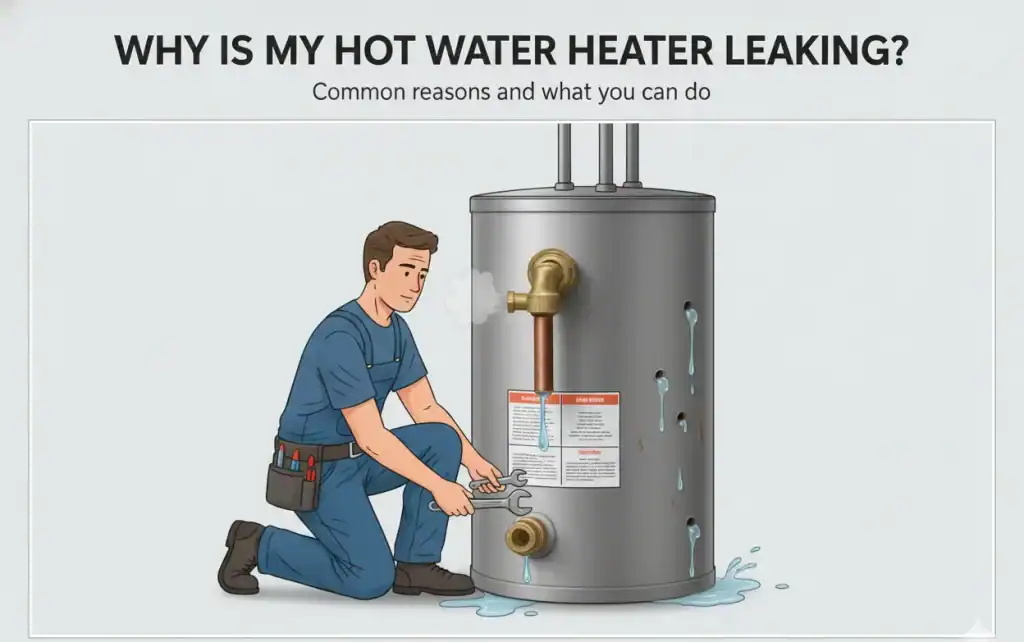
Just imagine it’s a chilly Aussie morning, you’re craving a long, hot shower… but instead, you step into a puddle […]

Hot water is now a modern necessity. But the cost you’re paying for it might be heating more than just […]
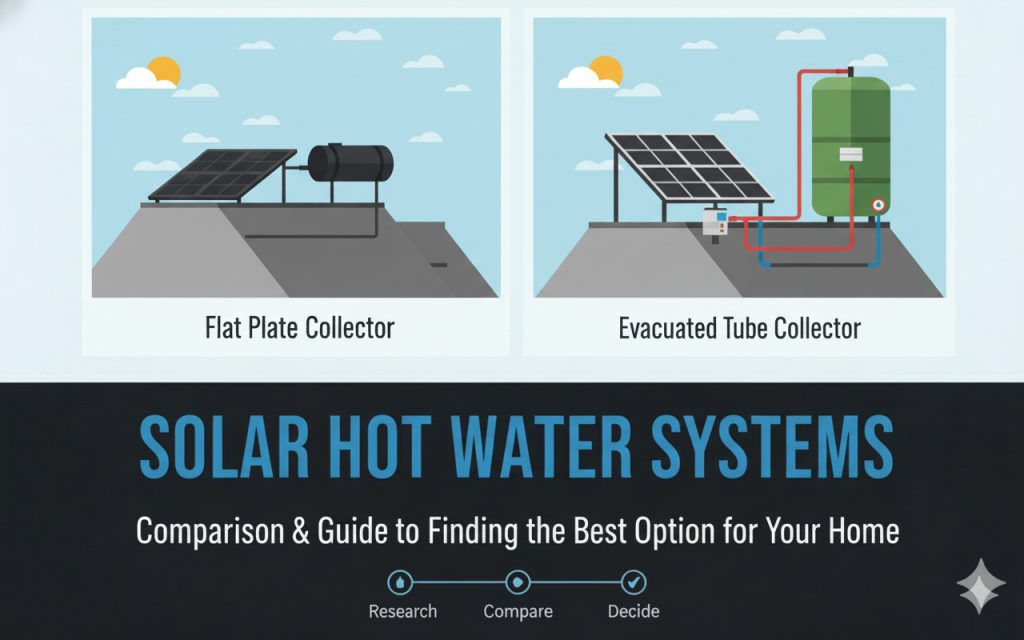
What Is a Solar Hot Water System? Solar hot water is a system that harnesses the sun’s energy to warm […]









Our energy efficiency experts are here to answer all your questions and guide you through the products, rebates, and installation process.

Upgrade now, pay later with