Home batteries are becoming an increasingly common part of Australian households. When paired with solar, they help you store excess […]
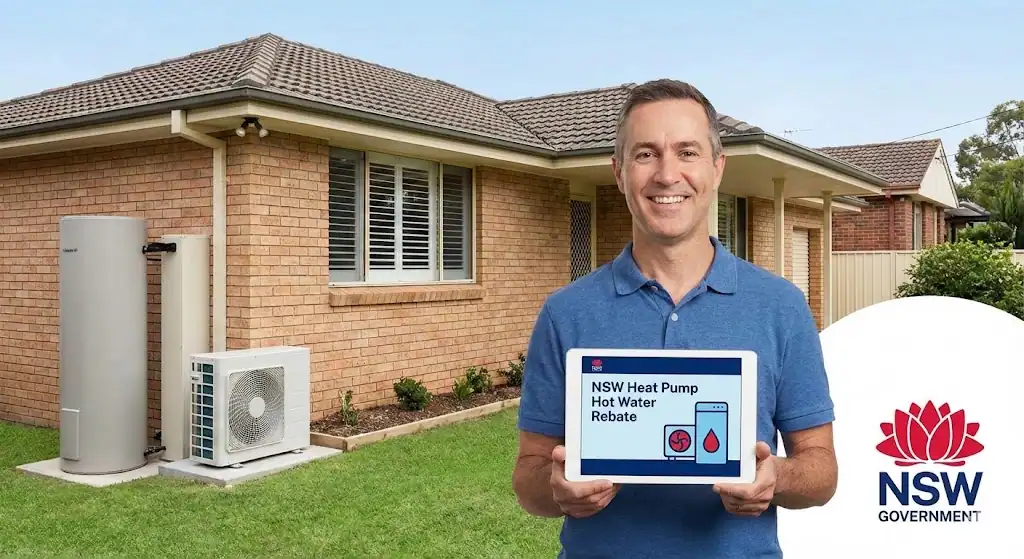
Hot water is often the second-largest energy expense in an average NSW home, coming right after air conditioning.
It can make up around 25% of total household energy use.
If your home still relies on a traditional electric storage tank, you could be spending more than AUD 1,100 a year just to keep the showers running.
Thankfully, upgrading to a high-efficiency heat pump can reduce that cost to roughly AUD 290 a year, slashing your hot water energy bills by around 75%.
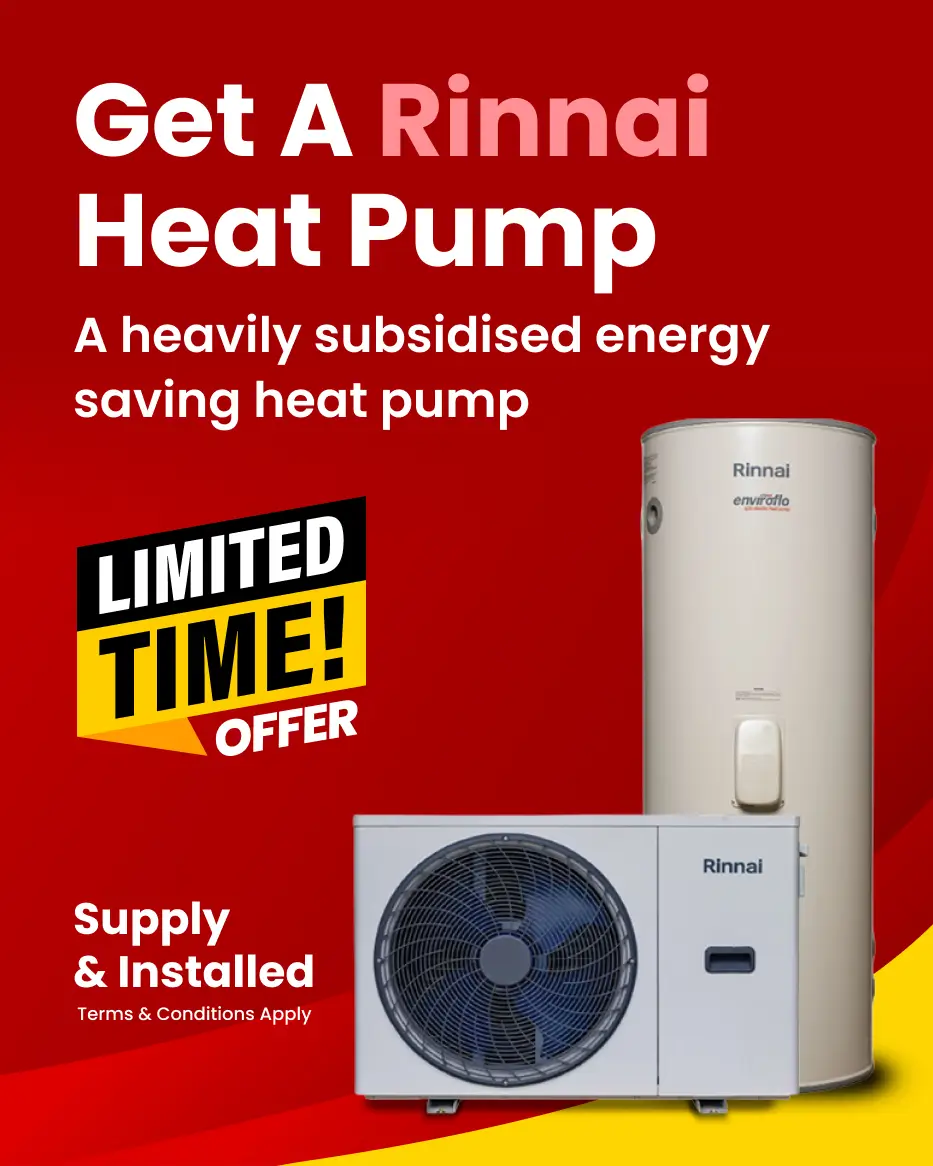
Even better, there is a heat pump hot water rebate that helps reduce the upfront costs of installing these systems.
This article will discuss the heat pump hot water rebate, eligibility, how to apply in NSW, and more.
The rebate is actually a combination of two programs working together to make upgrading more affordable.
First, there’s the NSW Energy Savings Scheme (ESS).
This state initiative requires large energy companies to help reduce overall power consumption. They do this by subsidising upgrades like high-efficiency heat pumps for households.
Second, there are Federal Small-scale Technology Certificates (STCs).
Across Australia, each heat pump you install earns “points” that can be converted into a dollar value. This helps lower your upfront cost even further.
When you combine ESS and STCs, you can get a significant discount right at the time of purchase. The goal here is to replace old and costly electric hot water systems with heat pumps, which work like a fridge in reverse.

You don’t need to be a low-income earner to get this, but there are a few rules to follow:
The rebate value depends on a few things:
You can combine both and cut the total installation cost by AUD 700–AUD 900. However, the exact amount varies depending on the following:
Applying for the NSW heat pump rebate is very easy, but you still need to follow a specific path to ensure you don’t accidentally disqualify yourself. Here is the process you need to follow:
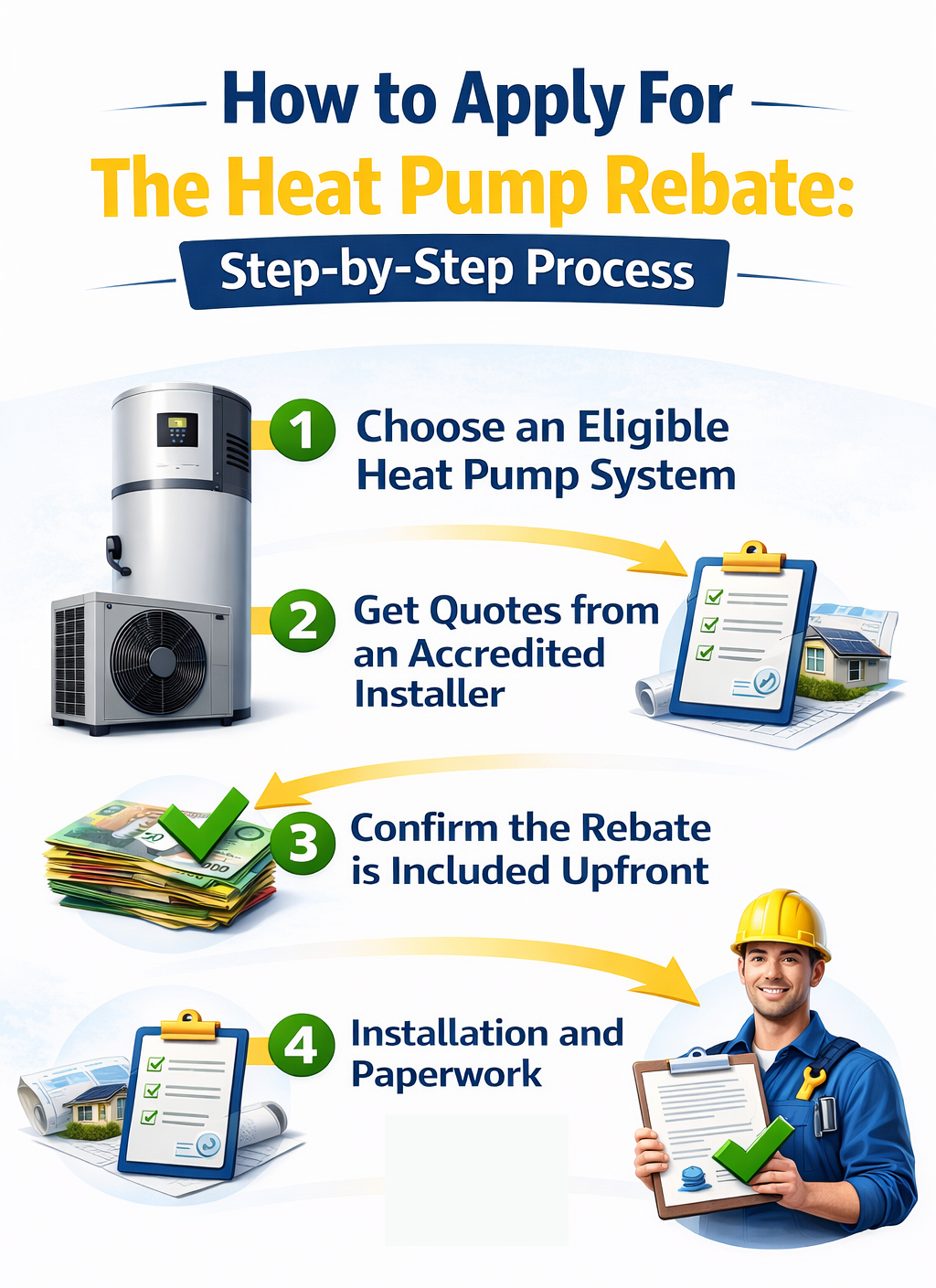
Not every shiny new unit on the market qualifies for the rebate.
To tap into the NSW Energy Savings Scheme (ESS) and federal STCs, the heat pump must be on the government-approved list of high-efficiency models.
These units are tested to ensure they actually save the energy they claim.
Most reputable installers will only carry approved stock, but it’s always worth double-checking that the specific model you want is rebate-ready.
This is the make-or-break step. You cannot use just any plumber; you must use an Accredited Certificate Provider (ACP) or an installer partnered with one.
These companies are authorised to create the energy certificates that fund the discount. It’s a good idea to get at least two or three quotes.
Ask them specifically if they handle the decommissioning of your old system because that’s usually a requirement for the upgrade.
When the quote arrives, look for a line item that shows the ESS Discount or STC Incentive. In NSW, the discount is applied before you pay.
On install day, the team will swap your old gas or electric tank for the new heat pump.
They’ll need to take a few evidence photos—usually of the old unit, the new installation, and your switchboard.
Once they’re finished, you’ll sign a Post-Implementation Declaration confirming the work was done. This bit of paperwork is what allows the installer to finalise the rebate on their end.
It is an upfront discount. You should never be told to “pay the full AUD 4,000 now, and the government will send you AUD 1,000 back later.” In NSW, the value is deducted from the quote before you even pay. If an installer tells you otherwise, find a different one.
Applying for the heat pump hot water rebate in NSW is simpler than most people think.
You pick an eligible system, hire a licensed installer, and let them handle the paperwork. Rebates are applied upfront, cutting hundreds off the cost.
For households replacing old electric or gas systems, this is one of the easiest ways to save money and reduce energy bills.
You do not apply directly to the government. Your installer, who works with an Accredited Certificate Provider (ACP), will include the rebate as a discount in your installation quote and handle all the paperwork for you.
No, the rebate is not claimed separately. Your installer manages the process and applies the rebate before you pay for the system.
Get quotes from installers offering the rebate, confirm the rebate is included in the quote, and sign the nomination form before installation starts.
Your installer, working with an Accredited Certificate Provider, can check if your property and system qualify under the NSW Energy Savings Scheme.
Your installer provides a nomination form to sign and may ask for proof of eligibility. After installation, you sign a Post Implementation Declaration confirming the work was done, so the rebate can be finalized.
No, the heat pump must meet government efficiency standards and be eligible under the scheme. Your installer will ensure the model qualifies.
The rebate is applied upfront in your installer’s quote, reducing the total cost before you pay.
Home batteries are becoming an increasingly common part of Australian households. When paired with solar, they help you store excess […]
Air conditioning rebates in New South Wales are often misunderstood. Many people assume they work like traditional government grants: apply, […]
Managing the heat in New South Wales can be a struggle, especially when power bills start to rise. Air conditioning […]
Electricity prices across NSW have been rising, with some households seeing bill increases of up to 9.7%. Most people feel […]



Our energy efficiency experts are here to answer all your questions and guide you through the products, rebates, and installation process.

Upgrade now, pay later with