Quick Answer Yes, instant water heaters are safe when installed and used properly. Modern ones come with pre-installed safety features […]
Quick Answer
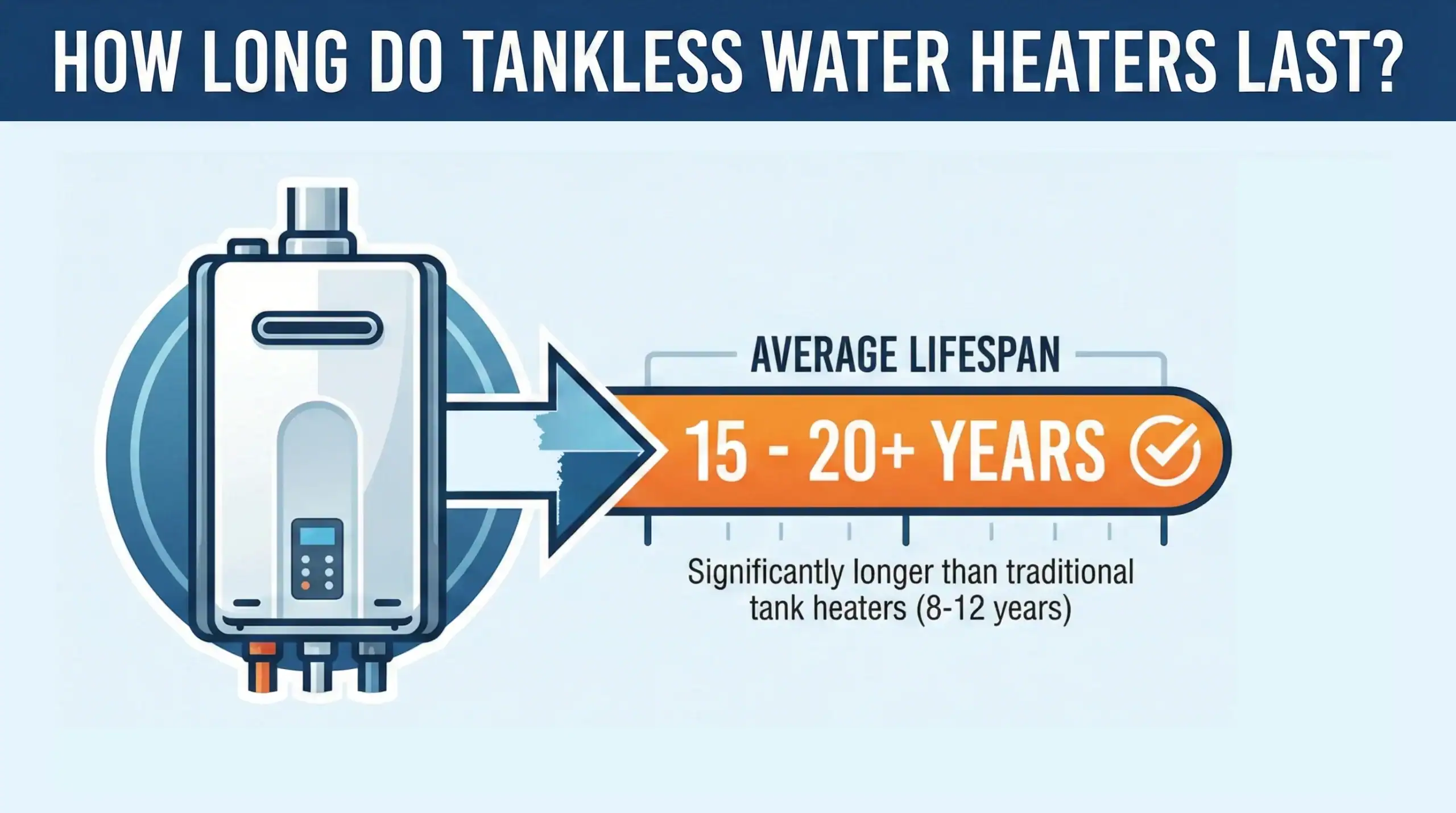
The average life expectancy of a tankless water heater falls anywhere between 15 and 20 years, and often longer with regular maintenance. Gas models have a higher lifespan than their electric counterparts, simply because they don’t cycle on and off as often. Increasing the lifespan of your instantaneous water heater involves proper use and good care.
Have you ever stepped into a bathroom expecting a warm shower, only to be greeted by ice-cold water? If that’s so, you should definitely consider installing a tankless hot water system.
Unlike the storage tank hot water system, tankless heats water the moment you need it, so you will never again have to deal with those uncomfortable cold showers.
However, before investing in an on-demand water heater, you should first of all ask yourself, “How many years does a tankless water heater last
Finding an answer to this question helps because you aren’t just buying an appliance; you are investing in your home and want to make sure it’s a worthwhile investment.
As already mentioned above, the expected average lifespan of a tankless water heater is 15 to 20 years. The exact duration depends on a number of reasons, as we are going to explore in this post.
This is where the design makes a difference.
The typical life expectancy of tankless water heaters is higher because nothing is stored. No tank full of hot water sitting there all day. No constant pressure on metal walls. And no slow internal rusting.
A tankless unit stays idle until you turn on a tap. Then it heats water as it flows through. When the tap closes, it shuts down again.
There is less standing water. Less heat stress. And fewer things are wearing out slowly in the background.
That’s why these systems tend to last longer in the first place.
Even good systems can wear out early if conditions aren’t right.
Here are some of the things that can lower the typical lifespan of a tankless water heater
If you’ve ever wondered why two identical heaters age differently, this is usually why.
If you want your unit to reach the upper end of its lifespan, focus on a few key habits.
🟩 Maintenance
Wondering how maintenance impacts tankless water heater lifespan? Regular flushing stops mineral buildup from settling inside the system. When that buildup is left alone, heat gets trapped, and parts work harder than they should. Over time, that extra strain shortens the heater’s life.
🟩 Filter cleaning
Tankless heaters depend on a steady water flow. When filters get dirty, the unit has to work harder to keep up. That doesn’t cause immediate failure, but it does increase wear on internal components over time.
🟩 Stable water pressure
These systems are designed to run within a specific pressure range. Ongoing pressure spikes or drops put stress on valves and sensors. Even if everything still works, that stress slowly reduces how long the heater will last.
🟩 Professional inspections
A yearly inspection helps catch small problems early. Things like loose connections or early scale buildup are easier to fix before they cause lasting damage. Skipping checks often leads to bigger issues later on.
🟩 Water quality control
Hard water speeds up mineral buildup inside the heater. A water softener helps reduce that buildup before it reaches the system. Over time, this can make a noticeable difference in how long the heater lasts.
The question “how often do tankless water heaters need replacing?” usually comes from frustration or caution.
In most homes, tankless systems don’t need replacing for 15 to 20 years. That’s why many people never replace one at all during their time in a house.
If you’re replacing one sooner, it’s often due to skipped maintenance, poor installation, or extremely hard water.
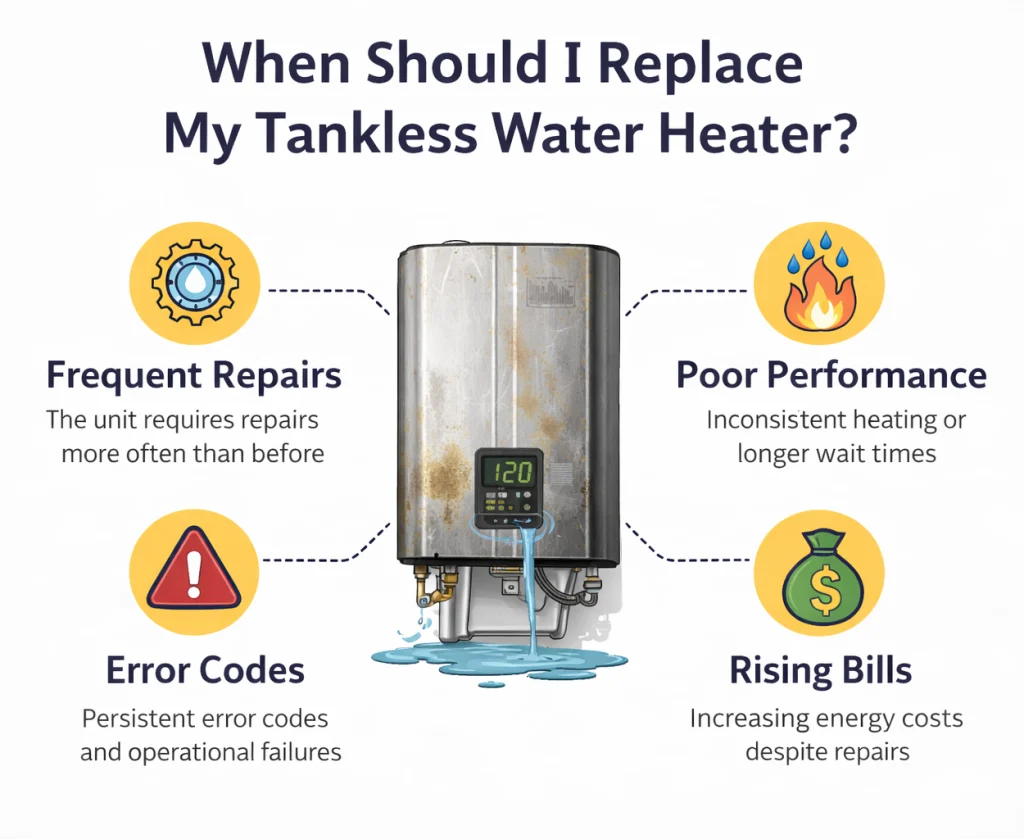
Usually, you should replace your instantaneous water heater when:
Replacing before full failure avoids cold showers and emergency call-outs. It also lets you upgrade efficiency instead of scrambling.
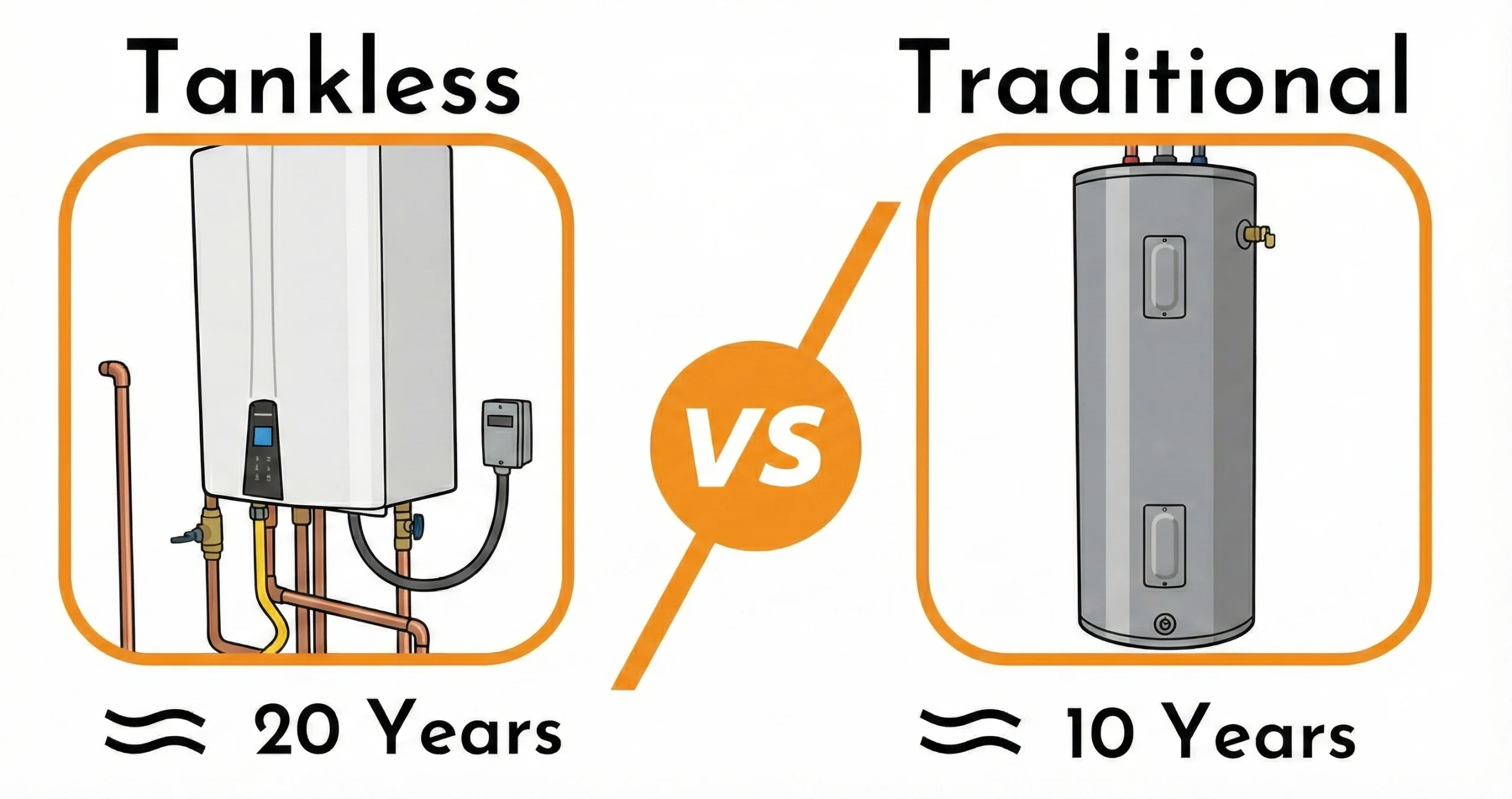
Here’s the simple breakdown of tank vs tankless water heater longevity:
The difference comes down to corrosion and prolonged exposure to constant heat. Tanks deal with both. Tankless systems largely avoid them.
Final Thought
Tankless water heaters are built for longevity, but their lifespan isn’t automatic. While most systems are designed to last 15 to 20 years or more, how long yours actually lasts depends on how it’s installed, how it’s used, and how well it’s cared for over time.
Regular maintenance, stable water pressure, and good water quality make a real difference in the typical lifespan of a tankless water heater. Skip them, and even the best unit can wear out early.
The main issues are mineral buildup, system overload, cold water bursts, vent blockages, ignition failure, and flame failure, usually fixed with basic maintenance or a quick professional check.
Mostly, you just need to flush out the mineral scale every six to twelve months. It’s a DIY job if you have the kit, but a plumber can do it fast. You should also check the intake filters for dust or gunk every once in a while. A quick yearly service call usually keeps the unit from acting up.
Not in the way a storage tank does. Since it heats water as it moves, you’ve got an endless supply. The only real “limit” is the flow. If everyone in the house tries to shower at once, the water might get lukewarm because the heater can’t keep up with that much volume.
You’ll usually get a solid 15 to 20 years out of one. That’s way better than the old-school tanks that rust out fast. Just don’t skip the descaling, or it’ll die early.
Yes. They save more because they only heat when you turn the knob. With them, you will never pay to keep a massive tank of water hot all day while you’re at work. That means no wasting energy.
They do. If your pressure is too low, the heater might not even fire up. If it’s too high, you’ll probably need a regulator so you don’t blow out the internals.
We strongly believe it’s the way to go. A pro knows how to handle the gas lines and venting so you don’t have issues later. Plus, doing it yourself usually kills the warranty.
Quick Answer Yes, instant water heaters are safe when installed and used properly. Modern ones come with pre-installed safety features […]
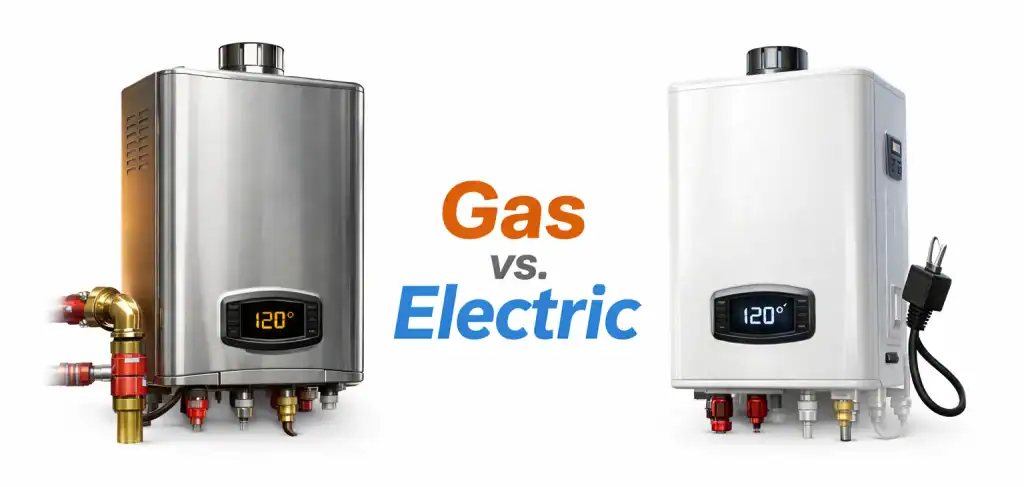
Hot water feels simple. You turn the tap and expect warmth, every time. But behind that moment is a system […]
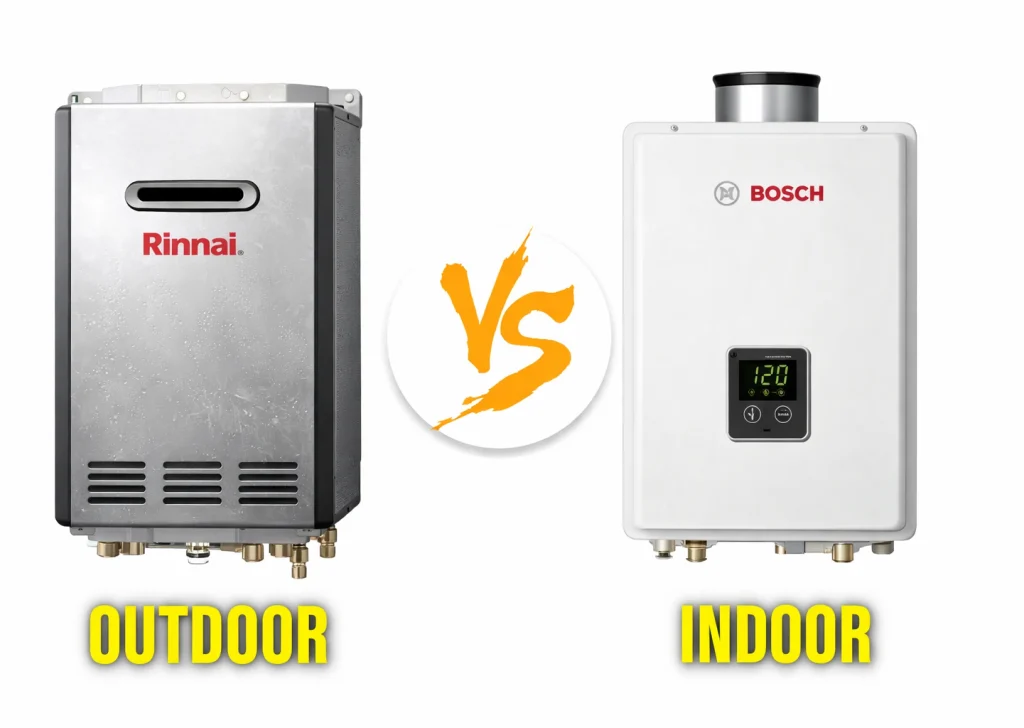
Quick answer The difference between indoor and outdoor tankless water heater setups comes down to placement and protection. Indoor units […]
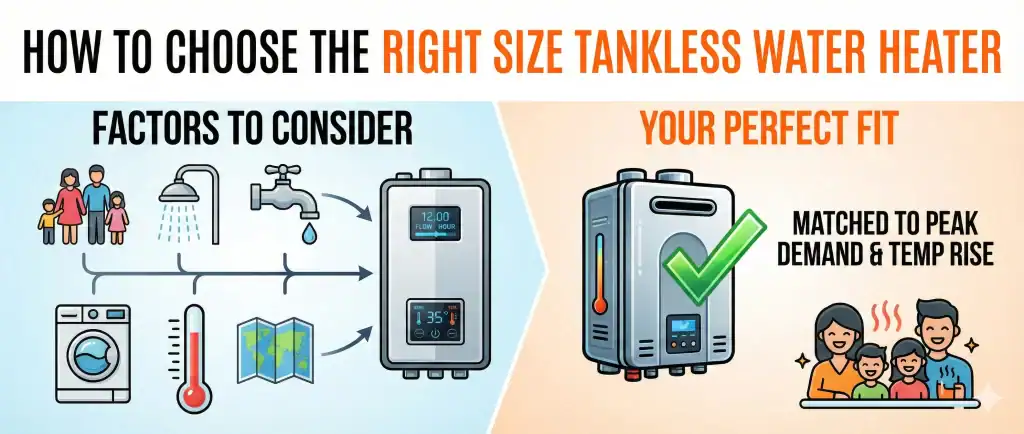
Quick Answer: Continuous flow (tankless) water heaters are now the standard choice for modern Australian homes. They offer the luxury […]



Our energy efficiency experts are here to answer all your questions and guide you through the products, rebates, and installation process.

Upgrade now, pay later with