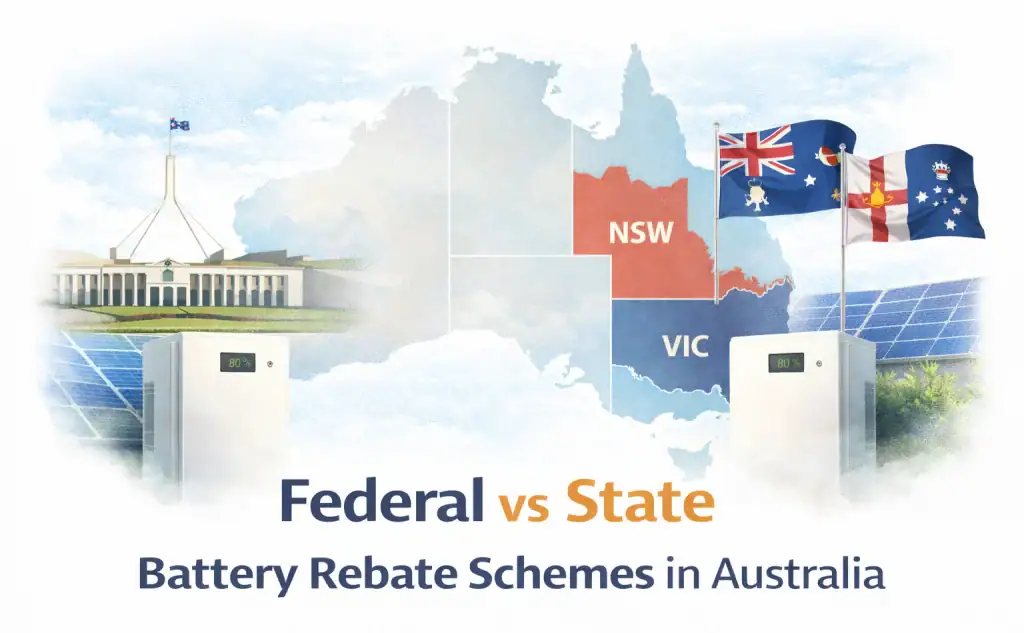
Home batteries are becoming an increasingly common part of Australian households. When paired with solar, they help you store excess […]
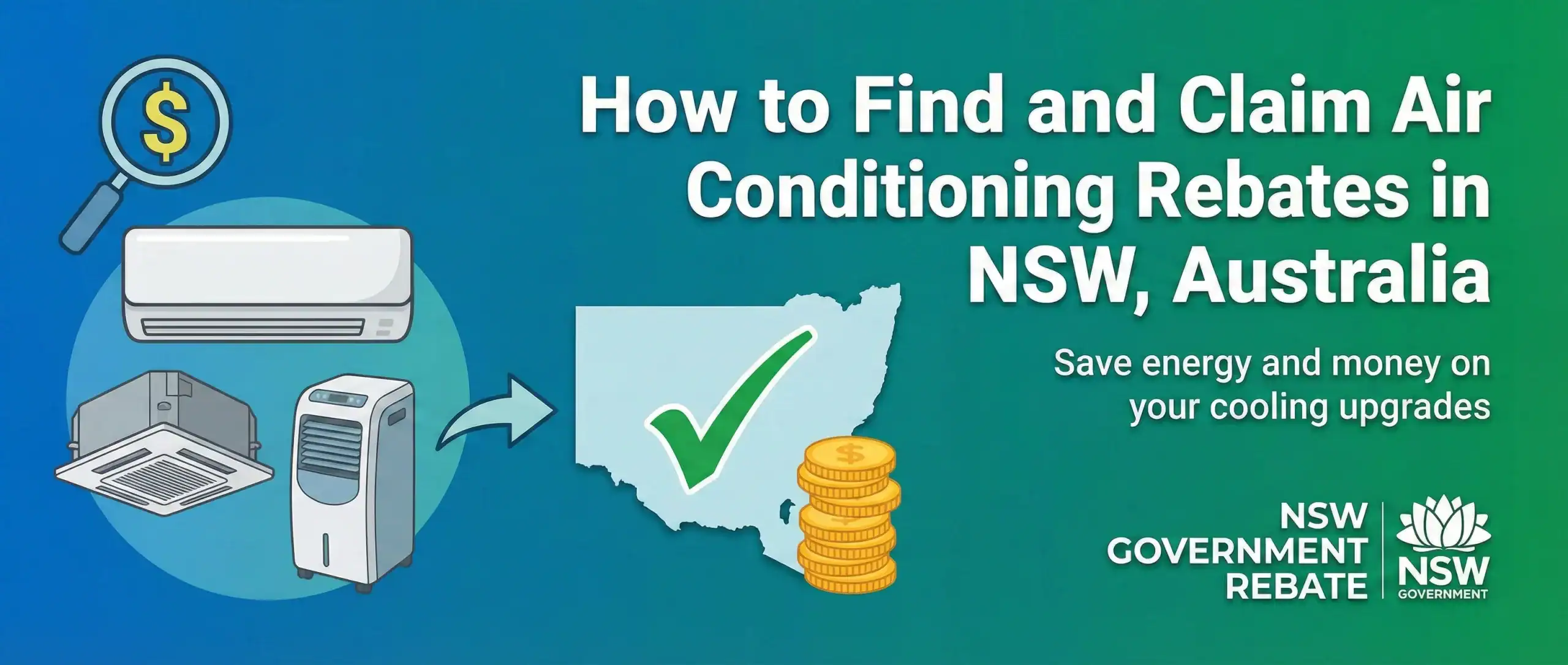
Managing the heat in New South Wales can be a struggle, especially when power bills start to rise. Air conditioning is a necessity for many, but the cost of running an old, rattling unit is a heavy burden on the wallet.
That is why air conditioning rebates exist in NSW. These incentives help locals switch to smarter, greener cooling. The state is pushing for better energy efficiency to lower the strain on the grid. This guide will help you spot the right deals and claim your savings.
A rebate is essentially a financial nudge from the government. It encourages you to ditch the energy-guzzlers. In NSW, these aren’t always “cash back” offers. Most work through energy certificates. Think of them as credits for saving carbon.
The core goal of these programs is to modernise homes across the state. By using less power, we reduce the need for massive infrastructure upgrades. It’s a win for the environment and a win for your bank account.
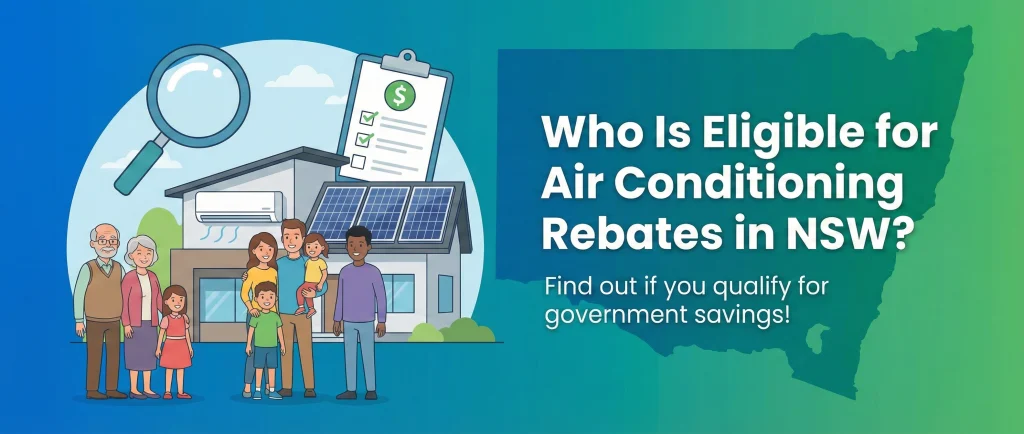
Not every home is the same, and neither are the rules. Most homeowners and owner-occupiers are at the front of the line. If you live in the house you own, you likely qualify for the main schemes.
Renters aren’t left out, but they need the landlord to sign off.
Since the unit becomes a permanent part of the property, the owner must agree to the installation. Low-income households and concession card holders often get extra help. There are specific streams designed to lower the entry cost for those who need it most.
If you live in a strata building or a high-rise, check your bylaws. While you might be eligible for the rebate, your building’s rules on external units might be a hurdle.
Remember: Eligibility rules vary depending on the rebate program.
There isn’t just one single bucket of money. Different systems attract different levels of support.
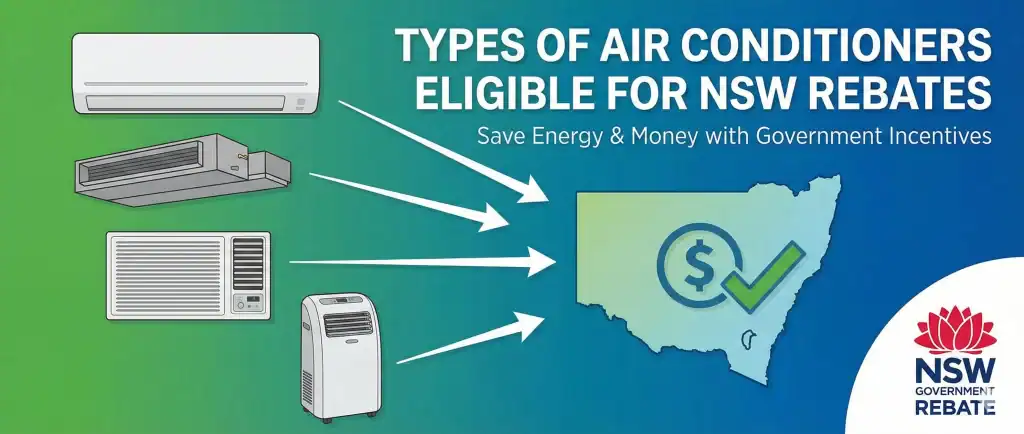
1. Split Systems: These are the most common. If you are putting a unit in a single room, look for high star ratings.
2. Ducted Systems: These are larger jobs. Because they use more power, the potential for energy savings is huge.
3. Replacements: Many programs focus on “swapping.” If you are replacing an old, inefficient unit with a 5-star model, the rebate is often higher.
The heavy hitter in NSW is the Energy Savings Scheme (ESS). This is a certificate-based program. While the state government sets the rules, private companies (Accredited Certificate Providers) do the legwork.
There is a difference between state and federal support. Most air-con specific deals are state-run. Federal incentives usually focus on broader solar or whole-home upgrades.
You can’t just buy the cheapest unit at a hardware store and expect a rebate. The system must meet strict standards.
Warning: Installing a non-eligible system can void rebate eligibility.
Savings vary wildly. For a small split system, you might see a discount of a few hundred dollars. For large ducted systems or multi-unit upgrades, the savings can climb much higher.
The value depends on how much energy the new system saves compared to the old one. The more “efficient” the jump, the bigger the rebate.
Quick Answer: Savings depend on efficiency, system type, and installation method.
Tip: Never rely on verbal promises;s confirm rebate details in writing.
The good news? You don’t usually have to file piles of paperwork with the government.
Remember: Installers usually manage the rebate process on your behalf.
Avoid these traps: Using a “handyman” instead of an accredited installer is the fastest way to lose your discount. Buying a unit that isn’t on the approved list is another common error.
Also, don’t assume you can claim the rebate after you’ve already paid full price and installed the unit yourself. The paperwork must be done at the time of sale.
Warning: Rebates usually can’t be claimed after installation errors.
Yes. This isn’t just about a standard electrical license. An installer must be part of the Accredited Certificate Provider (ACP) network or work with one. Without this link, they cannot “create” the value that turns into your discount.
Good to Know: Only approved installers can process energy certificates and rebates.
No. As long as a licensed pro installs it, your manufacturer’s warranty remains solid.
Yes, landlords can often claim these to improve their investment properties.
Usually, yes, provided the property is in NSW and meets the energy criteria.
If you have a signed contract, you are usually safe, but always check the “sunset clauses” of the current offer.
Yes. If you’re replacing an old unit or adding a new energy‑efficient component, you may still qualify, as long as the installer is accredited and the new equipment meets the program’s energy standards.
Yes. It’s a good idea to keep your quote, installation certificate, and any rebate forms. These documents may be needed if there’s a warranty claim, program audit, or future proof-of-purchase verification.
Yes. Property owners with more than one eligible NSW property can apply for rebates on each one, as long as every installation is done by a licensed installer and follows the program rules.
Home batteries are becoming an increasingly common part of Australian households. When paired with solar, they help you store excess […]
Air conditioning rebates in New South Wales are often misunderstood. Many people assume they work like traditional government grants: apply, […]
Electricity prices across NSW have been rising, with some households seeing bill increases of up to 9.7%. Most people feel […]
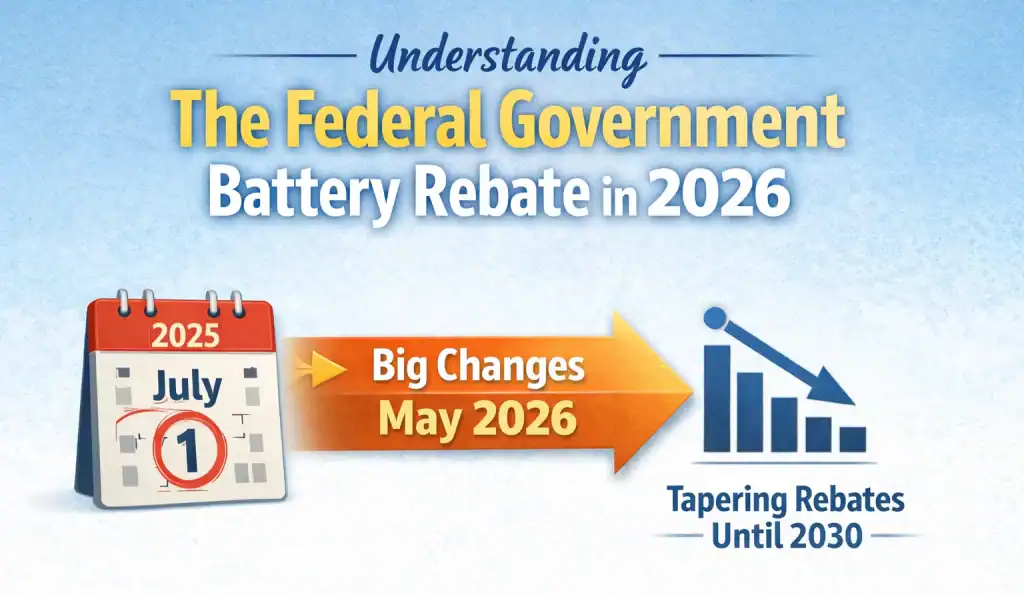
Electricity bills continue to rise, and more Australians are looking for ways to save. One of the biggest opportunities right […]


Our energy efficiency experts are here to answer all your questions and guide you through the products, rebates, and installation process.

Upgrade now, pay later with