Quick Answer Yes, instant water heaters are safe when installed and used properly. Modern ones come with pre-installed safety features […]
Quick answer
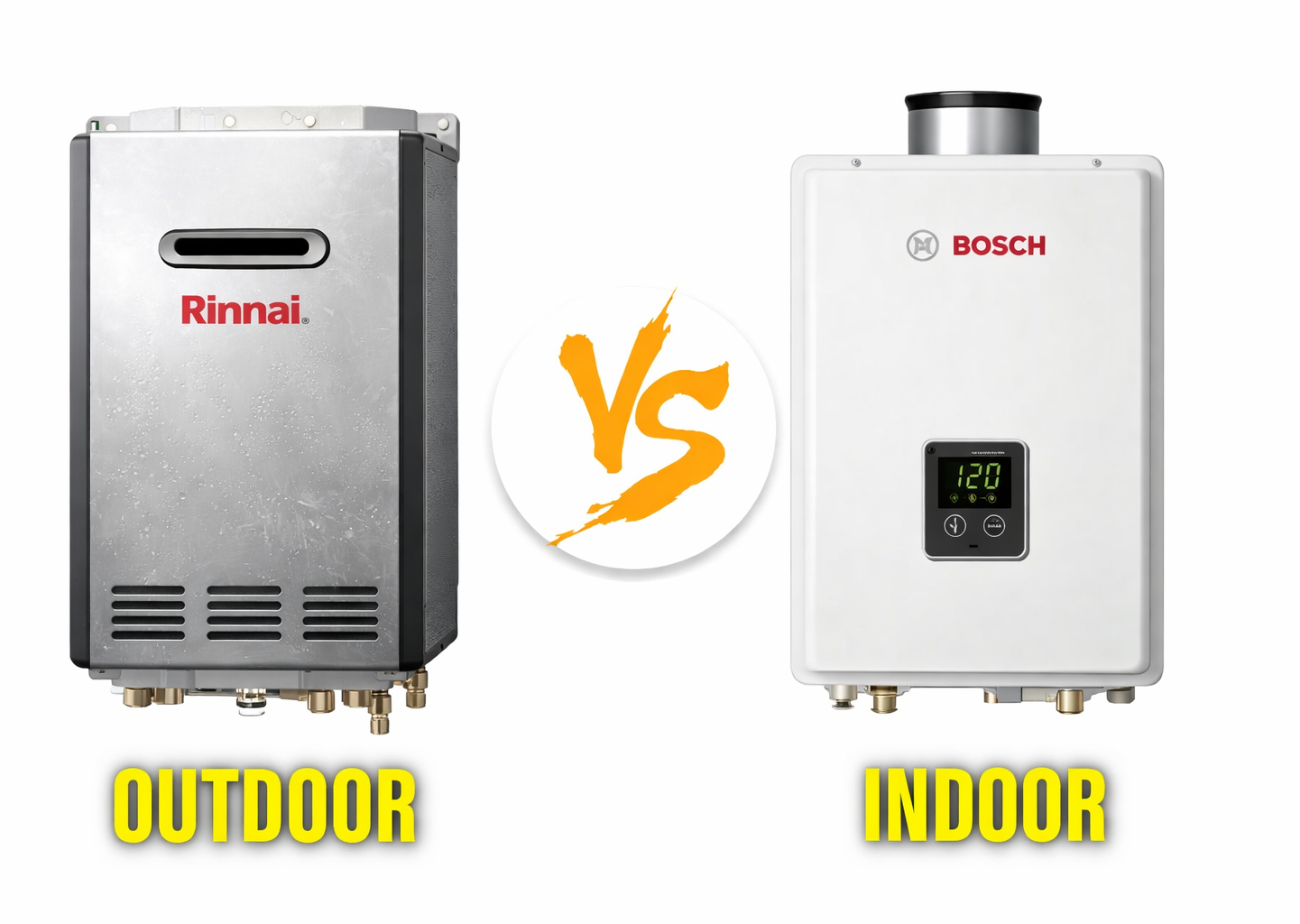
The difference between indoor and outdoor tankless water heater setups comes down to placement and protection. Indoor units are tucked inside, providing great protection but requiring a complex venting process to send exhaust outside. Outdoor units mount on your exterior walls. They face the wild weather but offer a much simpler installation that skips the need for expensive chimneys or flues.
When upgrading a water heater, most homeowners hit the same fork in the road: a tankless water heater, indoor or outdoor.
On paper, both promise endless hot water and lower energy use. However, in real life, placement makes a big difference. It dictates your installation costs and how long the unit stays healthy.
Unfortunately, most people don’t know what to prioritise between the tankless indoor vs outdoor water heater setup. Most assume all systems are the same as long as they deliver hot water.
This assumption sees most people ending up with higher costs, inconvenient maintenance, or a unit that doesn’t handle climate well.
If choosing between an indoor vs outdoor on-demand water heater gives you trouble, this guide is here to help. It will explain how these two systems compare and ultimately help you pick the best one for your location, household, and daily hot water needs.
When upgrading your hot water for the first time, most people ask, “Which is better, an indoor or an outdoor tankless water heater?” The straightforward answer is that the best option depends on your use case and your local weather.
🟩 Best for New Builds
If you are starting from scratch, an indoor unit is the way to go. You can plan the indoor tankless water heater ventilation needs early.
It is easier to run the proper gas lines and stainless steel flues while the walls are open. Since the unit lives inside, you won’t have to worry about the home’s exterior look.
🟩 Best for Cold Climates
If you live in cold areas like Tasmania and are stuck between indoor vs outdoor tankless water heaters for cold climates, the indoor model is a clear winner. It stays tucked away in a heated space.
This avoids the outdoor tankless water heater freezing issues that can crack a heat exchanger in a single night.
🟩 Best for Warm Climates
In the south, an outdoor tankless water heater for home use is often the best. You don’t have to worry about venting or stealing closet space. These units thrive in mild weather and are much cheaper to install since they don’t need a chimney.
🟩 Best for Tighter Spaces
When every square foot counts, go for the outdoor models, especially if you have a balcony. If not, look for a small “point-of-use” indoor model. Moving the heater to an exterior wall frees up an entire utility closet for storage.
Indoor systems usually have more installation requirements because of venting and clearances.
Outdoor units need fewer parts but must be securely mounted and protected. Here is a quick breakdown of how indoor vs outdoor tankless water heater installation requirements compare:
🟩 Indoor tankless water heater installation requirements: If you decide to work from the inside, you have to take into consideration the space requirements for an indoor tankless water heater.
It needs at least 12 inches of clearance at the top and bottom, and about 6 inches on the sides to “breathe” and stay accessible for repairs. You must also consider the indoor tankless water heater ventilation needs to ensure safety.
The venting requires a dedicated exhaust path to the outside, often using specialised stainless steel or PVC pipes, depending on the model’s efficiency rating.
Without a proper vent, dangerous fumes can linger in your home, so getting this part right is non-negotiable for a safe house.
🟩 Outdoor tankless water heater installation requirements: These units are built to be self-sufficient on an exterior wall.
The space requirement for outdoor tankless water heater wall mounting is usually minimal, though the wall must be sturdy enough to handle the weight and heat. The best part is that the outdoor instantaneous water heater ventilation needs are simple.
Since the unit lives in the open air, it vents its exhaust directly through a front-facing grate. You won’t have to worry about cutting massive holes in your roof or running expensive pipes through your attic.
Tip: Always confirm the local code before installation. Some towns have very specific rules about how close an outdoor vent can be to a window or an air intake.
When comparing indoor vs outdoor tankless water heaters for chilly areas, the indoor tankless water heater for winter climates takes the crown. It is the safest bet because it is physically shielded from the biting wind and sub-zero nights.
While modern outdoor models are tough, they are inherently more vulnerable when the temperature drops.
Here is why an outdoor instantaneous water heater may struggle in cold weather:
When comparing the maintenance costs for indoor vs outdoor on-demand water heaters, the outdoor model needs more of your attention. It is always exposed to the wild Aussie weather, so it faces a tougher life than one tucked away in a dry laundry room.
While both types require regular descaling and filter cleaning to handle our often “hard” water, the maintenance cost of indoor vs outdoor tankless water heaters starts to show in the physical upkeep:
To extend the reliability of your indoor or outdoor tankless system, make sure you’re flushing the unit to remove mineral scale. If you skip this, the heat exchanger has to work harder, which can lead to a shorter lifespan and higher gas bills.
Indoor units are usually slightly more efficient than outdoor instantaneous water heaters, and it is easy to see why. For one, the indoor model is physically shielded by your home’s insulation, meaning it doesn’t lose much heat to the surrounding air.
When the air inside your house is at a steady room temperature, the unit’s internal components stay warm, allowing it to reach your target heat faster and with less fuel.
Outdoor units are still incredibly efficient by modern Australian standards, but they do face a bit more of an uphill battle. Because they are hanging on an exterior wall, they are constantly exposed to the ambient temperature.
If it’s a cold night in Melbourne or Adelaide, the unit has to work harder to heat up its own internal pipes and heat exchanger before it can even get to work on your water.
This creates a tiny amount of heat loss that indoor models simply don’t have to deal with.
To get the most out of whichever system you choose, keep these factors in mind:
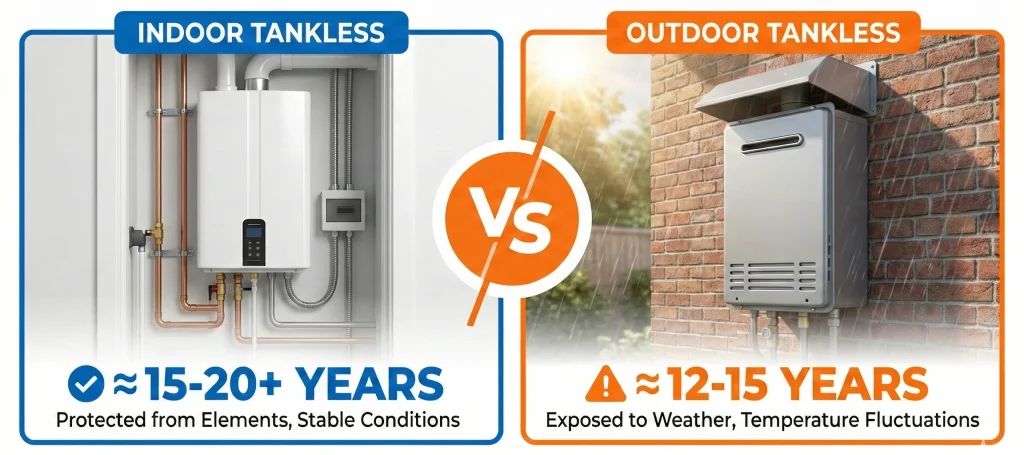
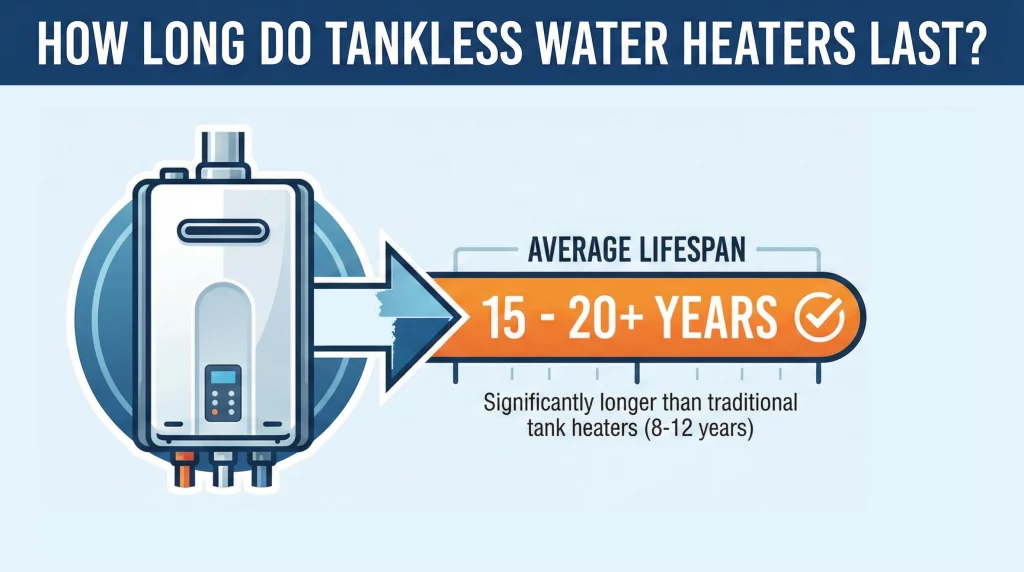
The lifespan of an indoor vs outdoor tankless water heater varies by exposure. Indoor units often last 20+ years. Outdoor units average 12–15 years with protection. Weather, freezing, and airflow affect durability.
Typical lifespan
Safety is the biggest priority when installing an indoor or outdoor tankless water heater. Indoor tankless water heater safety concerns focus on clearance and ventilation.
You can’t just tuck these units into a tight cupboard and forget about them.
They need a specific amount of breathing room, usually 300mm at the top and bottom, to keep the heat from building up and to ensure a plumber can actually reach the parts for a service.
Proper airflow prevents exhaust buildup. Because the unit burns gas, it produces combustion by-products. If your venting isn’t spot on, you risk carbon monoxide leaking into your home.
Under Australian Standards (AS/NZS 5601.1), indoor units must be room-sealed or have a dedicated flue to carry those fumes safely outside.
Outdoor units face outdoor tankless water heater exposure risks like moisture and debris.
Rain, dust, and even local pests like spiders building nests in the vents can cause the system to fail or corrode. While they don’t need complex indoor flue pipes, they must be mounted away from windows so the exhaust doesn’t drift back into your living room.
Pro Tip: If you’re in a tight apartment, look for “recess boxes.” These allow an outdoor unit to sit flush inside the wall, giving you the best of both worlds—saved space inside and a clean look outside.
To help you understand the comparison between these two setups better, here is a quick overview of an indoor tankless water heater compared to an outdoor one.
| Feature | Indoor Tankless Water Heater | Outdoor Tankless Water Heater |
| Venting Needs | Complex flues through the roof/wall | Self-venting (built-in grates) |
| Climate Fit | Ideal for cold, frosty regions | Best for mild or tropical areas |
| Space Impact | Uses a closet or utility room | Frees up all internal storage |
| Install Cost | Higher (pipes + labor) | Lower (no chimney needed) |
| Weather Risk | Safe from wind and rain | Risk of freezing or corrosion |
| Average Lifespan | 20+ years | 15–20 years |
Choosing between an indoor and an outdoor tankless water heater usually comes down to your home’s layout and the local weather. The main difference between indoor and outdoor tankless water heater setups is where they breathe and how they handle the elements.
Indoor units are tucked inside, providing great protection but requiring a complex venting process to send exhaust outside. Outdoor units mount on your exterior walls. They face the wild weather but offer a much simpler installation that skips the need for expensive chimneys.
It really depends on your local weather. If you’re in a frosty area, an indoor instantaneous water heater is the safest bet to avoid damage. In warmer spots, putting it outside is usually the best tankless water heater location because it saves room and skips the vent setup.
Definitely not. These units aren’t built to fight off rain or humidity. If you try it, the motherboards will likely fry. For an exterior installation, you need a unit specifically built with outdoor tankless water heater weather protection in mind.
In an indoor vs outdoor tankless water heater noise comparison, the outdoor unit wins for peace and quiet. It keeps the mechanical clicks and fan hum outside. Indoor units are mostly quiet but can be a bit chatty if they’re right next to your bedroom.
Keep it healthy by using a recess box to shield it from the wind. Also, don’t forget to wrap the pipes. Good insulation is the best way to stop outdoor tankless water heater freezing issues before they start during a cold snap.
Never. This is a major indoor tankless water heater safety concern because outdoor units vent exhaust right from the front. If you put one inside, carbon monoxide will build up fast. It’s dangerous and against the law.
Yes, they do. Since they face the elements, it’s smart to check for debris, leaves, or bird nests around the unit. Make sure the exterior casing stays clean, and the air intake isn’t blocked. A little seasonal maintenance goes a long way in keeping your outdoor tankless water heater running efficiently.
Avoid it if you’re not fully trained and licensed. Professional installation is strongly recommended because tankless units require precise gas or electric connections, proper venting, and sometimes water pressure adjustments. Without proper knowledge, you might compromise safety, efficiency, and warranty.
Quick Answer Yes, instant water heaters are safe when installed and used properly. Modern ones come with pre-installed safety features […]
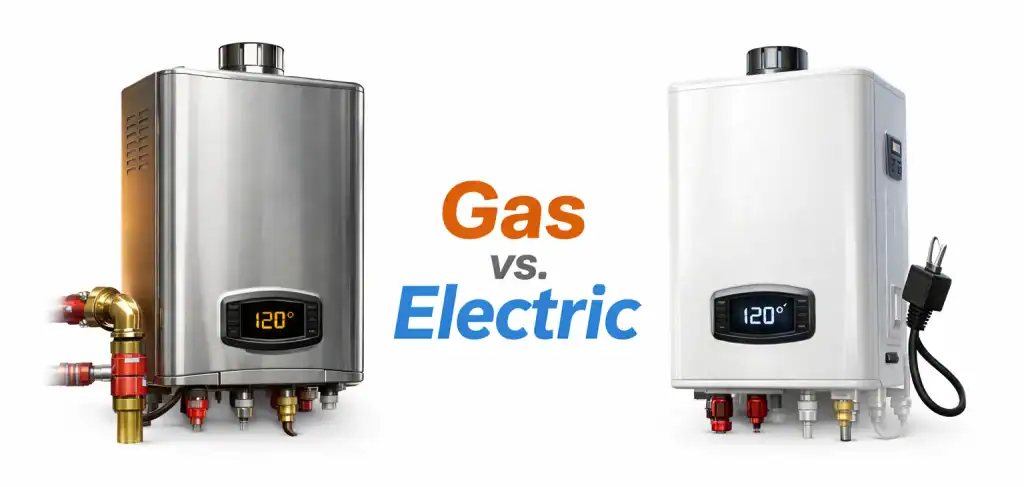
Hot water feels simple. You turn the tap and expect warmth, every time. But behind that moment is a system […]
Quick Answer The average life expectancy of a tankless water heater falls anywhere between 15 and 20 years, and often […]
Quick Answer: Continuous flow (tankless) water heaters are now the standard choice for modern Australian homes. They offer the luxury […]



Our energy efficiency experts are here to answer all your questions and guide you through the products, rebates, and installation process.

Upgrade now, pay later with