
Normal Range: $1,850 – $30,000 Air conditioning and climate control service costs in Australia depend heavily on your specific project, […]
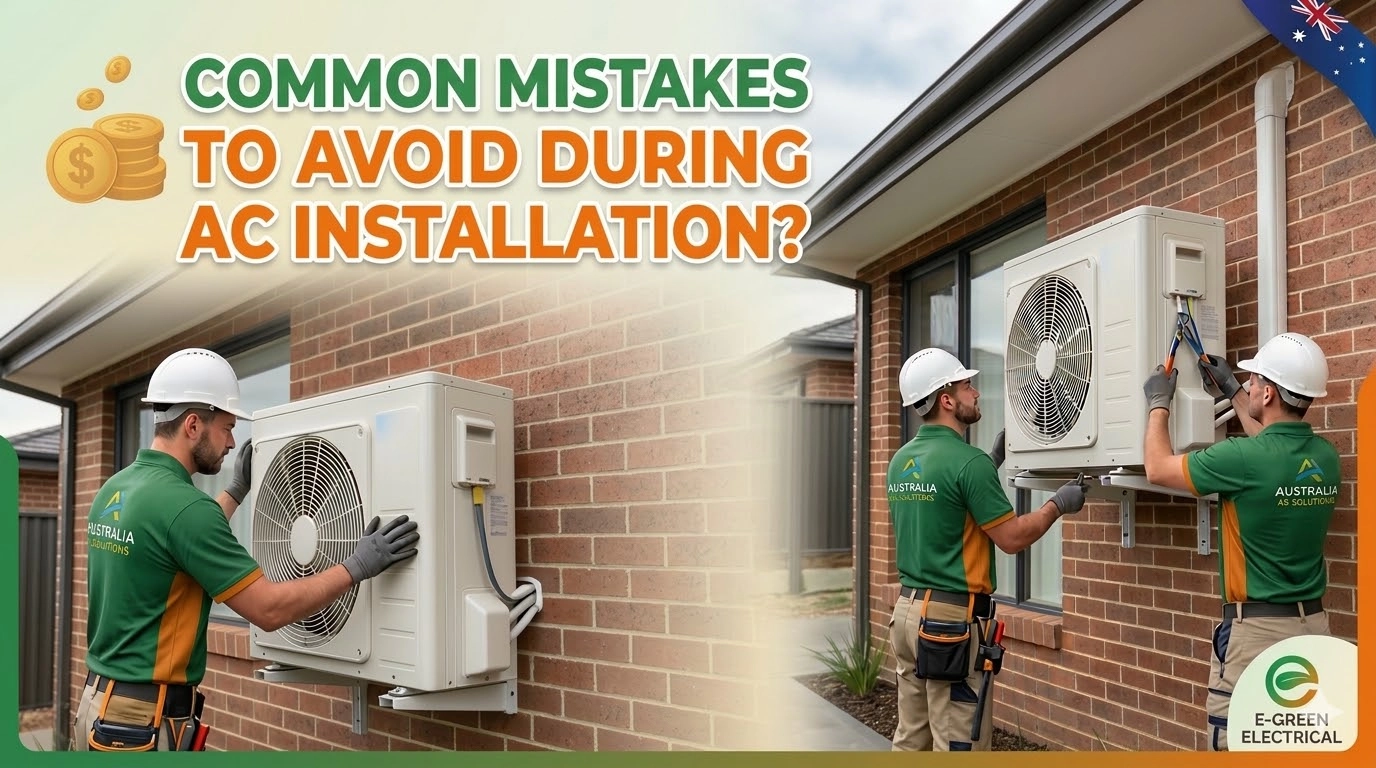
Designing a home climate system is an exercise in precision. When we talk about installing a new air conditioner, we aren’t just “mounting a box.” We are integrating thermodynamics, high-voltage electricity, and pressurised gas into the very bones of your home.
In 2026, the cost of a professional installation in Australia reflects this complexity. You might see a quote for $1,550 for a basic bedroom unit, or you might be looking at $30,000 for a high-end, zoned ducted setup.
But the true price isn’t just that upfront number; it’s the efficiency and the “peace and quiet” you experience over the next decade.
To ensure your investment doesn’t turn into a series of expensive service calls, you need to understand the following 7 subtle errors that even experienced builders can overlook.
There’s a persistent psychological urge to “over-spec” our appliances. We often think that a 7.0kW unit will cool a room faster than a 5.0kW unit.
In reality, air conditioning is a delicate balance of temperature and humidity control.
When a system is too large for its space, it enters a cycle called Short-Cycling. It hits the target temperature in minutes and shuts down before it has the chance to actually extract moisture from the air.
The result?
A room that feels cold but “sticky” or damp. Plus, the constant surging of the compressor as it toggles on and off consumes far more electricity than a smaller unit running at a steady, efficient pace.
Don’t let an installer “eyeball” it; they should perform a heat load calculation that accounts for your window glazing and ceiling height.
With professional labour rates for HVAC technicians now averaging between $80 and $110 per hour, the temptation to use a “handyman” for a cash job is high.
But here is the warning: under Australian law, handling refrigerant gas is a strictly regulated trade.
Choosing an unlicensed installer is a mistake that stays hidden until something breaks.
Most major manufacturers explicitly state that their 5-year warranty is void if the system wasn’t commissioned by a technician holding a valid ARC Refrigerant Handling Licence.
If a component fails in year three, you’ll be paying for the entire repair yourself because of a shortcut taken on day one. Always verify an installer’s LHL (Licence Number) before they touch a ladder.
The outdoor compressor is the engine of your AC. It is responsible for dumping the heat it has collected from inside. Too often, these units are tucked into tight side-passages or hidden behind dense landscaping just to keep them out of sight.
This creates “recirculation,” where the unit “re-breathes” its own hot exhaust air. In a 40°C Australian summer, a cramped compressor can reach internal temperatures of 60°C.
It works 30% harder, your power bill spikes, and eventually, the thermal safety switch trips exactly when you need the cooling most. You should maintain a 300mm to 500mm “buffer zone” around the unit to keep it running lean.
A modern inverter air conditioner is a sophisticated piece of electronics. It places a unique load on your home’s power supply. A common mistake during installation is “piggybacking” the new AC onto an existing power circuit shared with other household appliances.
Under the 2026 Australian Wiring Rules, a fixed air conditioning unit must have its own dedicated circuit. Sharing a circuit with a toaster or vacuum cleaner will lead to “nuisance tripping.”
If your home still uses those old ceramic fuses, you really need to budget for a switchboard upgrade (typically between $800 and $2,200) to ensure the new system doesn’t become a fire hazard.
Air conditioners pull liters of water from the air every hour. This water has to go somewhere. One of the most frequent installation errors is failing to provide an adequate “fall” or downward slope for the drain pipe.
Water doesn’t run uphill. If a drain pipe is level or has a slight “up-kink,” the water backs up into the indoor unit’s tray. Eventually, it overflows, leading to mould growth inside your walls or water damage to your plaster ceilings. In ducted installations, a failure in the secondary safety tray can result in a collapsed ceiling. It’s a mess that’s entirely avoidable with a simple spirit level and a bit of forethought.
For those investing in whole-home ducted systems, the unit itself is only half the story. The ductwork is the “veins” of your home’s climate control. A major mistake is selecting low-grade ducting with minimal insulation (R0.6 or R1.0).
In the extreme heat of an Australian roof cavity, temperatures can hit 60°C. If your ducts are poorly insulated, you can lose up to 30% of your cooling power before the air even reaches the vent. Insist on R1.5 or R2.0 rated insulated ducting.
Also, make sure the copper refrigerant lines are “vacuumed” for at least 30 minutes during installation; any moisture left in those lines will turn into acid and eat the compressor from the inside out.
Finally, where you put the indoor head unit dictates how the air actually flows. Many installers place units where they are easiest to pipe, rather than where they distribute air best.
A unit placed directly above a doorway or in a narrow hallway will struggle to push air into the far corners of a room. You want a natural circular airflow. Placing the unit centrally on a long wall and ensuring it has at least 150mm of clearance from the ceiling allows it to “inhale” the warm air and distribute the cooled air effectively.
This results in a room that cools evenly, without the “hot spots” that characterise a poorly planned installation.
This checklist is designed to directly counteract the seven mistakes above. Use these points as your on-site verification guide to ensure the technical integrity of the job.
Without a proper load calculation (taking into account windows, insulation, and orientation), you risk a unit that cycles too often (oversized) or runs forever without cooling (undersized). Both destroy the unit’s lifespan and efficiency.
Moisture left in the lines mixes with refrigerant to form hydrochloric acid, which corrodes the compressor from the inside out. This is a “hidden” mistake that usually kills units 2–3 years after the warranty on labour expires.
Water doesn’t run uphill. Any “up-kink” or level section in the pipe creates a reservoir for mould and algae. Eventually, this creates a blockage that forces water to leak out of the indoor unit and down your drywall.
Only if the screen has at least 50% open area and maintains the manufacturer-specified clearances. If the hot air can’t escape, the unit will “short-circuit” its own airflow, causing it to overheat and shut down in peak summer.
AC units have high “inrush” currents and steady loads that standard household circuits aren’t designed for. Using a standard circuit can overheat old wiring, posing a genuine fire risk and violating modern Australian safety standards.
No. In a 60°C roof cavity, R1.0 allows too much heat transfer. You are effectively paying to cool your attic rather than your home. R1.5 or R2.0 is the standard for 2026 for actual comfort and cost-saving.
The unit “inhales” warm air from the top to cool it. If it’s mounted too close to the ceiling, the airflow is restricted. This makes the unit significantly noisier and forces the motor to work harder, reducing its efficiency.
Normal Range: $1,850 – $30,000 Air conditioning and climate control service costs in Australia depend heavily on your specific project, […]

Cheap air conditioning quotes have a strange pull. You see a low number and feel relief straight away. With summers […]
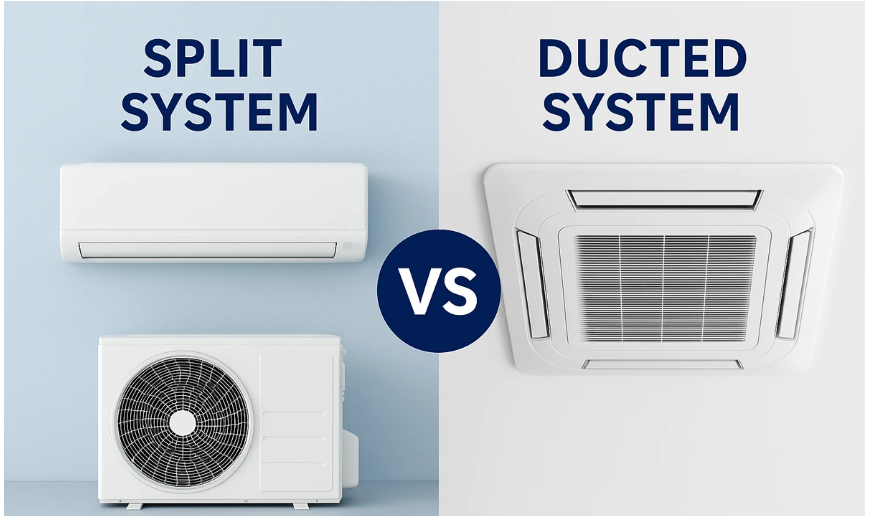
When it comes to keeping your home comfortable, the air conditioning choice is a big one. The main reason is […]

Same Name, Different Game: Which One Keeps Its Cool? 1. The Tale of Two Titans (Mitsubishi Electric vs Mitsubishi Heavy […]









Our energy efficiency experts are here to answer all your questions and guide you through the products, rebates, and installation process.

Upgrade now, pay later with