Home batteries are becoming an increasingly common part of Australian households. When paired with solar, they help you store excess […]
The summer in South Australia hits really hard.
When temperatures increase to 40°C, it becomes necessary to switch on the air conditioner.
But that relief comes with a price. South Australians are already facing some of the highest power bills in the country, with quarterly averages sitting around AUD 540-AUD 550.
Now, if you have an inefficient and old air conditioner, it sucks energy, spikes usage and pushes costs even higher. It simply turns comfort into an expense.
Thankfully, you don’t have to sit back and take it. South Australia’s Retailer Energy Productivity Scheme (REPS) makes energy-efficient upgrades more affordable.
In this guide, we’ll break down what REPS entails, how much you can save, and more.
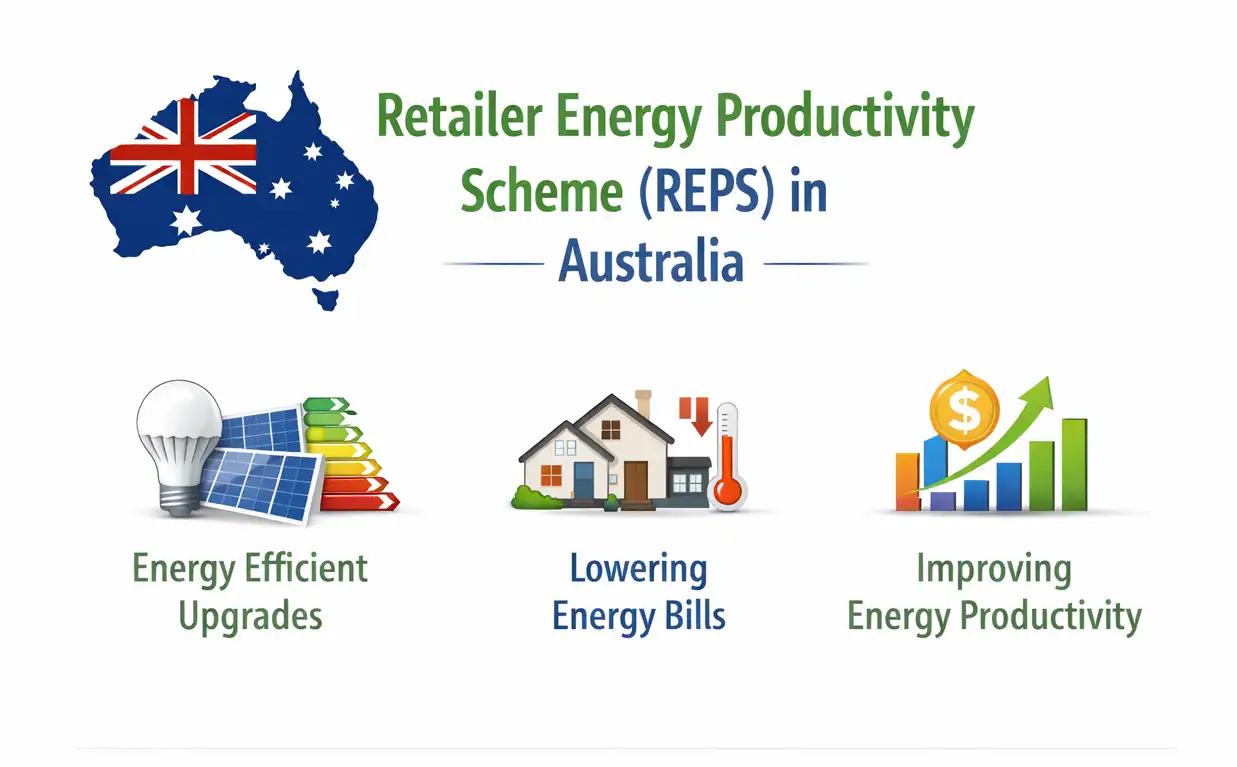
REPS is basically a program that helps South Australians reduce their electricity usage and save money while upgrading to more efficient appliances. If REPS sounds familiar, that’s because it replaced the older Retailer Energy Efficiency Scheme (REES).
Same idea but updated structure and broader focus.
Who’s behind it?
Well, it’s the energy retailers operating in South Australia.
What happens is that the government tells retailers to help customers use less energy, and they do it by teaming up with accredited installers. You don’t deal with the government directly.
You simply go through a certified installer, and the rebate shows up in your quote. It’s that easy.
Why bother?
Here are the reasons to upgrade to efficient appliances:
For air conditioning, REPS can reduce the cost of:
But how much rebate do you get?
It depends, but most South Australians see savings ranging from AUD 340 for a small split system to over AUD 1,000 for a large reverse cycle setup. The difference here comes down to several factors, such as:
Bigger systems that cool more space use more energy, so replacing them with an efficient model earns higher savings.
Swapping out an old electric or gas system usually qualifies for a bigger rebate than just installing a brand-new unit in a room that didn’t have one before. The scheme rewards upgrades that reduce energy consumption the most.
A higher star rating saves power and increases your rebate. The better the performance, the more incentives are applied.
REPS rebates are applied by accredited providers and small differences in how they price systems or value REPS certificates can affect the final discount.
Here is the table to give you an idea of typical rebates for various types of air conditioners:
| System Type | Typical Capacity (kW) | Scenario | Approx. REPS Rebate |
| Small split system | 2-3 kW | Bedroom or small office | AUD 300-AUD 500 |
| Medium split system | 3.5-5 kW | Living area or combined spaces | AUD 500-AUD 800 |
| Large ducted reverse-cycle | 6-10 kW | Whole-house cooling | AUD 1,000 |
| Replacement of the old, inefficient unit | Varies | Any type of swap for efficiency | Extra rebate applied |
Choosing the right system matters for both comfort and long-term costs. Here are the air conditioning options available:
REPS rebates are usable in most homes and business settings in South Australia. However, there are checklists that matter.
Here is an analysis that outlines who is eligible for the REPS rebate:
The property must be located in South Australia. It doesn’t matter that you are located in Adelaide, regional South Australia, or within the bush. As long as it is installed in South Australia, you will qualify.
The upgrade has to be done by a provider who is REPS-accredited.
The people who are accredited know the program in and out. This simply means that the rebate will be taken care of, and the system is in compliance.
The new air conditioner needs to satisfy certain standards for efficiency; otherwise, the energy-saving objective of REPS will not be achieved.
Most new models of split systems or reverse cycle-ducted systems satisfy the criteria, but specifications need to be checked before purchase.
When you’re upgrading from an older system, the old unit has to be decommissioned.
This ensures that the upgrade actually helps the system consume less power and continue to be an effective part of the program.
It may be a small act, but it’s significant.
Obtaining a REPS refund does not have to be confusing. Here are the simple steps you need to follow:
You will need help from someone approved through the REPS program.
They are installers or activity providers that are listed through the Essential Services Commission of South Australia (ESCOSA), or your energy retailer.
They are knowledgeable about the regulations and can inform you about rebates that you can avail of.
After you have identified your provider, you can discuss what you would like to achieve. This can be, for instance, the purchase of a new reverse-cycle air conditioner to replace the old one you have.
They will also determine if your proposed system satisfies the REPS requirements and the rebate amount you qualify for. It’s worth asking directly.
For example, “What rebate or discount would apply here?” and “Can you show me that in the quote?”
Before work starts, you may need to sign a simple REPS activity form.
This usually includes a customer information statement that shows you understand how the rebate works and confirms your address and installation details.
Your personal installer carries out the work and takes care of most of the paperwork.
This is why having an accredited supplier is so important. Your supplier will check that your work is done within the guidelines and submit what is needed to the retailer and the REPS database.
After getting your new air conditioner and enjoying the REPS rebate, there are a few simple things you can do to save even more.
It might sound obvious, but a lot of people get this wrong.
A tiny split system is simply not up to the task in a big living area, whereas having a huge ducted system for only one bedroom is just overkill.
You need something that matches your home and also fits within your lifestyle.
If you’re replacing an air conditioner, maybe check your insulation, windows, or lighting at the same time. Small things like sealing gaps or changing to LED bulbs don’t cost much.
What they do, basically, is just make life easier on your air conditioner and help you save money on your bills in the process.
Leaving it running all day doesn’t make sense either.
Turn off windows, doors, and set the temperature. Usually, temperatures around 24°C are fine. Also, use timers if your unit has them. Filters are important too.
A dirty filter causes the air conditioner to consume more electricity, and that’s why you need to clean it.
Not every accredited provider handles rebates the same way.
Ask them to explain exactly what the REPS discount covers and compare quotes. Sometimes taking 10–15 extra minutes can save a couple of hundred dollars.
If your current air conditioning system is outdated, very loud, or costing you a lot on your electricity bills, an upgrade would be the best decision for you.
The best part about the REPS program, however, is that it reduces the cost of purchasing the new system.
An upgraded and energy-efficient system cools the place much better, consumes less and performs well even in the summers of South Australia. But remember, before you purchase, compare quotes, confirm accreditation and choose a system that fits your home.
You’re free to choose from brands that meet the minimum efficiency standards. Your installer can confirm which models qualify before you buy.
In most cases, you don’t wait at all. The rebate is applied as a discount when you purchase the system.
Yes. Small businesses operating in South Australia can qualify. This is especially if the upgrade is completed by an accredited provider and meets the program’s requirements.
REPS runs on an ongoing basis. However, rebate values can change over time and that’s why it’s best to confirm available discounts before committing to an installation.
Nothing changes for you. The rebate applies to the property and the installed system but not the homeowner or tenant.
Yes. The rebate only applies if an accredited installer completes the air conditioning upgrade.
Sometimes. You may be able to use REPS alongside other energy-efficiency programs, but it’s best to check eligibility before booking your installation.
Home batteries are becoming an increasingly common part of Australian households. When paired with solar, they help you store excess […]
Air conditioning rebates in New South Wales are often misunderstood. Many people assume they work like traditional government grants: apply, […]
Managing the heat in New South Wales can be a struggle, especially when power bills start to rise. Air conditioning […]
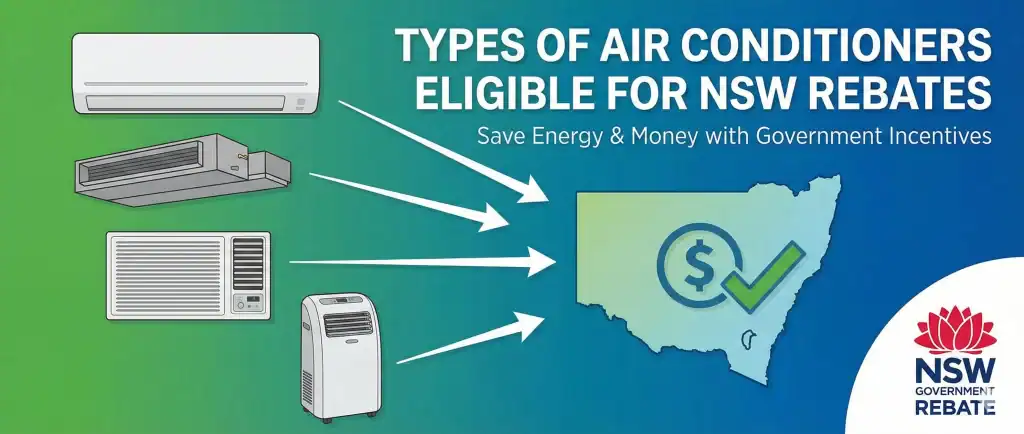
Electricity prices across NSW have been rising, with some households seeing bill increases of up to 9.7%. Most people feel […]



Our energy efficiency experts are here to answer all your questions and guide you through the products, rebates, and installation process.

Upgrade now, pay later with