
Quick Answer Yes, instant water heaters are safe when installed and used properly. Modern ones come with pre-installed safety features […]
Quick Answer
In Australia, the typical cost of a tankless water heater ranges from $1,500 to $4,500 for a standard supply and installation. Premium systems or complex electric conversions can increase the overall price of tankless water heater projects to $8,500+.
The final investment depends on system type (gas or electric), household hot water demand, installation complexity, and any required electrical or gas upgrades.
In Australia where close to 15%–30% of your total energy bills go into heating water, it’s easy to see why most of us are ditching the traditional storage hot water tank and embracing a tankless water heater.
These on-demand units are lean, mean, energy-saving machines because they only fire up when you actually turn on a tap. You won’t be stuck paying to keep 300 litres of water piping hot while you’re at work or fast asleep.
It sounds like a total win, but you must factor in the instant water heater price in Australia, and consider if the savings really add up.
In this tankless water heater pricing guide, we will walk you through the costs, what affects them, and what to expect before you decide, so you can always make your decision confidently.
A tankless water heater(often called a “continuous flow” or “instant” system) does the opposite of a traditional storage tank by heating water only when you turn it on, instead of storing volumes of pre-heated water.
Since it must heat water from a cold “inlet” temperature to a steaming 50°C or 60°C in seconds, the internal technology is far more advanced than a standard tank. This is why the initial cost of a tankless water heater hardware is usually higher.
The final amount you pay for your tankless water heater includes the following:
The Hardware Unit: Choosing between leading brands like Rinnai, Rheem, or Bosch.
Setting realistic expectations is key. While you might see a unit on sale for $850, the tankless hot water system cost once it’s on your wall is a different story.
Here’s what most Australian homeowners actually pay once everything’s done.
🟩 Entry-level systems ($1,200 – $1,800 installed): This suits a simple, like-for-like swap. Think about replacing an older gas instant unit with a new one. No major pipe changes. No electrical surprises. Clean and straightforward.
🟩 Mid-range systems ($2,500 – $4,500 installed): This is the most common range for 3–4 bedroom homes. It often includes small pipe upgrades, an added electrical point, or basic venting work. Nothing extreme, but more than a straight swap.
🟩 Premium or complex systems ($5,000 – $8,500+ installed): These jobs are bigger. Converting from an internal electric tank to an external gas unit. Moving the system to a new location. Adding three-phase power. More labour. More materials. More checks.
Instant water heater prices vary because no two homes are set up the same.
Gas supply, electrical capacity, plumbing condition, and even access to the installation spot all matter. That’s why getting a proper quote before committing isn’t just helpful. It’s essential.
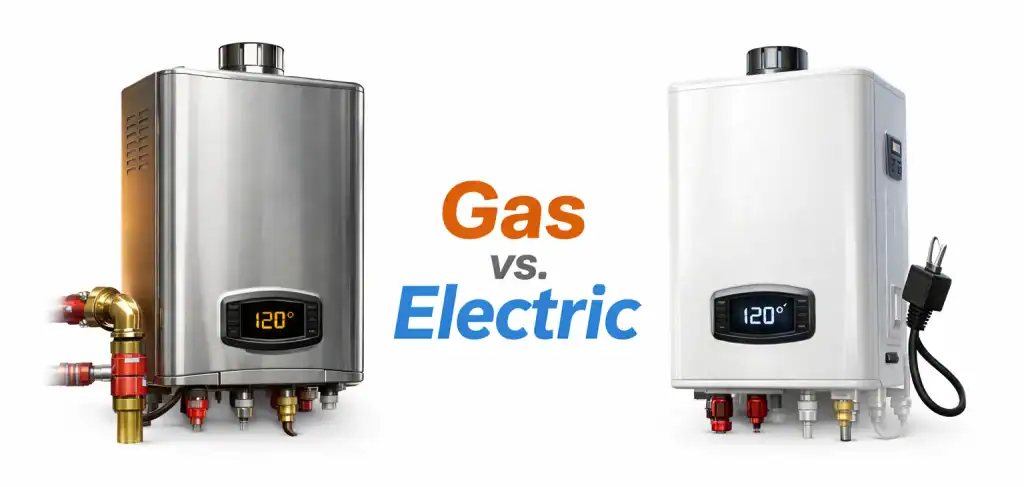
In Australia, the cost of a tankless water heater powered by electricity typically ranges from $1,500 to $5,000 fully installed.
The hardware alone usually costs between $750 and $2,200 as follows:
In 2026, the cost of a tankless water heater powered by gas typically ranges from $1,800 to $4,500 fully installed. Your total tankless hot water system cost comes down to the unit’s flow rate, energy efficiency, and any gas line or venting upgrades.
Here is what you should expect:
In Australia, the labour and materials for a professional installation typically range from $600 to $3,000.
This is separate from the purchase price of the unit. The final cost is determined by whether you are performing a simple “like-for-like” replacement or a complex fuel conversion.
Average Cost: $600 – $1,200. If you are replacing an old tankless unit with a new one in the same location, the installation is straightforward. This covers:
Average Cost: $1,500 – $3,000+ Switching from a traditional storage tank to a tankless system is more labour-intensive. Because tankless units require much higher energy bursts, your current infrastructure likely needs an upgrade:
In Australia, you cannot DIY a hot water installation. Your total on-demand water heater cost will always include:
The total cost of a tankless water heater doesn’t end at installation. While these systems are highly efficient, understanding the annual energy impact and the specialised servicing required is key to calculating your long-term ROI.
In Australia, the on-demand water heater cost varies significantly depending on your fuel source and local tariffs. Because tankless units eliminate the “standby heat loss” of storage tanks, they are generally 20% to 30% cheaper to run than their tank counterparts.
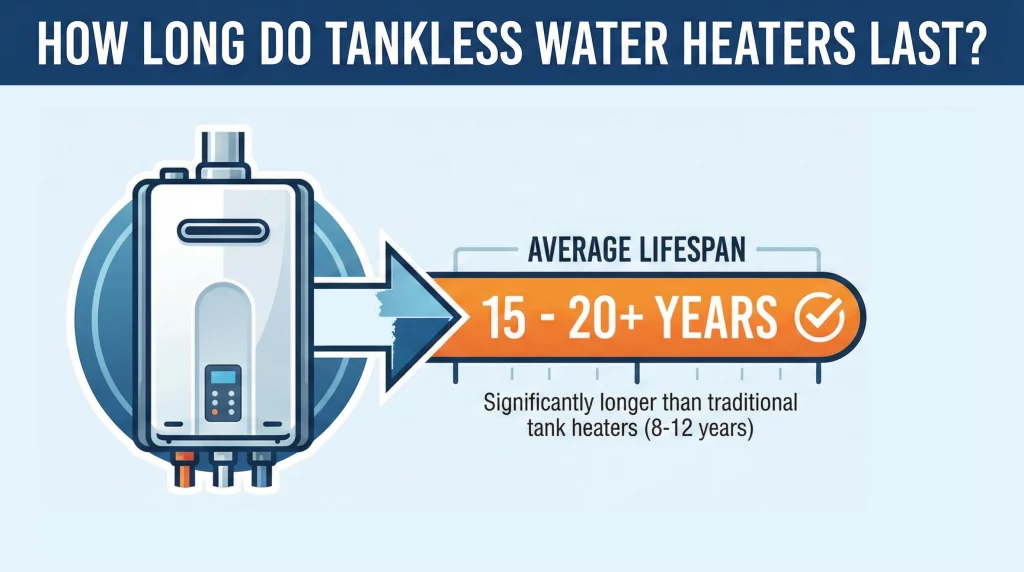
To ensure your system reaches its 20-year potential, periodic maintenance is required. In Australia, a professional service for a tankless unit typically costs between $150 and $350.
While tankless units are durable, their complex electronics mean that if a part fails, the price of tankless water heater repairs can be higher than a simple tank:
By budgeting for a biennial service, you can usually avoid these major repairs and keep your tankless hot water system cost predictable over the life of the unit.
Choosing between a tankless vs storage tank hot water heater is essentially a choice between lower upfront costs and long-term operational savings.
A storage tank works by heating and holding a large volume of water (usually 135L to 315L) at a constant temperature. This ensures hot water is ready immediately, but it leads to “standby heat loss” as the unit cycles on and off to keep the tank hot, even when no one is home.
In contrast, a tankless system skips the storage phase entirely. It uses high-powered gas burners or electric elements to flash-heat water only when a tap is opened.
While this advanced technology increases the instant water heater price, it eliminates the unnecessary energy waste and provides a virtually endless supply of hot water.
The following table provides a detailed comparison of tank vs tankless water heater 2026.
| Feature | Tankless (Continuous Flow) | Storage Tank (Traditional) |
| Typical Purchase Price | $800 – $2,500 | $400 – $1,800 |
| Installed Price (Standard) | $1,500 – $4,500 | $1,000 – $2,500 |
| Complex Install/Conversion | $4,500 – $8,500+ | $2,500 – $4,000 |
| Average Lifespan | 20 – 30 years | 8 – 12 years |
| Energy Efficiency | 85% – 98% (No standby loss) | 60% – 65% (Standby loss) |
| Annual Running Cost (Gas) | $205 – $325 | $415 – $475 |
| Annual Running Cost (Elec) | $335 – $600 | $435 – $1,200 (Peak tariff) |
| Maintenance Needs | Annual/Biennial Descaling | Anode replacement & flushing |
| Physical Footprint | Small, wall-mounted | Large, floor-standing |
| Hot Water Supply | Endless (limited by flow rate) | Limited by tank capacity |
Why do quotes for the tankless hot water system cost vary so much?
Deciding if a tankless system is “worth it” usually boils down to one thing: how much you hate running out of hot water. While the upfront cost of a tankless water heater can be a bit of a sting, the long-term payoff is actually pretty solid if you plan on staying in your home for more than a few years. It’s a classic case of paying more now to worry less later.
For most Aussie households, you’re looking at a “payback” period of about 5 to 9 years. Here’s why the math usually checks out:
It’s not for everyone. If you’re planning to sell the house in a year or two, you won’t live there long enough to see the energy savings cover the higher on demand water heater cost.
Also, if you live somewhere truly freezing (like the High Country or parts of Tassie), the “inlet” water can be so cold that a basic unit might struggle to keep the pressure high while hitting those steaming temperatures.
In 2026, a tankless water heater is a premium performance upgrade that pays dividends in comfort and durability rather than immediate cash savings.
While the upfront tankless hot water system cost is higher, you are investing in a unit that lasts twice as long as a standard tank and clears up significant space in your home.
For “forever homes,” it’s a smart play; for short-term rentals or quick flips, a cheap storage tank is often the more logical financial choice.
You’ll likely shave about 25% to 35% off your water heating bills. Since there’s no big tank of water sitting there cooling down all night (what we call “standby loss”), you aren’t paying to heat water you aren’t using. For a typical family, that’s roughly $150 to $400 back in your pocket every year.
It’s the “muscle” inside. A tank heats water slowly with a small element, but a tankless unit has to flash-heat freezing water to 50°C in seconds. That requires massive burners or high-tech heat exchangers. Plus, because they draw so much power instantly, you often have to pay a plumber or sparky to upsize your gas pipes or electrical board just to handle the “burst” of energy.
In 2026, most Aussies are spending between $25 and $50 a month on gas units. If you’re on a whole-home electric unit without solar, it can climb to $60–$90 because electricity is pricier per unit of energy. It’s still cheaper than a standard electric tank, but the “monthly” cost depends heavily on how long your teenagers spend in the shower!
Yes, if you’ve got solar panels. But there’s a catch. Unlike a tank, which acts like a battery (heating water at noon to use at 8 PM), a tankless unit only uses your “free” solar power while the tap is actually running. If you shower at 6 AM or 9 PM, you’ll be pulling expensive power from the grid. It’s a great way to go gas-free, but you get the best ROI if you shift things like laundry or daytime showers to when the sun is peaking.
Expect a “break-even” point of about 6 to 10 years. While that sounds like a long time, remember that these units usually live for 20+ years. A standard tank often dies and needs a full (expensive) replacement at year 10, right when the tankless unit is just starting to save you real money.
A tank is cheaper today: If your budget is tight right now, a standard storage tank is the winner.
Tankless is cheaper over 20 years: When you factor in the lower monthly bills and the fact that you won’t have to buy a replacement unit in a decade, tankless wins the long game.
Quick Answer Yes, instant water heaters are safe when installed and used properly. Modern ones come with pre-installed safety features […]
Hot water feels simple. You turn the tap and expect warmth, every time. But behind that moment is a system […]
Quick answer The difference between indoor and outdoor tankless water heater setups comes down to placement and protection. Indoor units […]
Quick Answer The average life expectancy of a tankless water heater falls anywhere between 15 and 20 years, and often […]



Our energy efficiency experts are here to answer all your questions and guide you through the products, rebates, and installation process.

Upgrade now, pay later with