Blogs

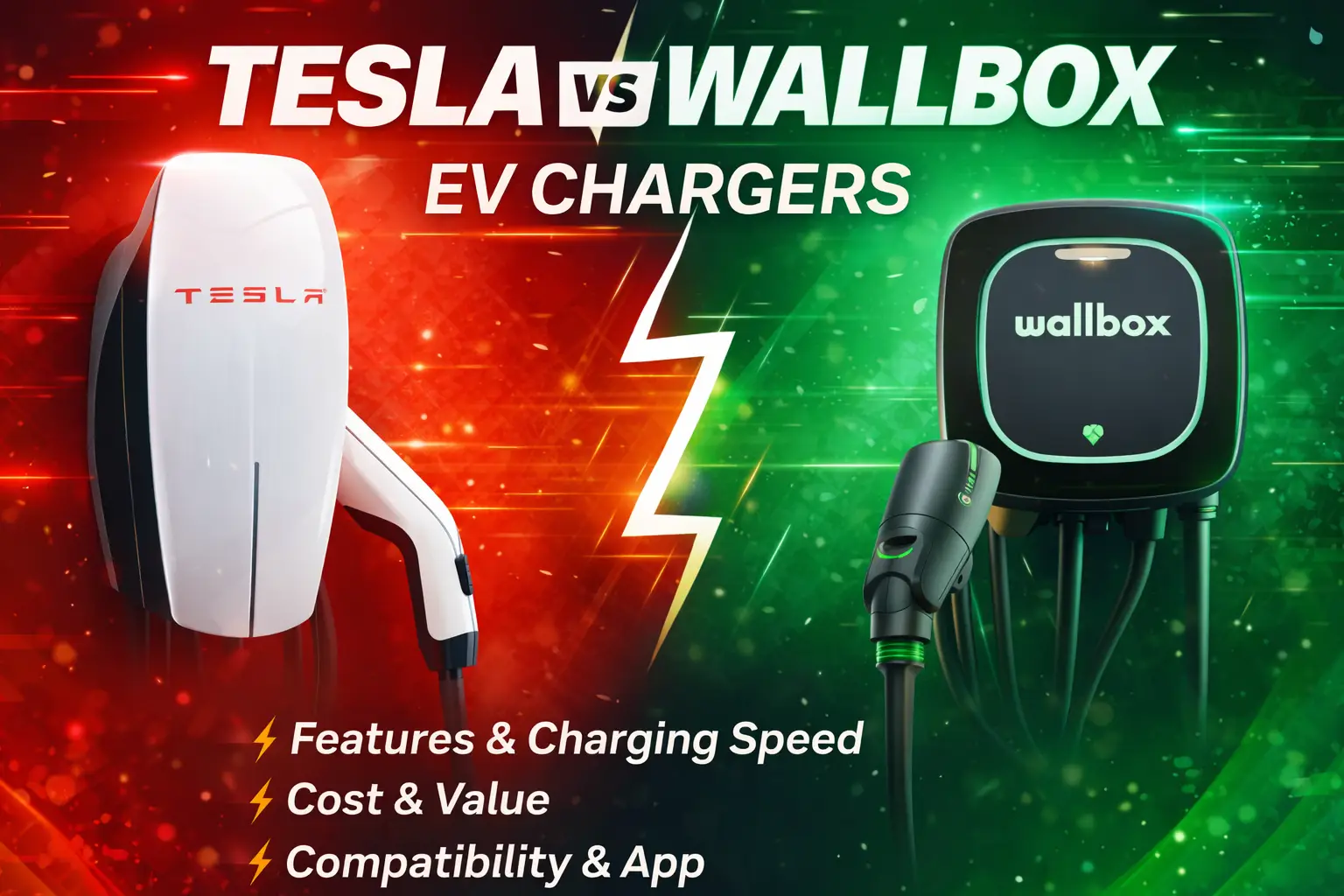
Tesla vs Wallbox EV Chargers: Which One Should You Choose in 2026?

Tesla vs Wallbox EV Chargers: Which One Should You Choose in 2026?

Last updated on April 9, 2026

Quick Answer

  • Pick the Tesla Universal Wall Connector if you own a Tesla. It is the easiest, most dependable setup. It costs less, features a longer cable, and works perfectly with Tesla vehicles.
  • Pick the Wallbox Pulsar Plus / Max if you want more control. This is the way to go for solar charging, detailed scheduling, and tracking your energy use. It is also the better move if you have a non-Tesla EV or might switch to one soon.

Australia has set clear goals to reach net-zero emissions by 2050, and one of the biggest steps toward that future is switching to electric vehicles (EVs).

Residents are already supporting this move, as the EV sales data for 2025 by the Electric Vehicle Council reveals. It shows that more than 72,000 EVs were on the road in the first half of 2025.

Unlike the traditional vehicles that rely on fossil fuels, EVs run on electricity. Since almost every home in Australia is powered, installing your own EV charger is the most rewarding decision for anyone driving an EV. 

After all, it gives you flexibility, reliability, and eliminates the hustle of waiting for the next car to charge at a charging station. 

While it sounds profitable, it’s one of the most confusing decisions right now. Check the market, and you will instantly notice the battle of choice between Tesla and Wallbox

Understanding which to choose and why can make your EV owning experience better suited to your lifestyle.

In this guide, we will compare Tesla vs Wallbox head-to-head, so you can clearly see which one suits your needs best in 2026.

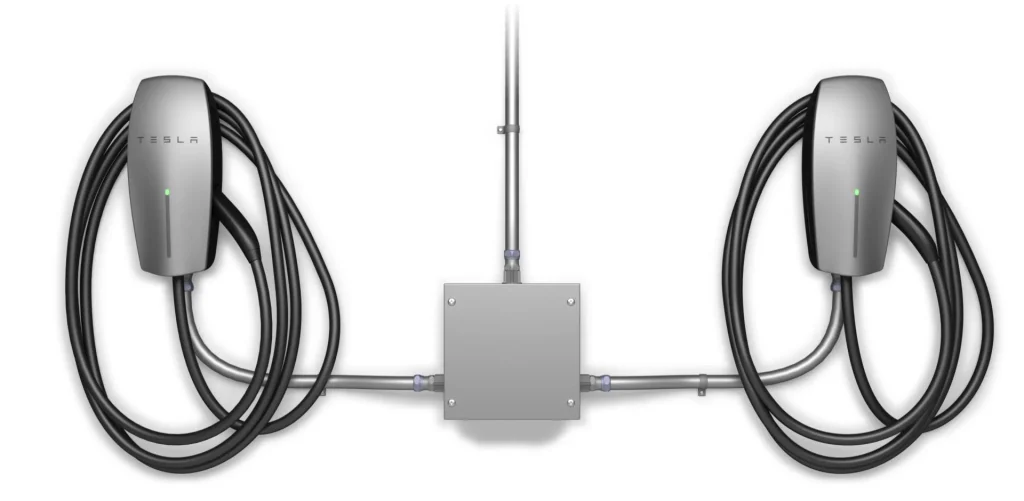
Tesla Universal Wall Connector (Gen 3)

Tesla Universal Wall Connector (Gen 3)

Best For: Households with Tesla and other car brands, and anyone who wants greater mobility when charging.

The Tesla Universal Wall Connector is a reliable charging station for any home. It stands out because of its integrated “Magic Dock” adapter. 

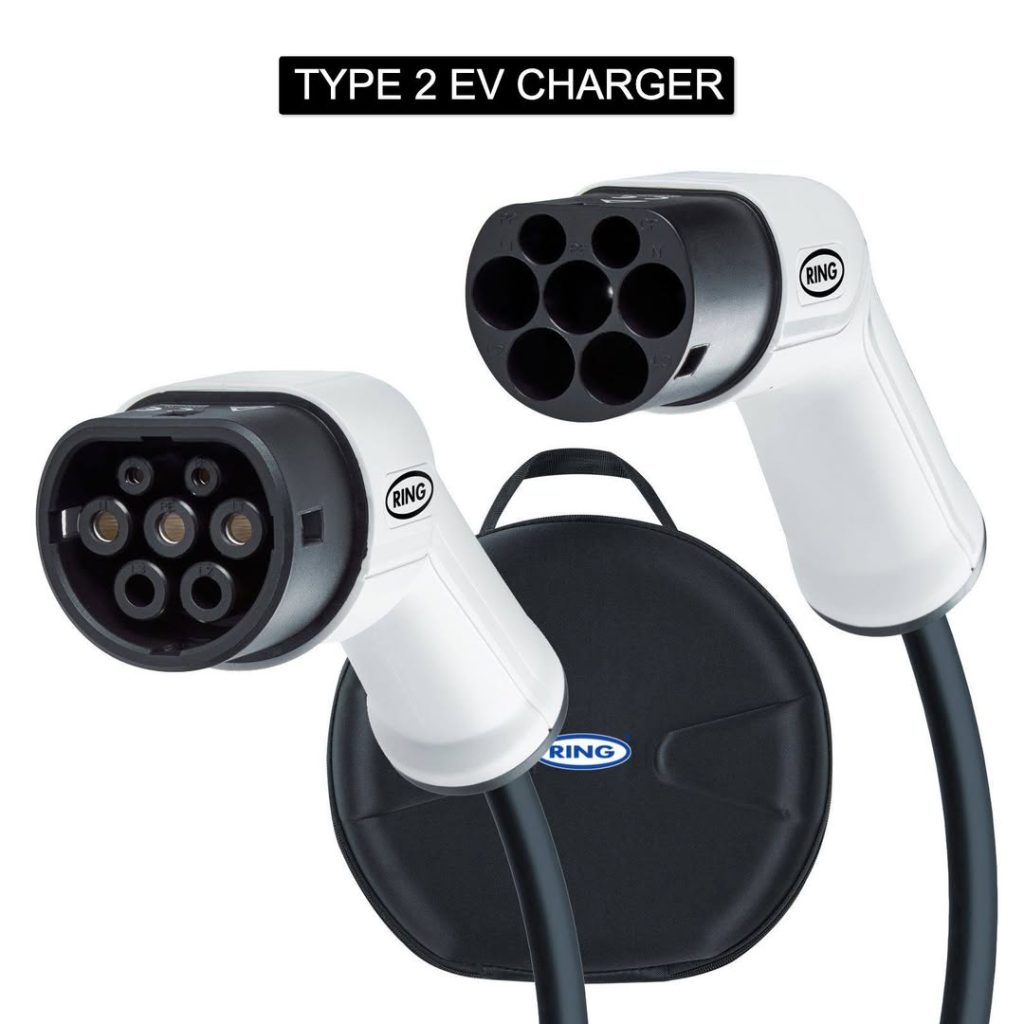
Since almost all electric cars in Australia use a Type 2 socket, this charger has that adapter built right into the handle. If you drive a Tesla, it works normally. 

If you drive a BYD or an MG, you simply press a button, and the adapter stays attached to the plug. It’s praised as a tidy, permanent solution that works for any car in the driveway.

Tesla Universal Wall Connecto Key Features:

  • Smart Connectivity: You can connect it to your home Wi-Fi, so it’s always ready for automatic software updates. Thus, the charger stays current with the latest technology.
  • Performance & Comfort: It is plenty fast, delivering up to 22kW on three-phase power or 7.4kW on standard single-phase wiring.
  • Energy Efficiency: It features power sharing. You can link up to six Tesla chargers together so they split the available power without ever blowing a fuse.
  • Extra Reach: The 7.3-metre cable is probably what you like the most if you have some space in your garage. It is the longest standard cable you can buy, making it easy to reach your car even if it is parked further away.
  • User Experience: If you drive a Tesla, the button on the handle is a great touch. It automatically opens the car’s charge port for you.

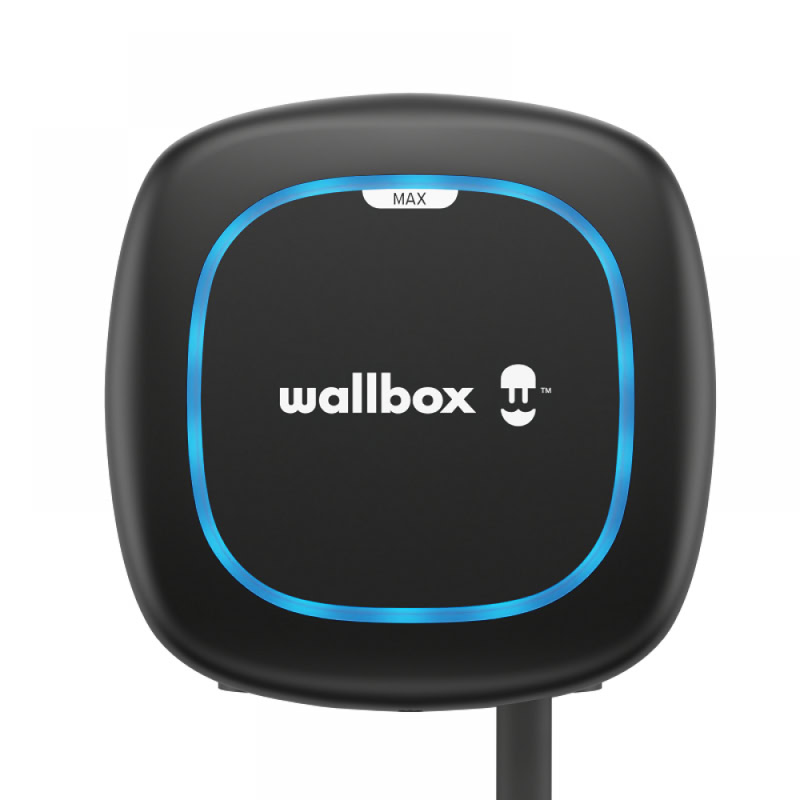
Wallbox Pulsar Max

Wallbox Pulsar Max

Best For: Solar panel owners, small garages, and spots with weak Wi-Fi signals.

The Wallbox Pulsar Max is tiny (about the size of a lunchbox), but it is incredibly tough. It was specifically redesigned to handle the Australian “Sun Belt.” 

While some chargers slow down when things get hot, this unit keeps working perfectly even when temperatures hit 50°C. It is the smart pick if you want to drive for free using your own solar power.

Wallbox Pulsar Max Key Features:

  • Dual Connectivity: It uses both Wi-Fi and Bluetooth. You will appreciate this dual connectivity if your garage has thick walls that block your internet signal.
  • Performance & Comfort: It offers up to 22kW of speed. If need be, you can easily adjust the charging power up or down using the app on your phone.
  • Energy Efficiency: The “Eco-Smart” technology is the real draw. With an extra meter, you can set your car to charge only when your solar panels are generating excess power.
  • High Durability: It is built to last with an IK10 impact rating. It can survive being bumped by a car door or a bicycle without breaking.
  • User Experience: You can keep your hands free by controlling the charger with your voice through Google Assistant or Amazon Alexa.

Wallbox Pulsar Max vs Tesla Universal Wall Comparison 

Choosing between the Tesla Universal Wall Connector vs Wallbox Pulsar Max in 2026 is a choice between a high-value all-rounder and a specialized solar tool.

Both chargers are reliable and widely used across Australia. Here is how they actually compare when you look at the technical details.

Max Power and Amperage

Both units provide the same top speeds for Australian homes.

  • Tesla Universal: Supports up to 22kW on three-phase power or 7.4kW on single-phase. It is mostly a “set and forget” device.
  • Wallbox Pulsar Max: Also hits 22kW or 7.4kW. The difference is in the app; you can manually slide the amperage down to 6A or up to 32A if you want to charge slowly or faster and stay under a specific energy limit.

Connector Type and Ease of Use

  • Tesla: It is the big winner for convenience. It has a built-in adapter called a Magic Dock. If you have a Tesla, it works like a normal plug. If you have a different brand like an MG or BYD, you press a button, and the adapter stays on the handle. It is the best way to handle a “mixed” garage.
  • Wallbox: Uses a standard Type 2 cable. This is the standard for almost every EV in Australia. It is simple, but it doesn’t have the hidden adapter trick of the Tesla.

App Experience

  • Tesla App: It is very fast and easy to use. It’s perfect for setting a basic schedule to charge during off-peak hours. However, it doesn’t give you much data about how much money you are spending.
  • MyWallbox App: This is for people who want details. It tracks every cent you spend and allows you to download reports. This is very helpful if you need to claim electricity costs for work or tax.

Using Solar Power

  • Wallbox: This is the better choice for solar. With an extra part called a power meter, it can “see” your solar panels. It has an “Eco-Smart” mode that ensures your car only charges using 100% free sunshine.
  • Tesla: It can “Charge on Solar,” but this usually requires you to own a Tesla Powerwall and a Tesla car. If you have a different brand of battery or inverter, the Wallbox is much more flexible.

Load Management

Both chargers protect your home from blowing a fuse if you turn on the oven and air conditioner at the same time.

  • Tesla:  Up to six Gen 3 Wall Connectors can communicate wirelessly via Wi-Fi to share power. They automatically distribute the available amperage among themselves.
  • Wallbox: Requires a wire to your switchboard. This monitors your entire home’s total power consumption and adjusts the charging speed accordingly.

Cable Length

  • Tesla: Includes a 7.3m cable. This is very long and reaches across most double garages easily.
  • Wallbox: Includes a 5m cable. You can pay more for a 7m version, but the standard one is a bit short for some driveways.

Durability and Heat

  • Wallbox: Built for the Australian summer. It works in 50°C heat without slowing down. It also has an IK10 rating, meaning it can take a hard knock from a bike or a car door without breaking.
  • Tesla: It is well-made but more likely to slow down its charging speed if it gets too hot in the direct sun.

Tesla vs. Wallbox Cost Comparison

Choosing between these two isn’t just about the charger itself. It’s about the total “on-the-wall” cost. Here is how the math looks for a typical Australian home in 2026.

Cost ItemTesla Universal (Gen 3)Wallbox Pulsar Range
Charger Unit$750 – $850 AUD$1,200 – $2,000 AUD
Solar Power MeterIncluded (with Powerwall)~$200 AUD (Single Phase)
Standard Installation$800 – $1,200$800 – $1,200
Total (Approx.)$1,550 – $2,050$2,200 – $3,400

The Verdict: Which One Should You Choose?


Go for the Tesla Universal Wall Connector if:

  • You want the longest cable and the best price for high-end gear.
  • You drive a Tesla or have a mix of cars and want the adapter built in.
  • You like a simple, clean app and don’t need complex solar features.

Go for the Wallbox Pulsar Max if:

  • You want to run your car on 100% free solar power.
  • Your garage has no Wi-Fi, and you need Bluetooth.
  • You have a small electrical panel and need the charger to watch the whole house.

Summary Table

FeatureTesla Universal Wall ConnectorWallbox Pulsar Max
Max Power22 kW (3-phase) / 7.4 kW (1 phase)22 kW (3-phase) / 7.4 kW (1 phase)
Connector TypeType 2 + Magic Dock AdapterType 2 (Tethered)
App FeaturesClean / Simple (Wi-Fi only)Detailed / Bluetooth + Wi-Fi
Solar ChargingBasic (Best with Powerwall)Advanced Eco-Smart (Any Solar)
Load ManagementPower Sharing (Up to 6 units)Dynamic Balancing (Up to 100 units)
DurabilityStandard (IP55)High (IP55 / IK10 / 50°C Rated)
InstallationHardwiredHardwired
Cable Length7.3 Metres5 Metres (7m optional)

Wallbox vs Tesla EV Charger FAQs

Does a wallbox charger work with a Tesla?

Absolutely. Every Wallbox unit in Australia uses the Type 2 plug, which is exactly what a Tesla needs. You just plug it in, and it starts charging. It’s even the best thing to do when you want to charge for free from your excess solar power.

What is the lifespan of a wallbox?

You should get 10 to 15 years out of a good one. Since there aren’t any moving parts inside to wear out, they are pretty hardy. The electronics usually outlast the car itself. To keep it in good perfomance, try to mount it out of the direct afternoon sun so the plastic doesn’t get brittle over time.

Why is a wallbox so expensive?

You’re paying for the “brain” inside. A standard power point just can’t handle the heat or the constant high load of an EV. A Wallbox has heavy-duty safety sensors, cooling systems, and smart tech that communicates to your solar panels. It’s built to run at full blast for hours without tripping your breakers.

Do I need an electrician to install a Tesla wall charger?

100%. In Australia, it is illegal and dangerous to try this yourself. You need a licensed technician to run a dedicated circuit from your main board. Doing it properly keeps your home insurance valid and ensures the charger doesn’t overload your house when the oven and AC are both running.

Can a Tesla wall charger be outside?

It sure can. It has an IP55 weather rating, so rain and dust won’t bother it. However, the Australian sun is brutal. If you can mount it under a carport or an eave, the cable stays flexible, and the casing won’t fade or crack nearly as fast.

What is the difference between Tesla Gen 2 and Gen 3 wall chargers?

Gen 3 is the modern version. It’s smaller, has built-in Wi-Fi for phone updates, and a much lighter cable. The old Gen 2 was a “dumb” charger with no internet features. It was built like a tank, but the Gen 3 is much smarter for today’s homes.

Which is the most reliable home EV charger?

It’s a toss-up between the Tesla Gen 3 and the Wallbox Pulsar Max. Tesla wins on simple design and value. Wallbox wins if you have a tricky garage with poor Wi-Fi, because it also uses Bluetooth. Both have been put through the wringer in our heat and are the most trusted brands out there.

e-green electrical logo image

E-Green Electrical

E-Green Electrical is a top tier energy efficiency company based in Sydney. We focus on utilising government rebates to help reduce our clients energy consumption by installing energy efficient solutions. E-Green boasts a rich heritage within the realm of energy efficiency, consistently staying up to date with cutting-edge technologies to deliver optimal results for our valued customers.

We don't just sell products and services; we also provides tips and information on how to help reduce energy consumption. We believe in using energy wisely and teaching others how to do the same. For E-Green, it’s important to share knowledge with the community. That's why we regularly write articles about saving energy, new government rebates available and increasing sustainability.

Related Articles

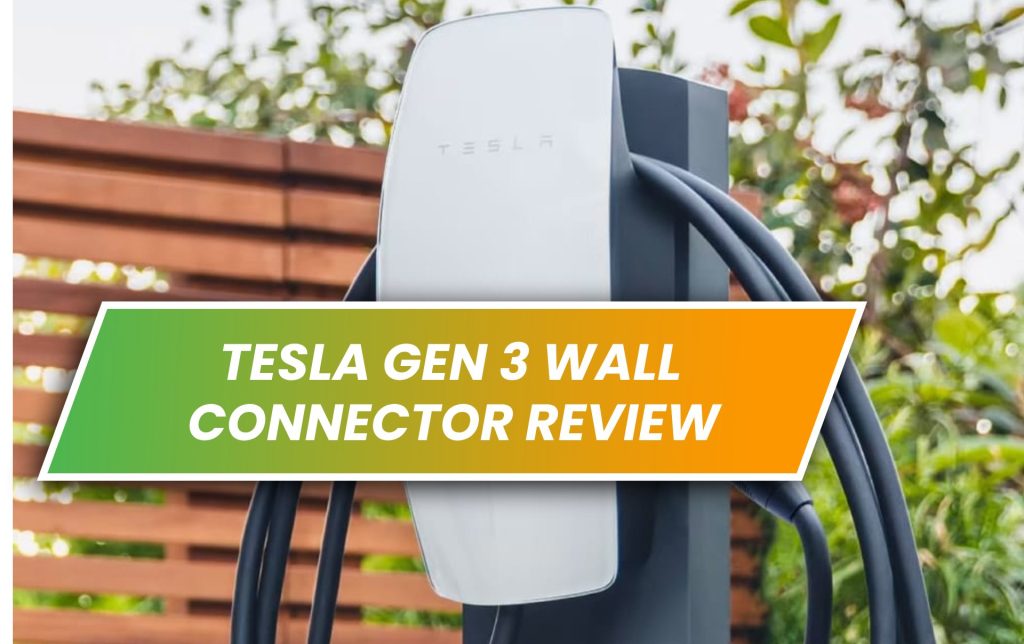
Tesla Gen 3 Wall Connector Review: The Ultimate EV Charging Solution

In 2024, electric vehicles (EVs) surged to nearly 10% of Australia’s new car market, with over 110,000 sold—a 150% increase […]

What is a Type 2 EV Charger?

The rise of EV cars has revolutionised the automobile industry. As awareness and the drive towards environmental sustainability are increasingly […]
How Much Does It Cost To Install An EV Charger?

Key Takeaways: EV Charger Installation Costs Many homeowners are considering installing EV chargers in their homes and garages as the […]
Best EV chargers in Australia banner image
10 Best Home EV Chargers in Australia in 2024

Key Takeaways: Make EV charging easy and convenient. Explore our wide range of EV chargers starting from $1544*(Supply Installation). Get […]


Leave a Reply

Your email address will not be published. Required fields are marked *

CONTACT US