Quick Answer: Tesla Powerwall is best for those seeking a premium experience with a built-in solar inverter and superior whole-home […]
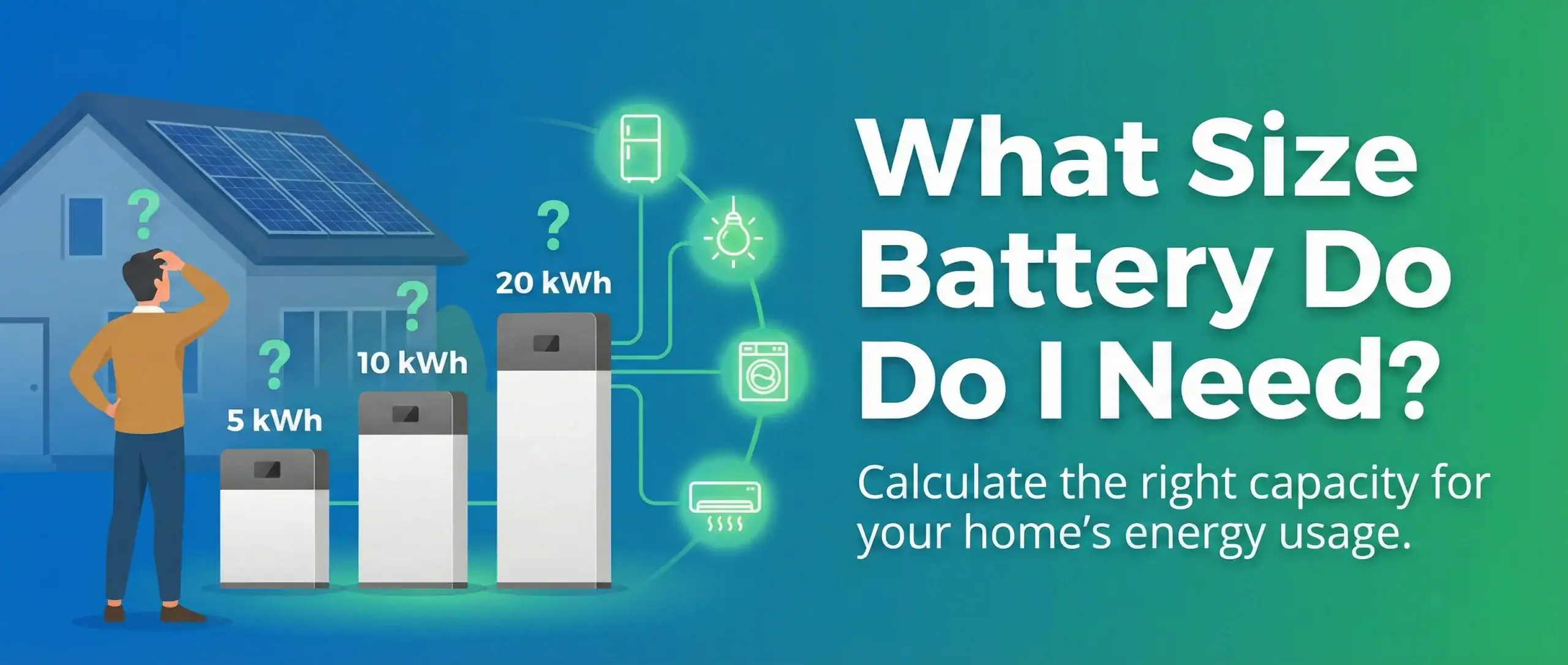
Key takeaway: Solar battery size is about fit, not bigger is better. The right battery matches your household’s energy use, the appliances you want to run at night, and how independent you want to be from the grid. Choose a size that covers your real needs — too small means less savings, too large means unnecessary cost.
This question usually pops up once solar panels are on the roof and the sun goes down for the first time.
The house is quiet. The lights are on. And you start wondering how long the stored energy will actually last. This uncertainty is easier to avoid when you invest in the right battery size.
And by this, we don’t mean chasing the biggest number.
It’s about choosing a battery that matches your household’s energy usage, backup expectations, and how you actually live, so your system works for you long after the sun sets.
But how do you figure out the right size? That’s exactly what this guide will walk you through, step by step.
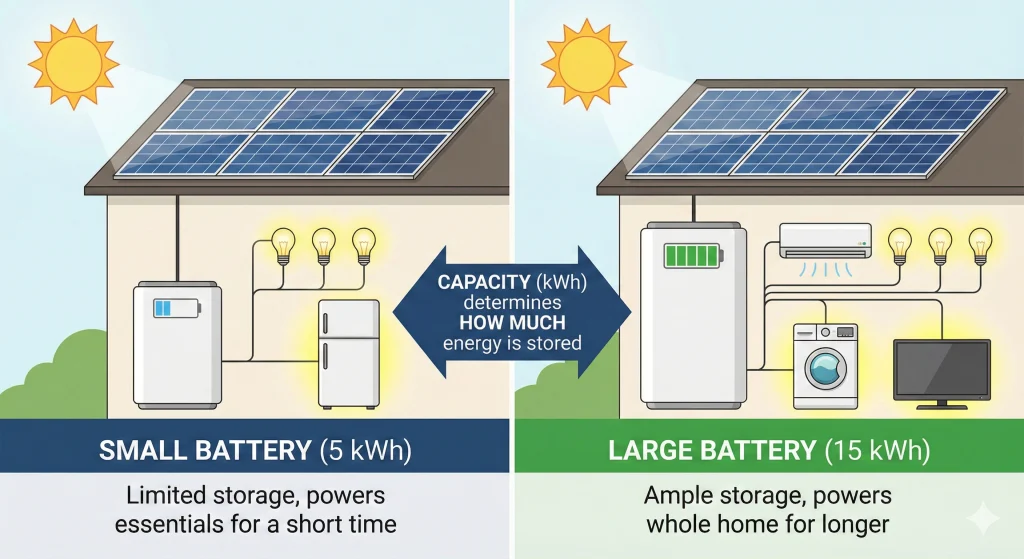
Battery size is often misunderstood. Most people think it refers to how big a battery is. In reality, it’s more about how much energy it can hold over time.
Battery capacity is measured in kilowatt-hours, written as kWh. This number tells you how much energy the battery can store. If a battery has 10 kWh of capacity, it can supply one kilowatt for ten hours. Or two kilowatts for five hours.
The total energy stays the same. Only how quickly it’s used changes.
Battery power, measured in kilowatts, is about speed. It shows how much electricity the battery can provide at one moment. Capacity is about duration. It shows how long that electricity can last.
A battery may have enough capacity to last all night but still struggle if too many heavy appliances run at once. That’s why both figures matter.
Not all stored energy is available for use. Batteries keep a small reserve to protect their lifespan. This means the usable capacity is slightly lower than the total capacity listed on the label.
The usable number is what actually supports your home at night. That’s the figure to focus on when choosing a battery.
Your daily energy use is the foundation. Everything else builds on it. Look at your electricity bill and find the average daily kWh.That number tells you how much energy your home uses over 24 hours. Evening and night use are especially important when sizing a battery.
Solar panels refill the battery during the day. If the panel system is small, a very large battery may never fully charge. This doesn’t mean you need a huge solar setup to own a battery. It just means the two should make sense together. Matching them avoids wasted storage.
More people usually means more energy use. More lights switched on.
More devices are charging, and probably more cooking. That said, habits matter just as much as headcount. A smaller household that stays home all day can use more energy than a larger one that’s out most of the time.
Not all appliances behave the same way. Some use very little energy. Others draw a lot, especially over long periods. Fridges and lighting are easy to support. Heating, cooling, and electric cooking need more storage. Your battery size should reflect what you expect it to handle.
How long do you want stored energy to last? A few evening hours, an entire night, or longer outages? Short backup needs allow for smaller batteries. Longer coverage pushes the size up. This choice often comes down to comfort and local grid reliability.
A battery that’s too small drains quickly. You end up pulling electricity from the grid sooner than expected. A battery that’s too large can sit half-full most days.
However, that extra storage may never be used, yet you paid for it upfront. Both situations feel frustrating in different ways. One affects comfort. The other affects your wallet.
Quick Reassurance: There’s No One-Size-Fits-All Answer
There is no perfect size that works for every home. And that’s not a problem. Homes use energy differently. Schedules differ. Habits differ. The right battery size is the one that fits how your household actually lives, not what works for someone else.
You don’t need complex tools to estimate battery size. A simple process works well. Start with your daily energy use. Decide what share of that you want the battery to cover. Then think about how long you want backup support.
Example Calculation
Say your home uses 20 kWh per day. You want the battery to cover about half of that, mostly after sunset. That means roughly 10 kWh of usable storage. This kind of estimate gives a clear direction without technical overload.
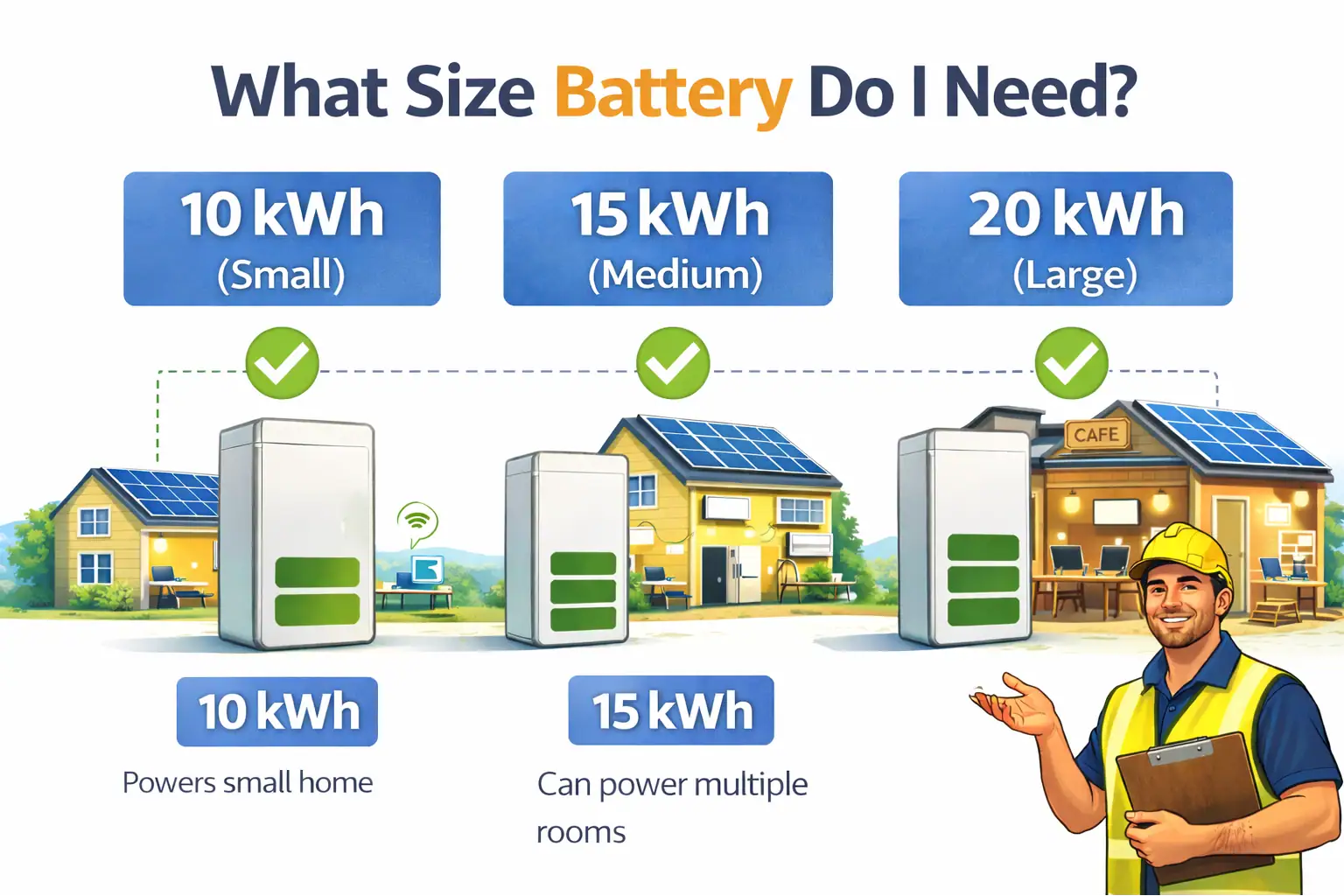
A 5 kWh battery suits small homes with light evening use. It works well if your goal is to keep essentials running after sunset. Lighting, refrigeration, internet, and basic entertainment are usually covered.
This size is common in 1–2 bedroom homes or places where energy use drops at night. It’s simple, practical, and focused on the basics.
A 10 kWh battery fits many family homes comfortably. It offers enough storage to handle evening and overnight energy use without constant grid support.
Most daily activities continue as normal, including cooking, entertainment, and general household needs. This size is popular because it feels balanced. Not too small. Not excessive.
A 13–15 kWh battery is suited for homes with higher energy demand. Larger families, active evenings, or frequent use of cooling systems often fall into this group.
The extra storage provides longer backup time and more flexibility. It’s also a smart choice if you expect energy use to increase in the future.
A smaller home usually uses less electricity at night. Lighting, refrigeration, and a few devices are the main loads. In many cases, a modest battery is enough to cover evening and overnight needs. This setup works well if energy use drops after dinner and heavy appliances are used during the day.
Family homes tend to stay active well into the evening. Cooking, screens, and shared spaces all add up. A mid-sized battery often feels comfortable here. It allows stored energy to carry the household through the night without constant grid use, especially when paired with a well-sized solar system.
Air conditioning changes everything. It draws energy steadily and for long periods. Homes that cool spaces at night need more storage to avoid early battery drain. A larger battery provides longer comfort and reduces the need to switch back to grid power late in the night.
An EV adds a new layer to energy planning. Charging can use more electricity than most household appliances combined. If charging happens overnight, extra battery capacity helps. Even partial charging support can reduce grid reliance and smooth out evening demand.
Homes without a reliable grid need storage they can trust. Batteries here are about stability, not just savings. Larger or multiple batteries are common in these situations. The goal is to keep essentials running for longer periods without stress, even when outages stretch on.
Undersizing leads to disappointment. Stored energy runs out earlier than expected. Oversizing can make sense in certain cases. If you plan to add an EV, a heat pump, or expect a growing household, extra storage can avoid upgrades later. Thinking ahead helps, but guessing too far ahead can waste money. Balance still matters.
Larger batteries cost more because they store more energy. That part is straightforward. Looking at the cost per kWh helps compare options. Still, the lowest price doesn’t always deliver the best experience. A battery that fits your daily life usually feels better over time.
There’s no universal battery size; the right choice depends on your household’s energy use, lifestyle, and backup needs. Start with your evening energy consumption, consider future changes, and aim for a battery that fits your daily life. Checking your bills or consulting an installer can help you make the best choice.
Yes, but it depends on how your home uses electricity. A single battery can run a whole house if usage is modest and appliances are managed carefully. Lights, fridges, internet, and TVs are usually fine. Problems start when several high-draw appliances run at the same time, like air conditioning, electric ovens, or water heaters. In those cases, the battery drains much faster. Many homes choose to power essential circuits only, which helps one battery last longer.
It can be, but the value changes. Without solar panels, the battery charges from the grid. This works well if electricity prices change during the day or if outages are common. You can store cheaper off-peak electricity and use it later. That said, adding solar panels usually improves savings and makes the battery feel more useful day to day.
There’s no single number here. Battery life during a blackout depends on three things:
Battery size
What you’re running
How carefully energy is used.
A 10 kWh battery might last many hours if it’s only powering essentials. Run heavy appliances, and that time drops quickly. Managing loads during outages makes a big difference.
In many systems, yes. Battery stacking is common and often planned from the start. Adding later gives flexibility if your needs change. The key is checking compatibility with your inverter and battery model. Some systems limit expansion, while others make it simple. Planning avoids surprises.
A calculator can help, but it’s not required. Most calculators ask for daily energy use and backup goals. That information already lives on your electricity bill. Simple math often gives clearer results than complex tools. Calculators are useful for quick estimates, not final decisions.
Many homes with a 6.6kW solar system choose a mid-range battery. This size of solar system often produces enough energy during the day to charge a battery and still power daytime use. The right battery size still depends on how much electricity you use at night. Evening habits matter more than panel size alone.
A 5kW solar system pairs well with moderate storage. For many households, around 10 kWh feels comfortable. It allows stored energy to cover evening use without overbuilding. Homes with lighter use may go smaller. Homes with heavier use may need more.
Start with how much electricity you use after sunset. That number gives a clear target. If your home uses 8 kWh between evening and morning, a battery around that size makes sense. Add extra capacity if you want longer backup or fewer grid imports. Keep it realistic.
Focus on usage, not marketing claims. Your daily habits tell the real story. Look at nighttime consumption, appliance use, and how long you want backup power. Panel size and battery brand matter, but lifestyle comes first.
For many households, yes. A 10 kWh battery often covers evening and overnight needs comfortably. It suits families with average electricity use and no constant heavy loads. Homes with air conditioning, EV charging, or high activity at night may need more.
Check your electricity use from sunset to morning. That window tells you how much storage you need to stay off the grid overnight. Many homes are surprised by how clear this number becomes once they look at their bill. That figure is more useful than daily totals.
Quick Answer: Tesla Powerwall is best for those seeking a premium experience with a built-in solar inverter and superior whole-home […]
Quick Answer Adding a Battery to an Existing Solar System typically costs between A$8,000 and A$20,000+ in Australia. This will, […]
Key Takeaways More Australian households are looking at 10kW solar batteries for one simple reason. Power bills keep climbing, and […]

Australia’s energy landscape is shifting. With electricity prices climbing and solar feed-in tariffs dwindling, the “sunny country” is no longer […]






Our energy efficiency experts are here to answer all your questions and guide you through the products, rebates, and installation process.

Upgrade now, pay later with