
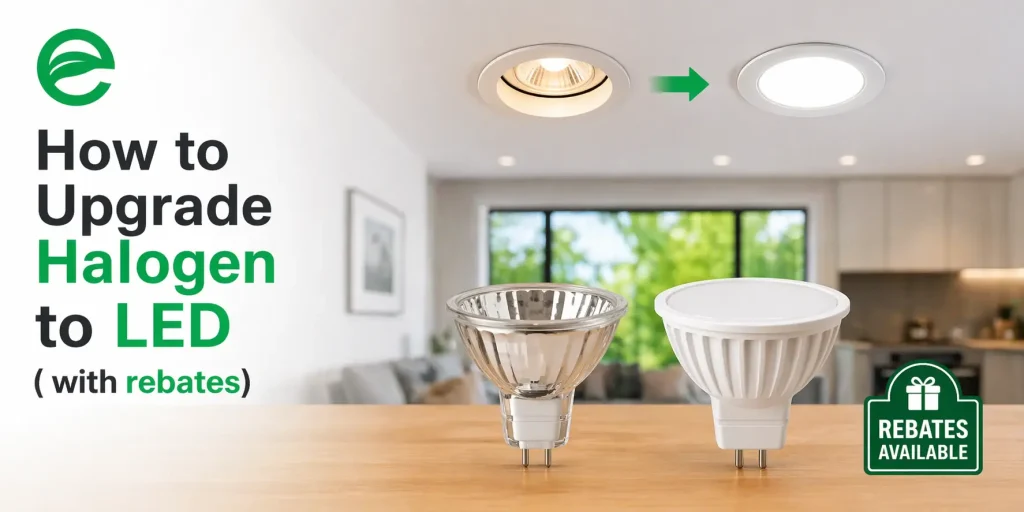
Getting an energy rebate shouldn’t feel like you’re doing a tax return. In New South Wales, the government is practically […]

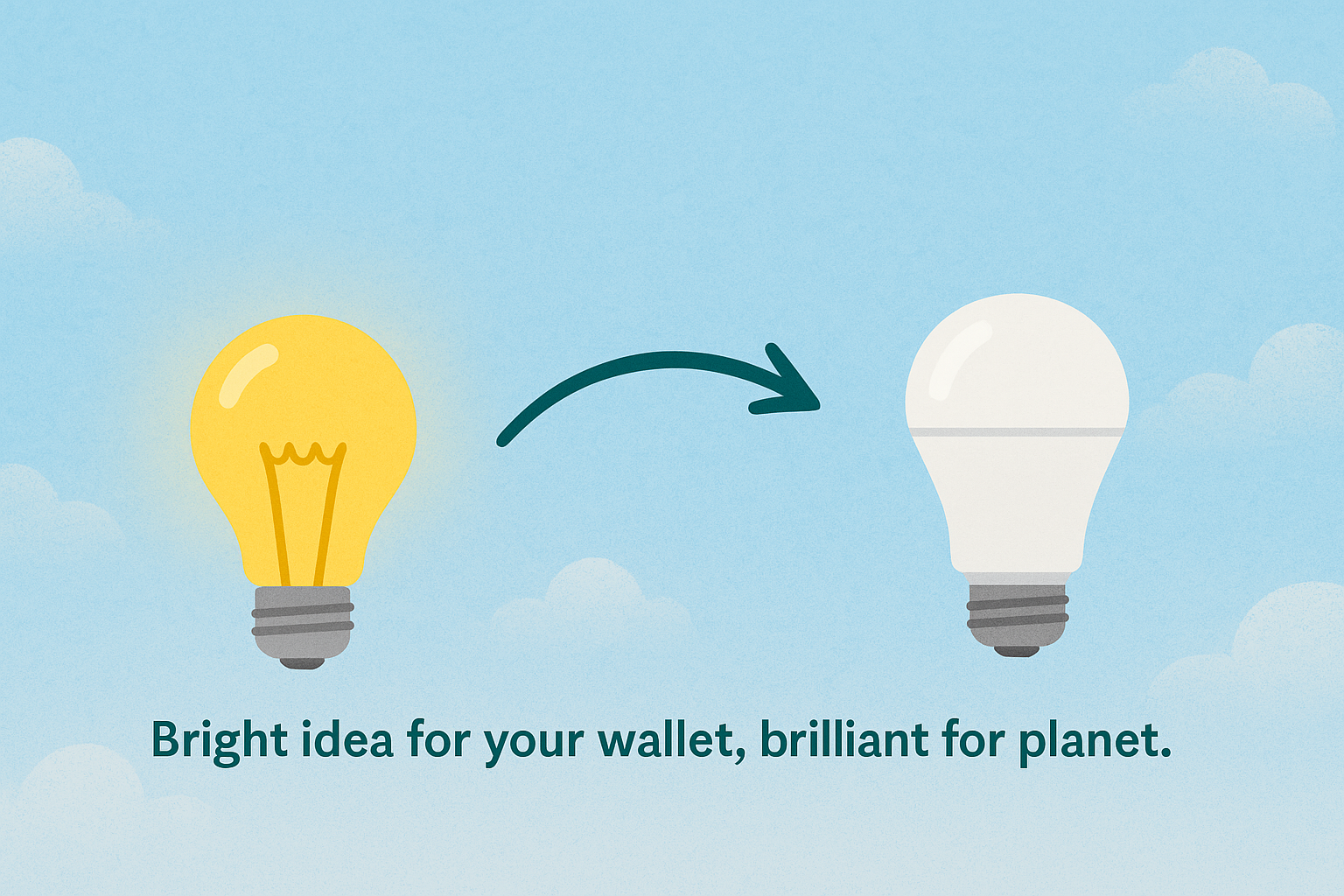
The average Australian household could save between $1,400 and $1,800 over 10 years by replacing just ten 60-watt incandescent bulbs with 9-watt LED bulbs. This saving is partly due to Australia having some of the highest electricity bills in the developed world.
It’s also because LEDs use nearly 80% less energy than incandescent lighting.
Also, you can use our energy saving calculator to calculate your savings.
In summary, changing out just 10 bulbs can create significant savings over the next 10 years.
Now, let’s do some calculations, look at some additional helpful information, and talk about why this might be a great possible outcome for households in Australia.
Australians use a lot of lighting: Living rooms, outdoor patios, verandas, kitchens, bathrooms, studies, and bedrooms. In older homes, especially, many fittings still rely on halogens or incandescents.
Even though LEDs have become the standard in new builds, millions of bulbs across the country are still wasting power.
With average Aussie electricity prices hovering between 28 and 35 cents per kWh, those old bulbs are draining wallets much faster than they would in other countries.
Every kilowatt-hour saved here makes a noticeable difference to the bill.
Now, let’s delve deeper into what ten bulbs can do in terms of actual costs.
Assumptions to Calculate Cost (AUSSIE/Regional Context):
For 10 bulbs:
$167.40 per year.
Over 10 years -$1,674 saved on electricity.
Incandescents: Burn out in ~1 year. Over 10 years, that’s 100 bulbs for 10 fittings. At ~$1 each = $100.
LEDs: Last 10–15 years. You might replace it once. Ten LEDs at ~$4 each = $40.
Extra savings: $60.
Total Savings Over 10 Years
Electricity: $1,674
Replacement costs: $60
Total ≈ $1,734
If your household uses lights longer (say 5 hours a day) or you pay above-average rates (some areas hit $0.40/kWh), savings can push well over $2,000.
Australia still relies heavily on fossil fuels, especially coal, for electricity. That means cutting power use directly lowers carbon emissions.
Replacing 10 bulbs with LEDs saves about 5,580 kWh of electricity over 10 years. That equates to:
Around 4 tonnes of CO₂ avoided.
The same as not driving a petrol car for over 15,000 km.
In a country that’s fighting to lower emissions while dealing with hot summers and high demand for power, every household change makes a difference.
Cooler rooms: Incandescent and halogen bulbs throw off heat; something you definitely don’t want in summer. LEDs run cool.
Safer: Less heat means lower fire risk in ceiling fittings.
Variety: LEDs come in warm or cool whites, dimmable options, and outdoor/weatherproof models; perfect for Aussie verandas and garden lights.
Durability: Great for homes in rural or coastal areas where bulbs get more wear from heat and salt air.
Smart options: Many LEDs can connect to Wi-Fi or smart hubs for scheduling and voice control.
Despite government rebates and years of LED promotion, some households still cling to old bulbs. Common reasons include:
But the economics are now too strong to ignore. Even swapping just the most-used lights, Like the kitchen, lounge, or porch, pays back in under a year.
State-by-State Savings
Electricity prices vary across Australia, so savings do too:
NSW & VIC: Rates around 28–32c/kWh → ~$1,500–1,700 saved in 10 years.
QLD: Slightly cheaper rates in some regions, but still ~$1,400–1,600.
SA & TAS: Higher rates, closer to 35–40c/kWh → savings up to ~$2,000+.
WA: Around 29–31c/kWh, savings ~$1,600+.
Ten LED bulbs can save a large amount of electricity over 10 years because LEDs use far less power than halogen or incandescent bulbs to produce the same brightness. The exact saving depends on the wattage of the old bulbs, the LED replacement wattage, and how many hours the lights are used each day.
An Australian household can often save a meaningful amount over a decade by switching 10 lights to LED, especially when both energy savings and reduced replacement costs are included. The final amount depends on electricity rates, bulb usage, and whether the old lights were halogen, incandescent, or CFL.
Yes, LED bulbs are designed to last much longer than traditional bulbs, which is one of the main reasons they save money over time. In many households, LEDs can reduce the need for frequent replacements, lower maintenance costs, and deliver better long-term value over a 10-year period.
Yes, LED bulbs are usually worth the higher upfront cost because they use less electricity and last longer than older lighting types. While the initial purchase price can be higher, the long-term savings on power bills and replacement bulbs often make LEDs the more cost-effective choice.
LED bulbs reduce maintenance and replacement costs by lasting much longer than halogen and incandescent bulbs. This means households spend less money on buying new bulbs and less time replacing failed lights, which becomes especially valuable when multiple bulbs are used throughout the home.
The main factors include the type of old bulbs being replaced, the wattage difference, how many hours the lights are used each day, and the household’s electricity tariff. Savings can also be affected by bulb quality, room usage, and whether the lights are used in high-use areas such as kitchens, living rooms, and outdoor spaces.
So, let’s put it plainly once more: an average Australian household could save $1,400 – $1,800 in 10 years by changing only 10 light bulbs to LED. If you heavily use lights or pay more per kWh, you will achieve much more than $2,000 in savings.
That’s enough money for a family holiday, a new BBQ or simply the comfort of not worrying so much when the energy bill arrives. And there will be residual benefits of reduced emissions, staying cooler and enjoying modern, safer lighting.
Such a small change in the household, and yet one of the smartest upgrades.
Getting an energy rebate shouldn’t feel like you’re doing a tax return. In New South Wales, the government is practically […]
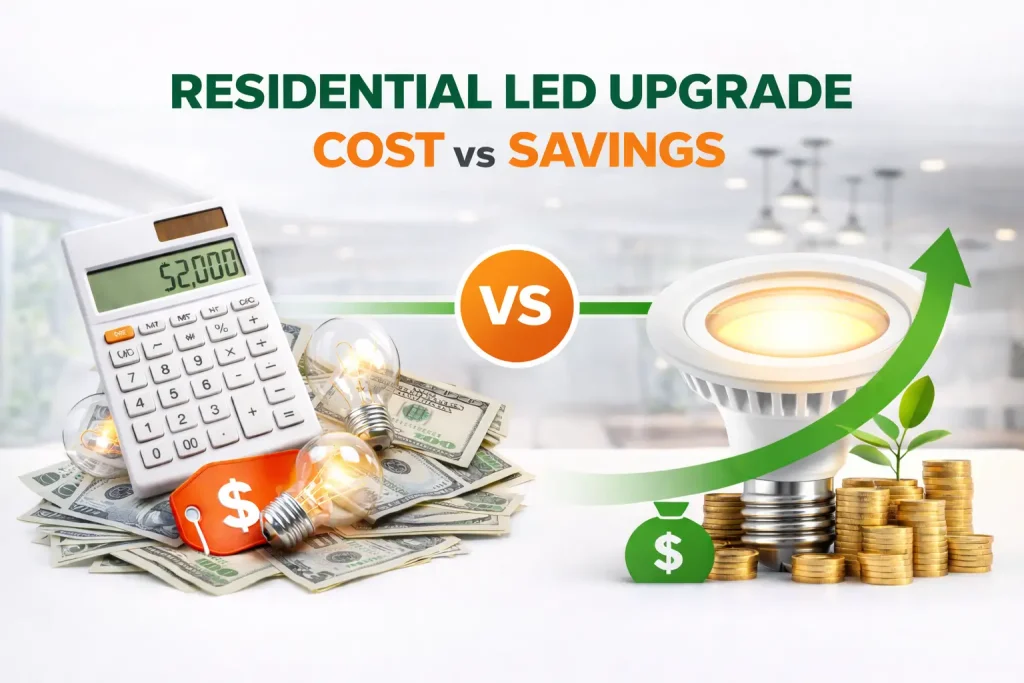
Electricity prices in some Australian states are rising to over 40 cents per kWh, and we are all busy now […]
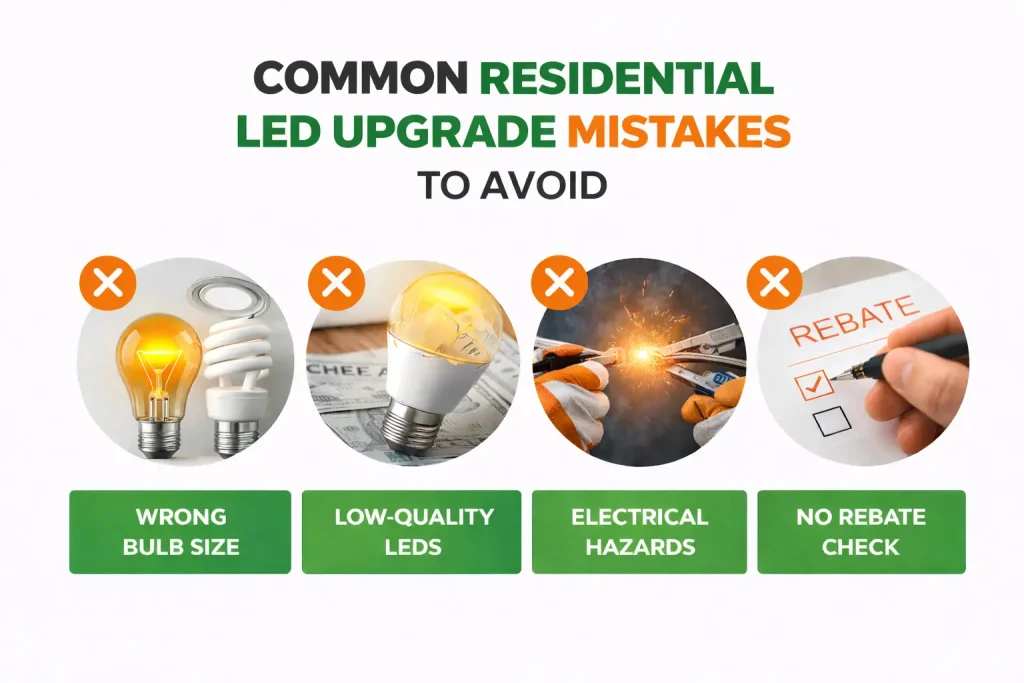
Did you know that around 10% of your household electricity budget goes to lighting? It’s such a huge bill that […]

So, you are fed up with the old light bulbs that keep flickering, increasing your electricity bills, and failing when […]






Our energy efficiency experts are here to answer all your questions and guide you through the products, rebates, and installation process.

Upgrade now and pay later with the Home Energy Saver Program!