

Quick Answer: Tesla Powerwall is best for those seeking a premium experience with a built-in solar inverter and superior whole-home […]


A cheap solar battery quote is not always a good deal. The battery itself is only one part of the system, and a low advertised price can hide unsuitable equipment, extra installation costs, weak warranty support or a battery that does not match how your home uses electricity.
Before you compare two battery quotes by price alone, look at what you are actually getting.
Here are 10 red flags to check before you sign.
A battery quote should tell you what you are paying for. If you see something like “20kWh battery system – $X” without a proper breakdown, you may not know what is included.
E-Green Electrical recommends checking the equipment, installation costs, rebates, warranties and other costs when comparing solar and battery quotes.
Your quote should identify things such as:
A low headline price means very little if important installation work appears later as an extra.
Be careful when an advertisement promises “free batteries”, “no-cost batteries”, huge savings or a deal that supposedly ends immediately.
The current federal Cheaper Home Batteries Program can reduce the upfront cost of eligible battery installations, but the discount does not mean the entire system is free. The Australian Government says the program provides around a 30% discount on eligible small-scale battery systems.
So look at the actual amount you will pay after any applicable rebate or discount. Don’t make a decision based only on the promotional price.
Bigger is not automatically better. A 30kWh battery may sound much better than a 10kWh battery, but you may not have enough electricity demand to make good use of the additional capacity.
Your battery should reflect your household’s electricity use, solar generation and when you use electricity.
Ask the installer:
Why have you recommended this capacity for my home?
The answer should relate to your actual electricity consumption and solar generation. If the explanation is simply “bigger is better”, ask for a proper explanation.
A battery does not work alone. Your system needs suitable equipment to move electricity between the battery, your home, solar system and the grid.
Don’t look only at the battery’s advertised capacity.
Ask:
A large battery does not automatically mean your home can charge or discharge it quickly. You are buying a battery system, not simply a large amount of stored energy.
Before you sign, make sure you can find reliable information about the battery manufacturer, product specifications, warranty and Australian support.
We recommend checking whether the battery is on the relevant approved products list and considering the manufacturer’s technical support and Australian presence.
Find out:
A good specification sheet is useful, but long-term support matters too.
“10-year warranty” sounds reassuring. But what does the warranty actually guarantee? This is important because battery warranties can involve different measures, including:
A battery may have a 10-year warranty but only guarantee a particular level of remaining capacity at the end of that period. That does not automatically make the warranty poor. You simply need to understand what it covers.
Before signing, ask:
What capacity will the manufacturer guarantee after 10 years? Also check who is responsible for warranty claims if something goes wrong.
Read the contract carefully if it contains wording about equipment substitutions.
Your quote should identify the actual equipment you are agreeing to buy, including the battery and inverter models.
Our team also recommend checking the components against your quote or contract when the equipment arrives for installation. If a product becomes unavailable, ask what happens before accepting a substitute.
A replacement product may have different:
Don’t assume that another product with a similar capacity is equivalent.
Don’t assume that installing a battery automatically means your house will have power during an outage.
Some battery systems can provide backup power, but the system needs to be configured for that purpose and may require additional equipment.
So, if backup power matters to you, ask:
Make sure the answer is included in the quote rather than relying on a verbal promise.
Be cautious if you receive a final installation price without a proper assessment of your home. The installation may involve more than simply placing a battery on a wall.
The installer may need to consider:
The Australian Government strongly recommends a site assessment because it can identify installation issues and additional electrical work before the job begins. Without that assessment, the first price you receive may not be the final price.
The installation is not the end of the process. Your battery should operate for many years, so you need to know who will help if something goes wrong.
Ask:
Who do I contact if the battery stops working?
Then check:
We recommend keeping your contract, system specifications, operating instructions, warranty information, product documentation and installer contact details after installation.
Good after-sales support can matter just as much as the initial installation.
A good quote should give you enough information to compare it fairly with another quote.
| What to check | What you should know |
| Battery | Exact make and model |
| Capacity | Total and usable capacity |
| Inverter | Make, model and power rating |
| Installation | What labour and electrical work is included |
| Backup | Whether backup is included and what it powers |
| Rebates | Amount deducted and eligibility assumptions |
| Warranty | Product, performance and installation warranties |
| Monitoring | What monitoring is included |
| Extra work | Switchboard, wiring or other costs |
| Network | Any connection or export limitations |
| Payment | Deposit, balance and payment terms |
| After-sales | Who handles faults and warranty claims |
Our experts recommend comparing quotes based on the system design, equipment, installation costs, warranties and expected performance rather than choosing purely on price.
Don’t put two quotes side by side and look only at the final price.
Compare them line by line.
Is it the same battery?
Is the usable capacity the same?
Is the inverter the same size?
Does either system include backup?
Are installation costs included?
Are switchboard upgrades included?
Are the warranties comparable?
Are the expected savings based on similar assumptions?
A $10,000 battery quote is not necessarily better than a $12,000 quote if the cheaper system excludes work that you will have to pay for later.
Likewise, the most expensive quote is not automatically the best.
You need to compare what each installer is actually offering.
Not necessarily.
A lower price can be a good deal when the equipment, installation and warranties are comparable.
The problem comes when the lower price results from unsuitable equipment, missing installation work, weaker warranty coverage or poor after-sales support.
You also don’t necessarily need the most expensive battery.
The better question is:
Does this battery system suit my home, my electricity use and what I want the battery to do?
That means looking at capacity, power output, solar compatibility, backup requirements, warranty, installation and long-term support before you look at the final price.
Take the quote home and read it carefully.
Check the exact equipment, installation work, rebate or discount, warranty and payment terms.
If something was promised verbally but isn’t written into the quote or contract, ask for it to be included.
Most importantly, make sure you understand why that particular battery system has been recommended for your home.
A good installer should be able to explain the recommendation clearly and show you what you are paying for.
If you’re comparing solar battery quotes and aren’t sure whether the proposed battery, inverter or installation is right for your home, our E-Green Electrical team can assess your existing energy setup and help you choose a battery solution that fits your electricity use.
Quick Answer: Tesla Powerwall is best for those seeking a premium experience with a built-in solar inverter and superior whole-home […]

Quick Answer Adding a Battery to an Existing Solar System typically costs between A$8,000 and A$20,000+ in Australia. This will, […]
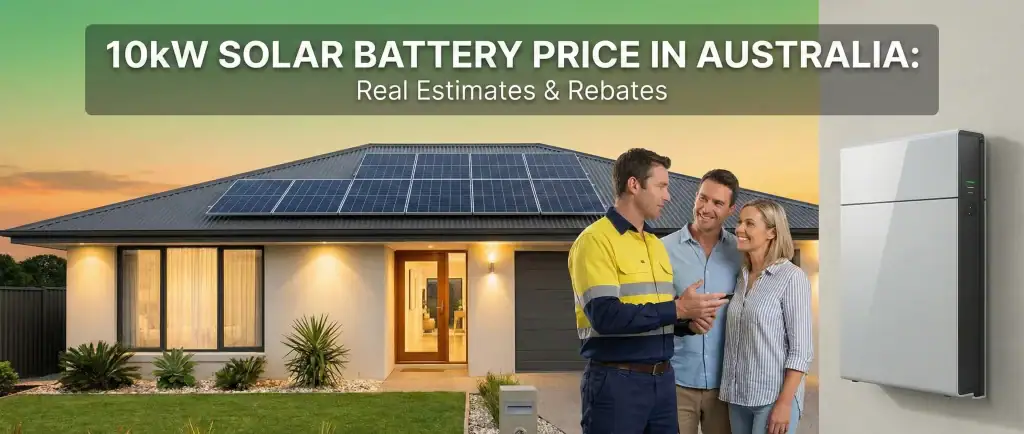
Key Takeaways More Australian households are looking at 10kW solar batteries for one simple reason. Power bills keep climbing, and […]

Australia’s energy landscape is shifting. With electricity prices climbing and solar feed-in tariffs dwindling, the “sunny country” is no longer […]






Our energy efficiency experts are here to answer all your questions and guide you through the products, rebates, and installation process.

Upgrade now and pay later with the Home Energy Saver Program!