
Quick Answer Adding a Battery to an Existing Solar System typically costs between A$8,000 and A$20,000+ in Australia. This will, […]
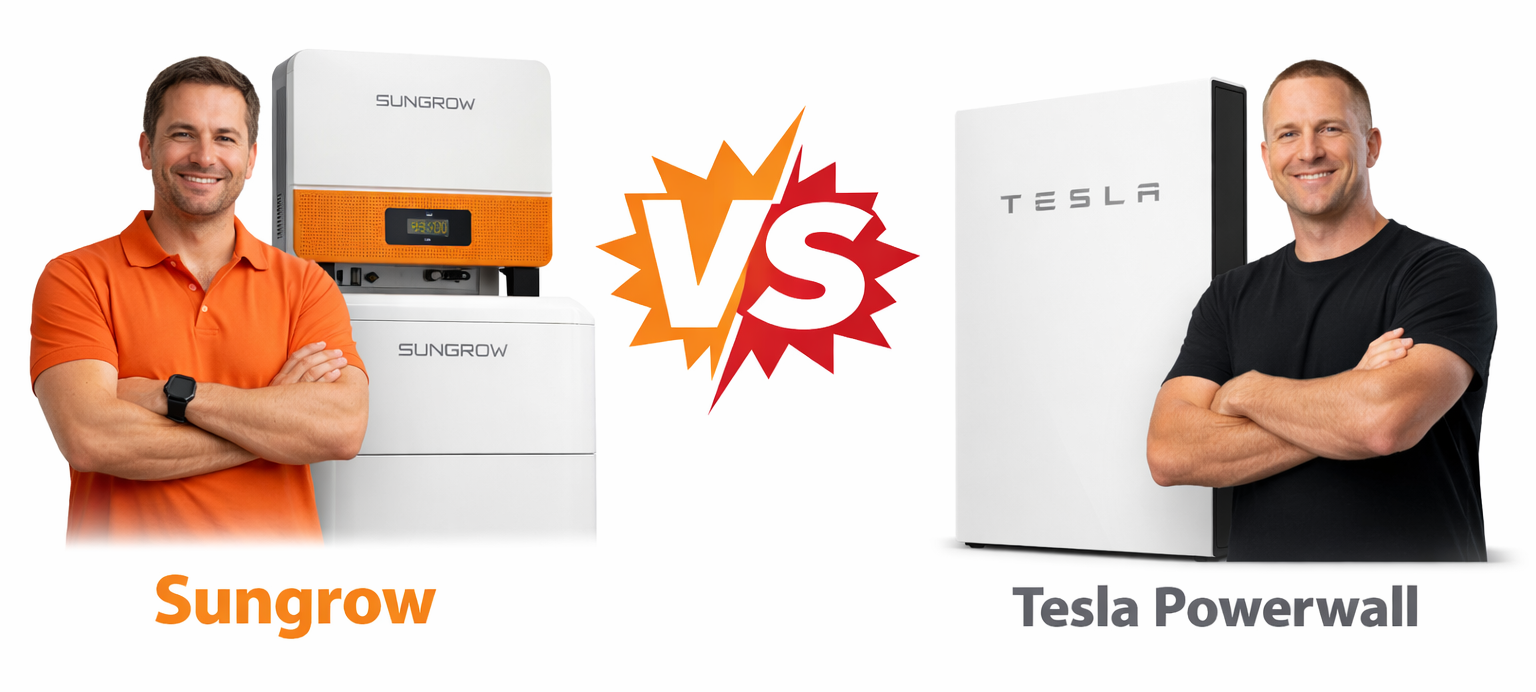
| Quick Answer: Tesla Powerwall is best for those seeking a premium experience with a built-in solar inverter and superior whole-home backup performance. Meanwhile, Sungrow is the better choice for budget-conscious owners or those who want a flexible and modular system that can grow over time. |
The choice between the Sungrow battery system and a Tesla Powerwall depends on the cost, flexibility, performance, and how you actually plan to use your energy at home. Indeed, solar adoption in Australia is rising, with about 300,000 rooftop systems installed a year.
In fact, 1 in 3 Aussie homes now have a rooftop solar. So these batteries help maximize savings amid the rising electricity prices that average between 24c and 43c for every kWh of electricity used.
The batteries allow you to store your unused solar and use it later. They can also provide backup power during outages. So which battery makes more sense for your home? Let’s have a quick comparison.
| Feature/Specs | Tesla Powerwall 3 | Sungrow Battery (SBR/SBH series) |
| System design | All-in-one unit with integrated solar inverter. | Modular battery system requiring a separate compatible Sungrow hybrid inverter. |
| Usability capacity | ~13.5 kWh (expandable with Powerwall 3 Expansion Packs). | Highly flexible, from 9.6 kWh to 25.6 kWh for the SBR series, and larger capacities for the SBH series. |
| Round-Trip Efficiency (RTE) | ~89–93% (AC-coupled system). | ~95–97% (DC-coupled design offers higher efficiency). |
| Power output | ~11.5 kW continuous output (grid-connected), higher in backup mode. | Depends on the paired inverter; designed for flexibility and can support high loads with commercial systems. |
| Scalability | Multiple units can be stacked (up to 4 Powerwall 3s for 54 kWh total). | Modular and allows you to add individual 3.2 kWh or 5 kWh modules to the stack over time. |
| Backup capability | Known for reliable, seamless and automatic blackout protection for whole-home backup. | Good performance monitoring, but generally less advanced in app features compared to Tesla. |
| Monitoring | Advanced real-time monitoring and control via the intuitive Tesla app. | Good performance monitoring but generally less advanced in app features compared to Tesla. |
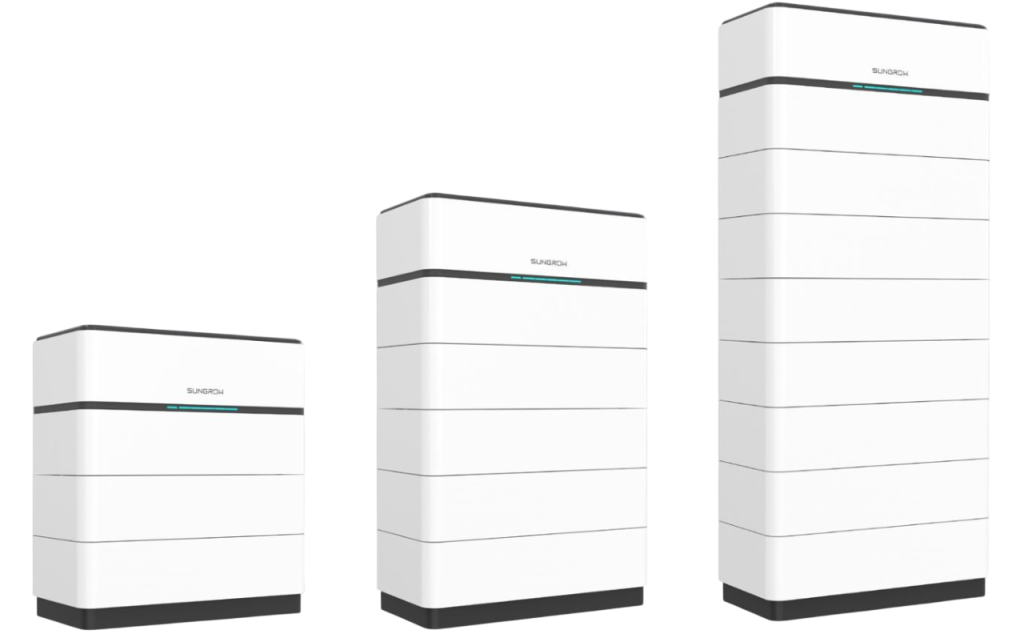
Sungrow is a Chinese company specialising in the production of energy technology solutions and has been in the industry for over 25 years, particularly in the development of solar inverters and storage systems.
The company’s systems are finding traction in the Australian market due to their quality and affordability. Most of the batteries use a modular design. This means the homeowner can purchase one and add another alternative in the future.
Besides, the standard Sungrow home batteries provide a storage capacity of 9.6-10.2 kWh in total. This means a homeowner gets most of the power back from a single product, considering the round-trip efficiency rate of 95%.
Pros:
Cons:
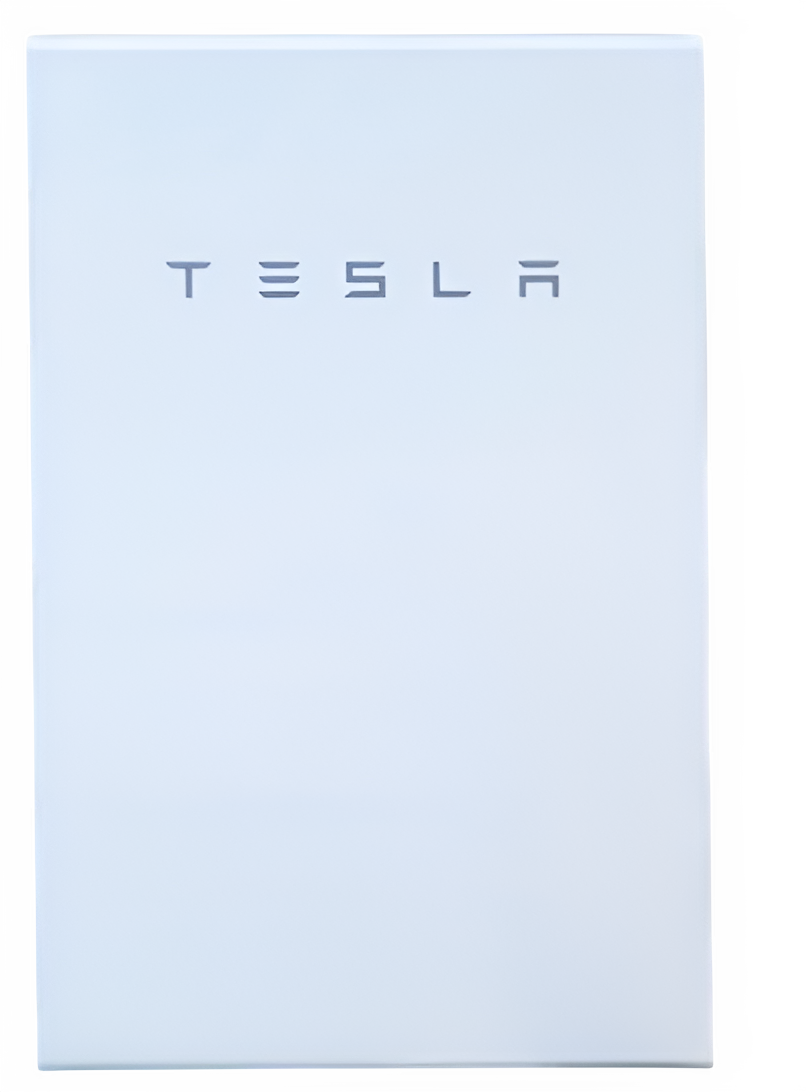
The most popular home battery brand in Australia is the Tesla Powerwall.
Each unit has an absolute capacity of 13.5 kWh, and this makes it suitable for medium or large households. Its round-trip efficiency is about 90%, and it is fully compatible with the Tesla application and other software.
The system is also compact, sleek, and designed to handle outages. Generally, Tesla is a reputable brand for new ideas. The warranty for each unit is 10 years, guaranteeing performance during that time.
The difference between Sungrow and Tesla batteries is that Tesla batteries are less flexible when expanding the unit.
Pros:
Cons:
Sungrow systems shine for their modular capacity, usually starting at 9.6 kWh of usable storage per standard unit and scaling up to 38.4 kWh or more by stacking modules.
This is pretty ideal for most Australian homes, which average 20-30 kWh of daily needs. Tesla Powerwall 3, on the other hand, has a fixed 13.5 kWh usable capacity per unit, expandable to 54kWh with 4 stacks, but the all-in-one design limits ultra-high scaling compared to the flexibility offered by Sungrow.
For the average household exporting 8-10 kWh of daily solar surplus, the expandability of Sungrow assures better value in the long run when energy demands grow with EVs or pools.
From a performance point of view, Powerwall 3 is the best. It has a continuous output of 11.04 kW and a peak of 30 kW, capable of running a 10 kW AC oven and an EV charger at once during a blackout.
Tesla Powerwall is also backed by real-world testing, verifying a reliable 98% uptime during storms in QLD. By comparison, Sungrow’s SBH/SBR offers a maximum continuous output of 5-10 kW, depending on the model.
Though still desirable for the average home, it falls short in situations requiring a high surge rate, like EV fast-charge support between 7-11 kW.
They both offer safety and long lifespan, although Sungrow’s modules are designed for a minimum of 4,000 cycles at 100% DoD compared to Tesla Powerwall’s unlimited cycles at 70% retention.
Efficiency edges to Powerwall 3 at 97.5% round-trip (solar-to-home/grid).
This helps in minimising self-losses in time-of-use arbitrage that saves Aussies $400-800/year on 30¢/kWh tariffs. Sungrow follows closely at 95-98% DC efficiency with strong hot-weather performance (degrades <1% at 45°C), though its separate inverter pairing can trim 1-2% overall versus Tesla’s integrated unit.
In federal rebate math ($336/kWh), Sungrow delivers more kWh per dollar, but Powerwall’s power density suits peak-demand households better.
Tesla Powerwall 3 in Australia will cost between A$12,000 and A$17,000 fully installed for a single unit of 13.5 kWh, including the cost of a backup gateway, which will cost an additional A$1,700 to A$2,000.
This pricing will depend on the level of complexity of the site, with areas like Sydney having the higher end of this pricing scale. Sungrow batteries are still priced very competitively, with standard 9.6 kWh SBR starting at A$8,000 to A$10,500 installed, reaching $15,000 to $18,000 for 19.2 kWh SBH versions.
Rebates under the Federal Cheaper Home Batteries Program reduce costs by ~$336/kWh, e.g., A$4,000 – A$5,000 off a Powerwall, or A$3,200 off a 9.6 kWh Sungrow. This is valid until May 2026, with state add-ons possible, e.g., A$1,500 – A$2,500 under NSW’s Peak Demand credits.
Payback averages 5-7 years for both at 30¢/kWh savings, with VPP earnings boosting Tesla (A$300–A$600/year) over Sungrow’s basic grid export.
Both Sungrow and Tesla Powerwall provide a standard warranty of 10 years on their home battery systems.
This helps ensure a minimum capacity retention of 70% at the end of the warranty period under normal conditions, which is an industry standard for LFP battery storage systems in Australia. Sungrow offers a warranty that includes 2.8–4 MWh throughput per kWh capacity or 4,000–6,000 cycles at 100% depth of discharge (DoD).
Meanwhile, Tesla offers similar warranty features with unlimited cycles corresponding to a minimum capacity retention of 70%, along with condition monitoring via their app, which extends battery life up to 15+ years.
Longevity slightly favours Sungrow due to high cycling (6,000+ cycles to 60-70% capacity each day). This is suitable for Aussie homes with high solar exports of 10-15 kWh/day in hot climates where actual degradation remains below 1.5%/year.
The built-in cooling and IP rating of the Tesla Powerwall 3 ensure higher reliability during outages in hot climates or coastal environments with failure rates below 1%/year in 50,000+ AU installations.
However, throughput capacity limitations (e.g., lower capacity for backup mode) may reduce actual lifespan compared to the modular design of the Sungrow.
When Aussies compare Sungrow and Tesla Powerwall, the real decision usually comes down to your priorities.
If your biggest focus is getting the most storage for the least money right now, then Sungrow makes a lot of sense. You pay less upfront. You get good efficiency, and you can add more batteries later if you want.
If you value user experience, polished software, and seamless backup performance, then Tesla Powerwall still leads the pack. The app experience is really strong. The integration with solar and even future energy features like grid services feels very smooth and intuitive.
Sungrow scales easily with stackable modules up to 100kWh+ paralleled. On the other hand, Powerwall 3 stacks three units for 40.5kWh but needs a professional installation for more.
Powerwall 3 excels with 30kW peak/11kW continuous powering AC/EVs. Meanwhile, Sungrow’s 5-10kW suffices for basics but lags in surges.
Both retain 70%+ after 10 years/4,000–6,000 cycles. LFP chemistry limits heat degradation to <1.5%/year in 45°C QLD/NT conditions.
Tesla’s app leads with real-time insights, Storm Watch alerts, and VPP controls. Sungrow’s iSolarCloud is good for basics but less polished for advanced time-of-use optimisation.
Sungrow modules are compact and flexible, letting you scale across rooftops efficiently. Powerwall 3 units are wall-mounted but need careful spacing for multiple units and airflow.
Yes. Both are designed to integrate with solar arrays. Sungrow is highly flexible with hybrid and AC-coupled systems, while Powerwall 3 works seamlessly with Tesla Solar Panels or other compatible PV setups.
Both require minimal maintenance. Sungrow may need occasional firmware updates via iSolarCloud, while Powerwall 3 is mostly hands-off, with Tesla monitoring systems handling alerts and diagnostics remotely.
Quick Answer Adding a Battery to an Existing Solar System typically costs between A$8,000 and A$20,000+ in Australia. This will, […]
Key Takeaways More Australian households are looking at 10kW solar batteries for one simple reason. Power bills keep climbing, and […]

Australia’s energy landscape is shifting. With electricity prices climbing and solar feed-in tariffs dwindling, the “sunny country” is no longer […]
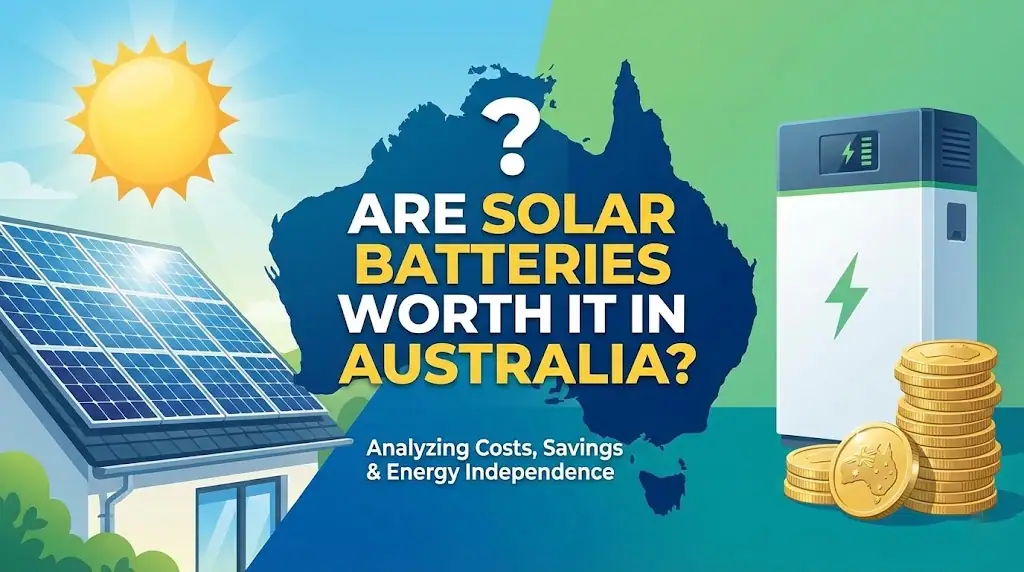
Quick Answer A solar battery can be worth it. It’s ideal if your household uses most electricity in the evening, […]





Our energy efficiency experts are here to answer all your questions and guide you through the products, rebates, and installation process.

Upgrade now, pay later with