

Sydney homeowners are seeking ways to reduce their power bills. With the sun beating down on New South Wales, the […]

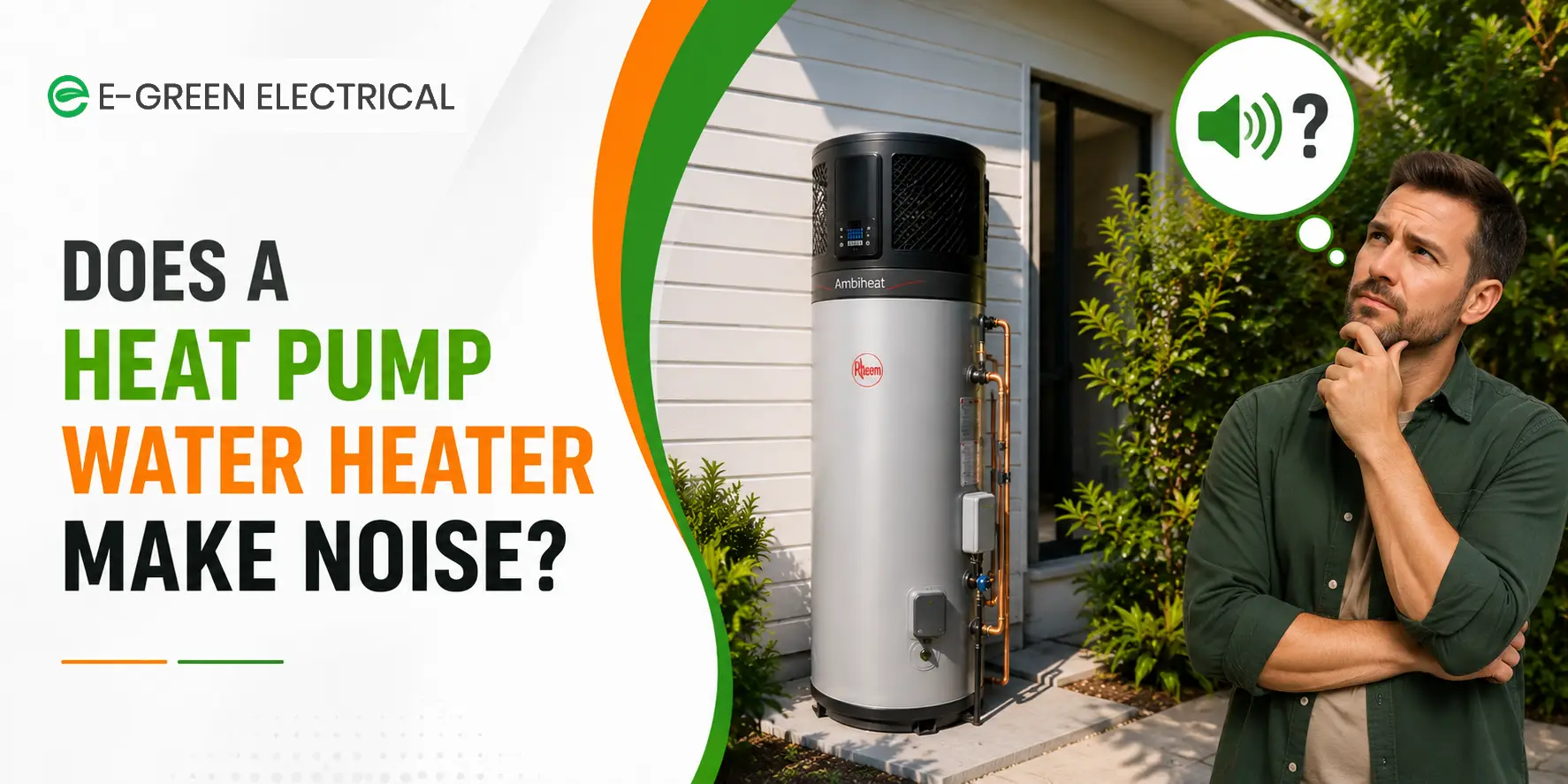
A heat pump water heater does make some noise because it uses a fan and compressor, but modern units are usually quiet when installed correctly. Most systems produce a soft hum, fan sound, light clicking, or occasional defrost noise during operation, which is completely normal. The real noise problems usually come from poor placement, loose parts, blocked airflow, or worn components.
“That humming sound keeping you up at night is it your heat pump, or just buyer’s remorse?”
If you’re looking to upgrade your hot water, noise is probably your biggest concern. Honestly, it’s the top question we get from homeowners across Australia. You want those lower bills, but you definitely don’t want a jet engine parked right outside your bedroom window.
Here is the truth. Most noise issues are fixed before they even start. Modern units are actually quite quiet. If you know what sounds right and where the tank should sit, you get steaming hot water without the stress. This guide breaks down the decibels, the “weird” noises, and the placement tricks that keep the peace with your neighbours.
Also read: Running a Heat Pump Hot Water System with Solar Panels
Think of a heat pump as an air conditioner working backwards. Old electric tanks just sit there silently soaking up power. A heat pump is an active machine. It uses a fan and a compressor. These are your two main noise makers.
The fan pulls in air. The compressor squeezes a gas to make heat. Then, that heat moves into your water. Since things are moving, there will be a sound. It is louder than a silent tank, but it isn’t a constant drain. Most units run for maybe 2 to 4 hours a day. Once the water is hot, it shuts off. It’s a cycle, not a forever hum.
Decibels (dB) can feel like a confusing math project. Let’s make it simple. A quiet library is about 40 dB. Light rain hits 50 dB. A normal chat between friends is 60 dB.
Most good heat pumps sit between 45 and 60 dB when you stand right next to them. But Australian councils are picky. Usually, you need to stay under 45 dB at your property fence.
The Rule of Distance
Distance is your best friend here. Sound follows a specific law where every time you double the distance, the noise drops by about 6 dB.
| Distance from Unit | Typical Noise Level (dB) |
| 1 Metre | 55 dB (Noticeable) |
| 3 Metres | 46 dB (Quiet) |
| 5 Metres | 41 dB (Library level) |
Don’t worry if you hear these clicks during start-up or shut-down. It usually means the machine is doing exactly what it was built for
This is the compressor. It sounds like a big kitchen fridge. It’s the heart of the machine. It should be a steady, rhythmic drone.
The compressor maintains a constant vibration while it moves the refrigerant. You’ll hear this most when the unit starts heating a fresh tank. As long as it’s smooth and doesn’t jump in volume, you’re fine.
You will hear air moving when the system is running. The fan needs to move a large volume of air to extract heat, which creates a steady airflow sound. If it sounds like a consistent breeze, that’s completely normal.
In a quiet area, this may seem noticeable at first. You might also hear light mechanical sounds as air passes through the unit’s internal components. Over time, most people stop noticing it as it blends into the background like a soft hum.
You may hear a light gurgling or bubbling sound during operation. This is usually caused by refrigerant moving through the internal piping as the system starts up. It’s a normal part of the heat transfer cycle and not a fault.
This noise often settles shortly after the unit begins running for the day. It can be more noticeable during start-up or temperature changes. The process is similar in principle to how a split-system air conditioner operates.
You may hear light clicking sounds when the system starts up or shuts down. This is usually caused by metal components expanding as they heat up and contracting as they cool down. It’s a normal part of how the system operates and not a fault.
As the cycle finishes, the temperature inside the unit changes, and the copper and steel parts naturally adjust. This movement creates small “tink” or clicking sounds. It’s similar to what you might hear from metal cooling after being heated, like in other appliances or even a car engine after a drive.
In a cold Aussie winter, the unit might get icy. It enters “defrost mode” to melt it off. You might hear a sudden hiss or a whoosh. It sounds big, but it’s just the machine taking care of itself.
The unit reverses for a few minutes to warm the outside coils. This creates a distinct steaming sound. It’s a sign your unit is smart enough to stop ice from ruining its efficiency.
Inside the system, you may hear light water movement or circulation sounds during operation. This is part of the normal heating process as water is heated and distributed within the tank.
As the system runs, the water naturally circulates as it reaches temperature, which can create a faint trickling or flowing sound. This is completely normal and simply shows the system is actively heating your water.
When the sound changes, pay attention.
Usually, something is just loose. A side panel might have a loose screw, or a pipe might be shaking against the casing. It’s a rhythmic, metallic clatter.
Loose panels act like a drum, making the internal hum much louder. A quick test is to press your hand on the casing. If the noise stops, you’ve found the spot. A bit of tightening or some foam tape fixes this fast.
This is a warning for the fan motor or a bearing. Metal-on-metal screeching means a part is struggling. It isn’t just annoying; it’s the sound of a part dying.
This often gets worse when it’s cold, and the unit works harder. If you ignore it, the motor could seize. That turns a small fix into a total replacement. If it sounds like a whistling kettle, call someone.
If it sounds like loose parts in the compressor, that’s a problem. It could also be a stick or a leaf that got past the grill and is hitting the fan blades.
A heavy thud during start-up can mean the rubber mounts have failed. When the compressor kicks in, it “jumps” and hits the metal frame. This makes a jarring sound you might even feel through your walls.
Grinding is the last stage of a motor failing. It sounds gritty, like rocks in a blender. This happens when the internal bearings collapse.
Sometimes the fan blades get bent and scrape the shroud. This happens from a hard hit or crazy weather. Because the fan is balanced, even a tiny bend ruins the motor over time.
A hiss during defrost is fine. A constant hiss during a normal run might be a gas leak. If there is a leak, your system will run for hours just to get the water lukewarm.
Look for oily spots near the pipe joins. Refrigerant is under high pressure, so a tiny hole makes a “snake hiss” sound. This kills your power bill because the unit never stops running.
If your unit was quiet for a year and suddenly gets loud, something changed. Machines don’t get louder for fun. A spike in noise is usually the first sign a part is wearing out.
Often, the unit is struggling for air, making the fan spin at double speed. This wears everything out faster. If you can hear the unit from inside when you couldn’t before, check for blockages or call a pro.
E-Green Electrical Australia: If your unit is loud or dying, E-Green Electrical Australia makes the upgrade easy. We assess your home, swap the old tank, and install a quiet system without the drama.
Placement is everything. A great unit in the wrong spot will still be a pain.
Don’t put a heat pump right outside a bedroom window. Try for a 3 to 5-metre gap. If the unit runs at 3 AM for cheap rates, you’ll want that space. A unit that is 55 dB at the tank drops to about 43 dB at 3.5 metres.
Neighbours get grumpy about noise. If the fan blows right at their window or a metal fence, the sound bounces. Face the unit down a long path instead. Check your local council rules before you drill any holes.
Avoid the “megaphone effect.” Putting a unit in a tight corner makes it twice as loud because the sound has nowhere to go. Use flat walls. Plants or timber screens also help soak up the noise.
The unit needs a solid life. Use a concrete pad. We always suggest rubber anti-vibration feet. These soak up the “thrum” before it hits your house. Never mount it on a wooden deck; it turns the whole deck into a speaker.
When the truck rolls up, and the tools come out, it’s easy to get swept up in the excitement. You finally have a solution for those freezing mornings. But before a single bolt is tightened, you need to get these answers down in writing.
It’s not just about the gear; it’s about making sure the setup works for your specific home and your specific life.
Don’t let the sales guy brush you off with a vague “it’s pretty quiet.” Every manufacturer has an official decibel rating measured from a one-metre distance. You need this number. It lets you compare models without the guesswork.
Think of it this way: there is a massive difference between a unit at 48 dB and one at 60 dB. On a quiet Tuesday night, that gap feels huge. Beyond your own peace of mind, this number helps you map out exactly how far from the property line the unit needs to sit. You want to stay legal. It’s about making sure your neighbours don’t have a single reason to go to the neighbours’ council.
A lot of modern heat pumps feature a “silent” or “night” mode. Essentially, this feature throttles the fan speed during set hours. This keeps the machine from ramping up to full volume while you’re trying to sleep.
Sure, it might take a little longer to heat the water in this mode. For most people, silence is a fair trade. Ask and labour can automate this with a timer so it’s set-and-forget. If you’re a light sleeper, this one feature is the difference between loving your purchase and regretting it.
In Australia, councils generally don’t regulate hot water systems based on the slab itself, but they do care about placement rules — especially noise impact and boundary setbacks for mechanical equipment.
Each local council may have slightly different requirements around how close outdoor units can be installed to neighbouring boundaries. This is mainly to manage potential noise and nuisance issues rather than the plumbing system itself.
A professional installer will already be familiar with these local requirements and should position the unit accordingly from the start. It’s important to confirm this before installation, because relocating a system later due to compliance or neighbour complaints can be costly and unnecessary.
The fan is the hardest-working part of the system. It is usually the first thing to get noisy as it ages. If you hear rattling or squeaking, it’s often a sign of worn bearings. That’s a fix that glabourricey if it’s out of pocket.
Check exactly how many years of parts and labour you’re covered for. A solid warranty on the motor and compressor shows the brand actually trusts its build quality. Just be sure to read the fine print. Often, you’ll need to prove regular servicing to keep that warranty valid.
Pro Tip: If your system is old and clunky, it might be time to talk about an upgrade. E-Green Electrical Australia handles the whole process from start to finish.
Noise doesn’t have to be a dealbreaker. Most “horror stories” come from badly installed units slapped against bedroom walls or squeezed into tiny gaps. With the right spot and a good unit, you just get a soft hum and much lower bills.
Ready to fix your hot water? E-Green can help you get the setup right. If you have an old clunker, we make switching effortless. Stop worrying about the sound and start saving.
Sydney homeowners are seeking ways to reduce their power bills. With the sun beating down on New South Wales, the […]

Swapping a gas hot water system to a heat pump is becoming a huge topic of conversation around Sydney dinner […]

Spending over $4,000 on a home appliance is a big deal. It is a commitment that makes most homeowners pause. […]

Let’s get straight to the point. You aren’t here for a lecture on thermodynamics or evaporation cycles. You’re here because […]








Our energy efficiency experts are here to answer all your questions and guide you through the products, rebates, and installation process.

Upgrade now and pay later with the Home Energy Saver Program!