
Sydney homeowners are seeking ways to reduce their power bills. With the sun beating down on New South Wales, the […]

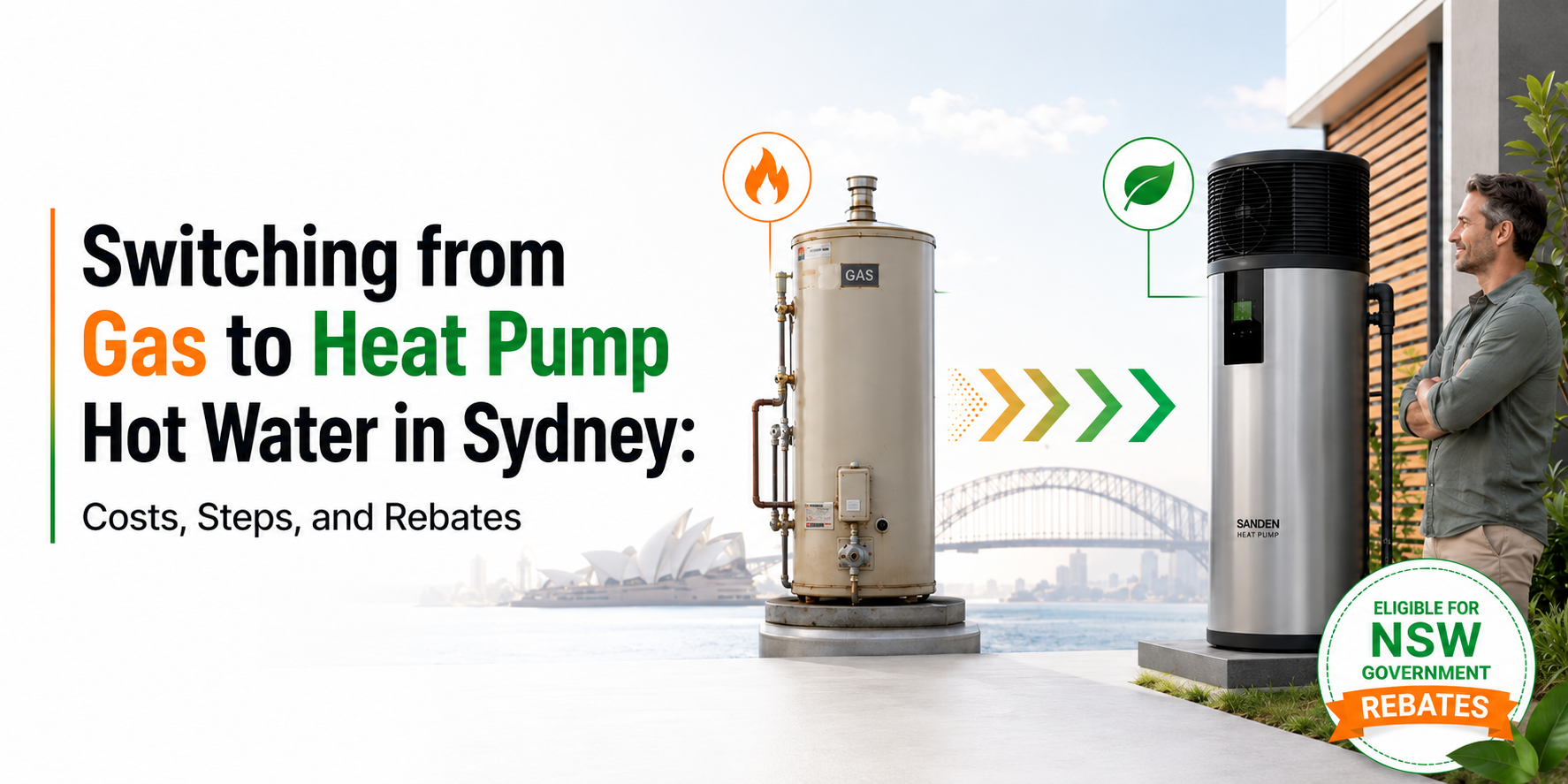
Swapping a gas hot water system to a heat pump is becoming a huge topic of conversation around Sydney dinner tables. With gas prices climbing and the NSW government pushing for a greener grid, homeowners are looking for ways to cut costs without losing that morning hot shower.
It is a big change, but it usually pays off faster than people expect.
Gas was once the king of Sydney homes. It was cheap and fast. Times have changed. The move toward electric systems is picking up speed because electricity can be generated by the sun on your roof. Heat pumps are the leaders of this pack.
They aren’t just “electric heaters” in the old sense; they are smart machines that move heat rather than creating it.
Sydney is at the heart of Australia’s energy transition. The NSW Government has been vocal about reducing our reliance on fossil fuels.
New developments in some parts of the state are even looking at gas-free mandates. If you live in the Harbour City, you’re likely feeling the pinch of gas connection fees. Switching to a heat pump helps you cut down on those daily supply charges for good.
Gas heaters burn fuel to create a flame. That flame heats a metal tank or a pipe. It’s a direct, brute-force method. Heat pumps are more subtle. They use a fan to pull in ambient air. This air heats a refrigerant liquid, which turns into a gas. A compressor then squashes that gas, making it very hot. That heat is then transferred to your water. It’s quiet, steady, and uses a fraction of the energy a gas burner needs.
Efficiency is the headline act here. A good heat pump can be 3 to 4 times more efficient than a gas unit. This means for every unit of electricity you put in, you get three or four units of heat out. You also reduce your home’s carbon footprint significantly. Because they don’t burn anything, there are no exhaust fumes or ventilation risks inside your home. Plus, they are incredibly reliable in Sydney’s temperate climate.
Burning gas releases methane and carbon dioxide, making residential gas a major source of urban emissions. Switching to a heat pump immediately lowers your footprint because it runs on electricity rather than burning fossil fuels.
This connects your hot water directly to the NSW power grid. As NSW adds more wind and solar to the grid, your hot water automatically becomes cleaner over time. If you program the system to run during the day when solar generation peaks, your hot water runs on 100% renewable energy.
The rules in NSW are slowly changing. The government supports programs like the Energy Savings Scheme, which helps households move away from gas and switch to electric hot water systems, especially energy-efficient heat pumps.
There is no full ban on gas appliances yet, but the direction is clearly moving towards electric options over time.
Right now, there are strong rebates available for upgrading to electric hot water systems, which makes switching cheaper. If you wait until your gas system breaks down, you might miss out on these savings and pay more later as gas prices and maintenance costs change.
Export markets drive the cost up, leaving Sydney locals with higher bills. Electricity isn’t exactly cheap, but it is more controllable. With a heat pump, your bill drops because you use so much less energy. If you have solar, your hot water can essentially be free. You can’t “grow your own gas” at home, but you can definitely catch your own sunlight.
Heat pumps are the perfect partner for solar PV. Most modern heat pumps have a timer or a “solar soak” mode. You can set the machine to do its heavy lifting at noon when your panels are producing the most power.
This turns your hot water tank into a thermal battery. You store the sun’s energy as hot water and use it at night. It is a closed loop of efficiency that gas simply cannot match.
You should expect to pay more up front for the hardware. A quality heat pump unit in Sydney generally costs between $2,500 and $5,500. This is higher than a basic gas storage tank. However, you aren’t just buying a tank; you’re buying a mini-power plant for your water. The price varies based on the tank size and the brand’s efficiency rating. Brands like Reclaim, Sanden, or Steibel Eltron are popular choices in the local market.
Installation isn’t just about pipes. You need a licensed plumber and often an electrician. If you’re moving from gas, you’ll need a new dedicated electrical circuit for the heat pump. This might cost between $600 and $1,500, depending on your switchboard’s age.
The plumbing work involves capping off the gas line and connecting the new tank. Total installation labour usually lands between $1,200 and $2,000 for a standard Sydney home.
A straight gas-to-gas replacement might cost you $1,800 to $2,500 total. A heat pump conversion might total $4,000 to $6,000 before rebates.
It looks expensive on paper. But wait. Once you factor in the NSW rebates, that gap shrinks significantly. In many cases, the out-of-pocket difference is less than $1,000. When you consider the yearly savings, the heat pump usually wins within two to three years.
The average Sydney household can save $200 to $800 a year by switching to a heat pump hot water heater. If you have solar, those savings can jump to over $1,000. Over the 15-year life of the unit, that’s $15,000 back in your pocket.
Gas systems also have daily supply charges. If you remove gas from your home entirely, switching to induction cooking as well, you save an extra $300 a year just in service fees. It adds up.
First, look at your switchboard. Do you have space for a new circuit breaker?
Next, check the location. Heat pumps need air to breathe. They shouldn’t be tucked away in a tiny, unventilated closet. They need about 20 cubic meters of space or a clear outdoor spot. Most Sydney homes have a hot water tank outside, which is perfect.
Your plumber will check if your existing pipes are the right size to handle the flow.
Don’t just buy the biggest one. A 215-litre tank is usually plenty for a family of four. Heat pumps take longer to “recover” than gas, so having a slightly larger tank than your old gas one is a smart move. Look at the Decibel (dB) rating as well.
Some heat pumps have a hum. If the unit is near a bedroom window, you’ll want a quiet model like a Sanden, which is famous for its low noise levels.
Not all plumbers are heat pump experts. You want someone who understands the electrical side and the federal rebate paperwork. Ask for a “turnkey” quote where they handle both the plumbing and the electrical work. Check Google reviews for Sydney-based installers.
Make sure they are accredited under the Solar Homes Program or the NSW Energy Savings Scheme. This ensures you get your rebate money without a headache.
On the day of installation, the team will drain and remove your old gas unit. The gas fitter will safely cap the line. The electrician will run a new wire from your board.
Then, the new unit is levelled on a concrete base. Once connected, they’ll test the valves and the temperature. The whole process usually takes about four to six hours. You’ll have hot water again by dinner time.
In NSW, all hot water installations must have a tempering valve. This keeps the water at the tap from being scalding hot, usually around 50°C.
The tank itself stays hotter to kill bacteria. Your installer must provide a Certificate of Compliance. This is your proof that the work meets Australian Standards. Don’t skip this; you’ll need it for your home insurance and for claiming any government incentives.
The main game in town is the NSW Energy Savings Scheme (ESS). This program provides “Energy Savings Certificates” (ESCs) when you swap a gas heater for a heat pump. Additionally, there are federal STCs (Small-scale Technology Certificates).
These aren’t just small discounts; they can shave $1,000 to $2,000 off the total price. Some installers even offer “no-upfront-cost” deals where they keep the rebate, and you pay a lower price.
Check with your local Sydney council. Some areas, like the Inner West or Northern Beaches, occasionally offer top-up grants for energy efficiency.
Federal low-interest loans are also becoming more common for green home upgrades. If you’re doing a full home renovation, look into the Clean Energy Finance Corporation (CEFC) programs. They can help bundle the heat pump cost into a larger, low-interest green loan.
Heat pumps are pretty low-maintenance. You should flick the pressure relief valve every six months to make sure it’s not stuck. Keep the area around the unit clear of leaves and debris so the fan can breathe. Every few years, have a plumber check the sacrificial anode inside the tank. This rod prevents the tank from rusting. Replacing a $50 anode can add five years to your tank’s life.
Most reputable brands offer a 5-to-10-year warranty on the tank and a 2-to-5-year warranty on the compressor. Always check if the brand has a service agent in Sydney. You don’t want a unit that requires parts to be shipped from overseas with no local tech to fix it. Brands with a strong Australian presence are always a safer bet for long-term peace of mind.
Don’t wait for your current gas heater to flood your garage. Start the research now. Call a few Sydney installers and ask for a quote that includes the ESS and STC rebates. Check your last gas bill and imagine it being zero. The technology is ready, the rebates are waiting, and your home will be better for it. Leap and join the thousands of Sydney-siders making the switch today.
Sydney homeowners are seeking ways to reduce their power bills. With the sun beating down on New South Wales, the […]
Spending over $4,000 on a home appliance is a big deal. It is a commitment that makes most homeowners pause. […]
Let’s get straight to the point. You aren’t here for a lecture on thermodynamics or evaporation cycles. You’re here because […]
There is nothing quite like the jolt of an icy stream of water when you are expecting a steaming morning […]







Our energy efficiency experts are here to answer all your questions and guide you through the products, rebates, and installation process.

Upgrade now and pay later with the Home Energy Saver Program!