
For Sydney homeowners wanting to replace an old electric or gas hot water system, a heat pump can provide a […]

Quick Answer
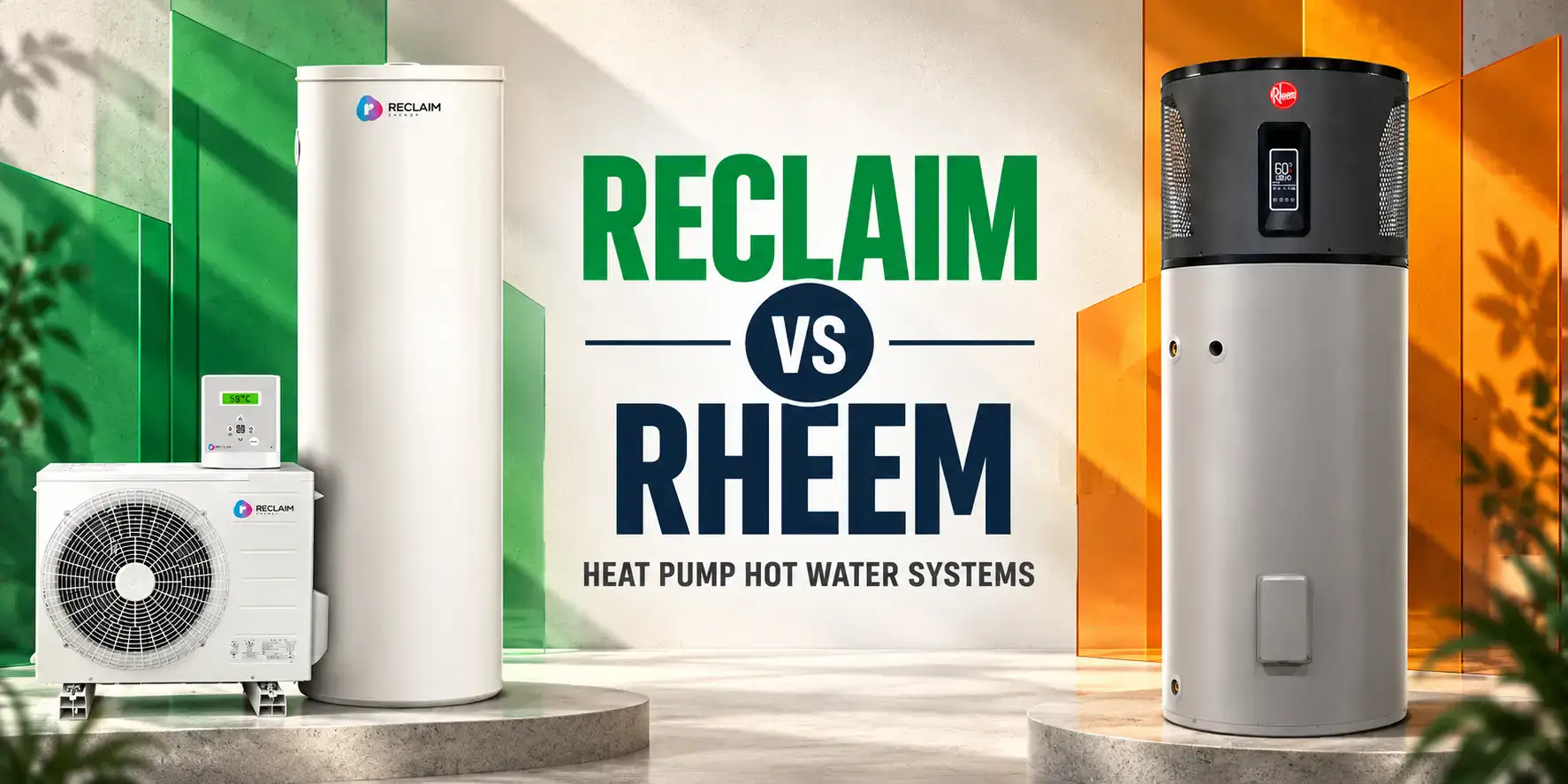
If you are choosing between Reclaim and Rheem, the better option depends on what matters most to you.
Reclaim is the better option if you want to cut your energy use, get more from your solar panels and enjoy quieter hot water operation. Its CO₂ heat pump technology, top-down heating and smart controls make it well suited to you if you want lower running costs and plan to keep your system for years.
Rheem is best suited to you if you want a reliable heat pump without paying as much upfront. Its AmbiPower and Ambiheat systems come in different tank sizes, so you can select a model that gives your household enough hot water without paying for more capacity than you need.
| Feature | Reclaim Heat Pumps | Rheem Heat Pumps |
| Best for | Premium homes, maximum solar use and quiet installations | High-demand households, fast recovery and established support |
| System type | Split systems | AmbiPower and Ambiheat integrated systems |
| Tank sizes | 160L, 250L, 315L and 400L | 180L, 270L, 280L and 325L |
| Refrigerant | CO₂ (R744) and R290, model dependent | R290 and R513a, model dependent |
| Energy efficiency | COP above 5 under optimal conditions | COP around 4.5 to 5.2, depending on model and conditions |
| Electric booster | No electric boost element during normal use | Backup electric heat available on selected models |
| Noise level | Around 37dB | Approximately 47dB to 54dB |
| Smart controls | Smart Controller with optional Wi-Fi and Reclaim App | Weatherproof LED touchscreen controls |
| Cold weather operation | Excellent cold-weather performance with built-in frost control | -7°C to 43°C |
| Hot water recovery | Top-down heat recovery of up to approximately 110L/hour | Approximately 56L/hour at a 45°C temperature rise |
| Warranty | Up to 15-year tank and up to 10-year heat pump | Up to 10-year cylinder, 3-year sealed refrigeration and 1-year labour |
| Government rebates | Eligible for Federal STCs plus applicable VIC and NSW rebates | Eligible for Federal STCs plus applicable state incentives |
Reclaim is the better option if maximum energy efficiency is your priority. Its CO₂ heat pump technology can achieve a COP above 5 under optimal conditions, meaning it can produce more heat from each unit of electricity it uses.
Reclaim also uses top-down heating, which sends heated water to the top of the tank first. This means you can have hot water available without waiting for the entire tank to heat up.
Rheem is best suited to you if you want strong energy efficiency without stepping into the premium end of the market. Its AmbiPower and Ambiheat systems achieve a COP of around 4.5 to 5.2, depending on the model and operating conditions. This makes them highly efficient alternatives to conventional electric storage water heaters, while typically offering a more affordable upfront price than premium CO₂ systems.
At E-Green Electrical, Rheem systems start at around $2,999 fully installed under standard conditions, making them easier to consider without a large upfront investment.
Reclaim costs more upfront, but some of that extra cost goes towards features designed to reduce energy use over time. These include CO₂ heat pump technology, smart controls, and solar integration, all of which can help you use less grid electricity and make better use of the solar power your home produces.
For example, smart controls can help you schedule heating around periods when electricity is cheaper, or your solar system is producing power. Similarly, better solar integration allows you to use more of your own solar energy to heat water rather than sending that electricity back to the grid.
That means the higher purchase price is not simply paying for extra features. You are also paying for technology that can help reduce your running costs over the life of the system.
Therefore, Rheem is the better option if keeping your initial cost down is your priority. On the other hand, Reclaim is best suited if you are willing to spend more upfront for technology that can help improve efficiency and reduce your long-term energy costs.
The purchase price is easy to see, but your electricity bill is where the long-term difference can become noticeable.
Reclaim is best suited if you have rooftop solar and want to use more of your own electricity for hot water. As said, the smart controller lets you set operating schedules around your household’s energy use, so you can heat water when your solar system is producing electricity.
Using your available solar power instead of relying as heavily on the grid saves on operating costs. On top of that, the high COP of Reclaim heat pumps helps keep electricity consumption down, so even if you buy electricity from the grid, you save more.
Similarly, Rheem can significantly reduce your hot water electricity costs compared with a conventional electric system. Its AmbiPower and Ambiheat models use heat pump technology to produce hot water efficiently and can suit households with high daily hot water demand.
The amount you save, however, will depend on how you use your system, when you heat your water, and whether you have solar available.
The refrigerant is what allows a heat pump to pull heat from the surrounding air and transfer it into your hot water. The type of refrigerant matters because different refrigerants have different environmental characteristics and can perform differently across operating conditions.
Reclaim uses CO₂ (R744) on its CO₂ heat pump systems, which is a naturally occurring refrigerant with a global warming potential of 1. This gives the system a very low-GWP refrigerant and makes CO₂ a more environmentally friendly alternative to many synthetic refrigerants.
Additionally, CO₂ heat pump technology can continue producing hot water effectively in colder conditions, which can help the system maintain performance when outdoor temperatures drop. In addition to CO₂, Reclaim offers models using R290, another natural refrigerant with a very low global warming potential.
On the other hand, Rheem uses R290 and R513A depending on the model. As mentioned above, R290 is a natural refrigerant with a very low global warming potential, while R513A is a synthetic refrigerant designed as a lower-GWP alternative to some older refrigerants.
Comparatively, both systems use modern, approved, lower-impact refrigerants, with the key difference being that some Reclaim models using CO₂ can offer stronger performance in colder conditions.
An electric booster gives your hot water system an extra way to heat water when demand is higher than normal. This can be useful when several people need hot water at around the same time or when the heat pump needs additional support.
Reclaim is designed to handle normal hot water heating without relying on a conventional electric immersion element. Its CO₂ heat pump and top-down heating design do the regular heating work, while a manual boost function can provide extra hot water when you need it.
Rheem takes a different approach, with selected models offering backup electric heating. This can be useful if your household suddenly uses more hot water than usual because the electric element gives the system another way to provide additional hot water.
The main consideration is how often you need that extra heating. Direct electric heating generally uses more electricity than heat pump operation, so you want the heat pump to handle most of your everyday hot water needs.
The tank is one of the most important parts of your hot water system because it stores the water your household relies on every day. The material used to build it can affect corrosion resistance, maintenance, and how well the tank suits your local water and installation conditions.
Reclaim gives you a choice between stainless steel and glass-lined enamel tanks. The stainless steel option offers strong corrosion resistance and does not require a sacrificial anode, which can mean less maintenance over the life of the tank. The glass-lined enamel option provides another form of protection against corrosion and may suit different installation conditions.
Rheem, on the other hand, uses heavy-duty enamel-lined storage tanks. This type of tank construction has been used extensively in Australian hot water systems and provides a proven approach to protecting the steel tank from corrosion.
Before deciding what is best for you, consider your local water quality, installation environment and maintenance requirements.
Pick Rheem if you prefer a proven enamel-lined tank design and want a straightforward option that has been widely used in Australian hot water systems. Otherwise, Reclaim may be better suited if you want more choice in tank construction, particularly the option of stainless steel for strong corrosion resistance and potentially lower maintenance.
Cold weather matters because air-source heat pumps rely on heat from the surrounding air.
Performance can change as outdoor temperatures fall, so homeowners in colder parts of Australia should pay close attention to the operating range.
Reclaim has strong cold-weather performance and built-in frost control. Its CO₂ technology allows the system to continue operating effectively in colder conditions without relying on a standard electric boost element during normal operation.
Rheem is excellent too! The systems have a published operating range of -7°C to 43°C. That makes them suitable for a wide range of Australian conditions, but the exact climate around your home should still form part of your decision.
Reclaim has the advantage if quieter operation is important to you. The system operates at around 37dB, giving you very quiet operation that can work well when the unit is installed closer to living areas or bedrooms.
Rheem offers noise levels that should suit many standard installations. The heat pumps operate at around 47dB to 54dB, depending on the model. They can still work well when positioned away from bedrooms and living areas, where the higher operating noise is less likely to be noticeable.
Reclaim places more emphasis on smart control and solar use. Its Smart Controller, optional Wi-Fi and Reclaim App give homeowners more control over when the system operates. You can use timers and operating modes to better match hot water production with your household’s energy needs.
That feature becomes particularly useful when you have rooftop solar. You can schedule the system around the times when your solar panels produce the most electricity, which gives you a better opportunity to use your own generated power for hot water.
Rheem takes a simpler approach with its weatherproof LED touchscreen controls. With it you can manage the system directly from the unit without relying on a smartphone or more advanced energy-management setup. That simplicity can be an advantage for homeowners who prefer straightforward controls.
Recovery speed matters when several people need hot water close together, such as during busy mornings.
Reclaim uses top-down heating, sending heated water to the top of the tank first so usable hot water can become available sooner. Its recovery rate can reach approximately 110 litres per hour, helping replace hot water more quickly when your household is using it heavily. It is better suited to households with high hot water demand.
Rheem provides around 56 litres per hour of recovery at a 45°C temperature rise, giving you steady hot water recovery for normal household use. It can be a good fit when your tank capacity matches your household’s usage.
Reclaim offers up to 15 years of tank warranty coverage and up to 10 years on the heat pump, depending on the system and components. That gives you longer maximum protection for both the tank and heat pump.
Rheem offers up to 10 years on the cylinder, 3 years on sealed refrigeration and 1 year on labour, depending on the applicable system and warranty terms.
While one system may appear to offer more years of coverage, the terms and conditions can make a difference. Check what is covered, which components have separate warranty periods and what is required to keep the warranty valid before making your decision.
Government rebates can significantly reduce what you pay for a heat pump, and both Reclaim and Rheem can qualify for rebates and incentives when the system, installation and your household meet the relevant requirements.
Both brands can be eligible for Federal Small-scale Technology Certificates (STCs), which can reduce the upfront cost of an eligible heat pump installation.
You may also qualify for state-based rebates or incentives, depending on where you live. Programs in Victoria and NSW, for example, can provide additional support for eligible households and systems.
So, don’t choose Reclaim over Rheem simply because one appears to offer a bigger rebate. Both brands can qualify for incentives, and the amount you receive depends on the system, where you live and your eligibility. Compare the two based on what suits your home first, then look at the final price after any rebates you can claim.
Reclaim has the stronger case if you already have rooftop solar.
Its smart controls are designed to help you schedule hot water production around your available energy. That can make it easier to use more of your solar electricity instead of sending excess generation back to the grid.
Rheem can still work well in a solar home, particularly when the system operates during periods of available solar generation. The difference is the level of control.
Rheem deserves consideration if your main concern is high daily hot water demand.
The AmbiPower and Ambiheat range gives you several tank sizes, including 180L, 270L, 280L and 325L options.
Reclaim also offers plenty of capacity, with 160L, 250L, 315L and 400L tanks.
That means neither brand is limited to small households. The more important question is how much hot water your family actually uses. The answer should guide your tank size rather than simply choosing the largest system available.
There is no single winner for every Australian home.
Reclaim is the stronger choice when your priorities are:
Rheem is the stronger choice when your priorities are:
After comparing the two, the better choice comes down to how much value you place on the extras versus keeping things simple.
Reclaim gives you more to consider, from tank construction and refrigerant technology to recovery, noise, and controls. Rheem keeps the choice more straightforward, with different tank sizes and a lower entry price.
If you have narrowed your decision down to these two, look at the specific models and the final installed price rather than comparing the brands alone. The best way to decide is to compare what each system offers for your home and what you will actually pay.
Not sure which one suits your home? Get a quote for both and compare the final options side by side.
For Sydney homeowners wanting to replace an old electric or gas hot water system, a heat pump can provide a […]

If you own or rent a property in NSW, you can make eligible home energy upgrades without paying the full […]
Quick Overview If you are a commercial property owner, facility manager, or business operator in Australia and plan to install […]
Quick Answer For many Sydney homes, 10kW is the better value choice when the household uses around 25 to 40kWh […]





Our energy efficiency experts are here to answer all your questions and guide you through the products, rebates, and installation process.

Upgrade now and pay later with the Home Energy Saver Program!