

For Sydney homeowners wanting to replace an old electric or gas hot water system, a heat pump can provide a […]

Quick Answer
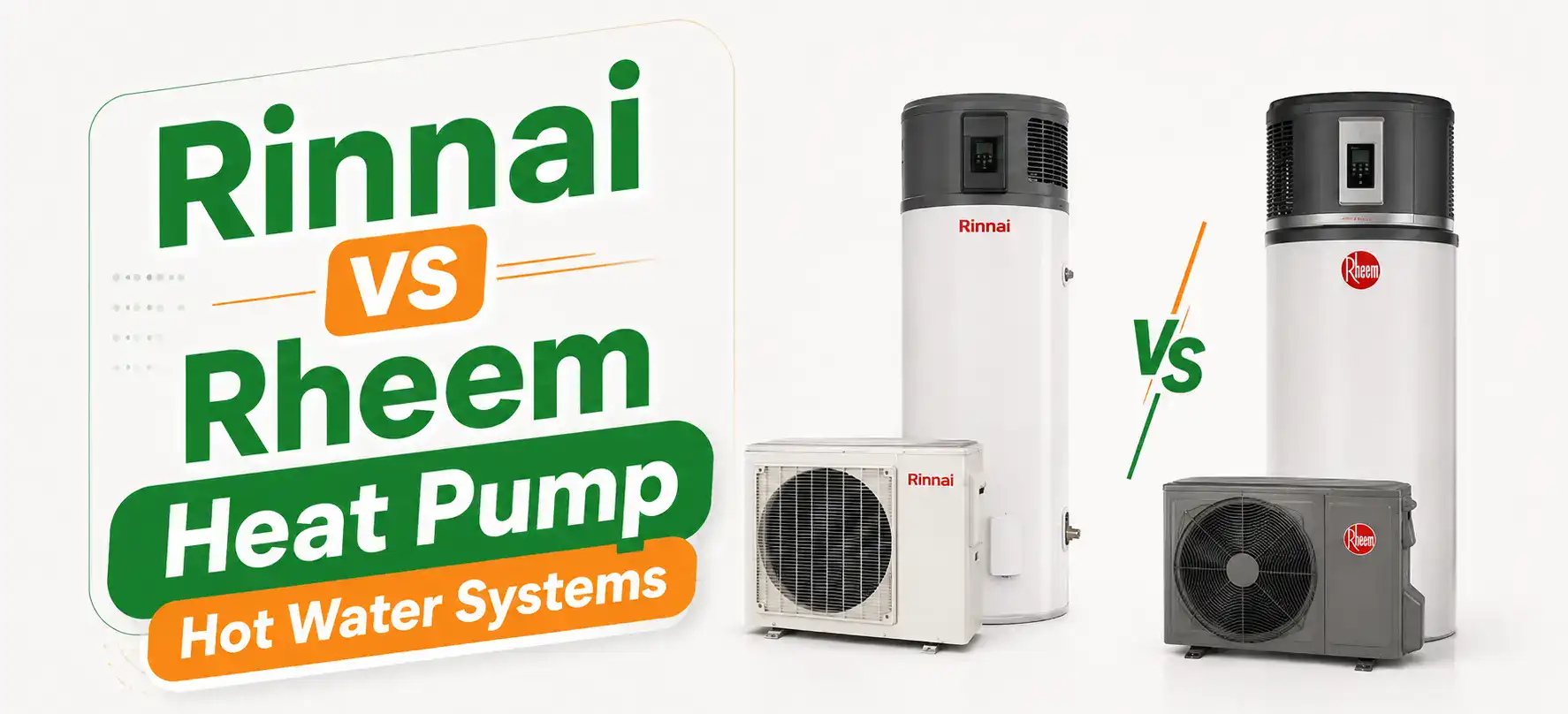
Rinnai is the better heat pump choice if you want to reduce hot water electricity costs while having greater control over when your system operates. Its Enviroflo range combines high-efficiency technology, quiet operation, flexible sizing, and smart controls that allow homeowners to schedule water heating during lower electricity tariff periods or when excess rooftop solar energy is available.
Rheem is the better choice if your household has higher hot water demand and you need dependable performance when usage increases. Its AmbiPower and Ambiheat heat pumps are designed to deliver strong recovery after periods of heavy use, making them a suitable option for families who need a reliable supply of hot water throughout the day.
| Feature | Rinnai Heat Pumps | Rheem Heat Pumps |
| Best for | Homeowners wanting energy efficiency, smart controls, and excellent value | Families needing fast recovery, reliability, and strong service support |
| System type | Split and integrated heat pump systems | AmbiPower and Ambiheat heat pump systems |
| Tank sizes | 180L, 250L, 265L, 300L, 315L, 340L and 400L (model dependent) | 180L, 270L, 280L and 325L |
| Refrigerant | R32 and R290 depending on model | R290 and R513a depending on model |
| Energy efficiency | Uses up to 75% less electricity than a standard electric storage water heater | COP around 4.5 to 5.2 depending on model and conditions |
| Hot water electricity consumption | Reduced through high-efficiency operation, smart scheduling, and solar optimisation | Reduced through consistent year-round heat pump performance |
| Electric booster | Inbuilt electric boost element on selected models | Backup electric heating available depending on model |
| Noise level | From approximately 45dB(A) | Approximately 47 to 54dB |
| Smart controls | Wi-Fi connectivity with Rinnai Link App or SmartLife App | Weatherproof LED touchscreen controls |
| Solar integration | Smart scheduling to maximise rooftop solar usage | Timer-based operation to support solar generation |
| Cold weather operation | -10°C to 45°C depending on model | -7°C to 43°C |
| Hot water recovery | Faster recovery on larger 7.0kW models | Approximately 56L/hour recovery at a 45°C temperature rise |
| Warranty | Up to 10-year cylinder, 5-year compressor, 1-year parts | Up to 10-year cylinder, 3-year sealed refrigeration, 1-year labour |
| Government rebates | Eligible for Federal STCs and applicable state rebates | Eligible for Federal STCs and applicable state incentives |
Both Rinnai and Rheem heat pumps can help Australian households reduce hot water electricity consumption compared with traditional electric storage systems, but they approach efficiency differently.
Rinnai states that its heat pump range can use up to 75% less electricity than a standard electric storage water heater. Its newer Enviroflo models use R290 refrigerant, which helps the systems transfer heat efficiently while reducing environmental impact.
Additionally, selected models include built-in timers and smart controls, allowing homeowners to schedule water heating when electricity prices are lower or when excess rooftop solar energy is available.
Comparatively, Rheem focuses on delivering consistent everyday performance. Its AmbiPower and Ambiheat systems typically achieve a COP between 4.5 and 5.2, depending on the model and operating conditions. Rather than focusing on maximum efficiency figures, Rheem designs its heat pumps to deliver dependable energy savings across changing Australian climates while maintaining reliable hot water performance for everyday households.
For homeowners looking for maximum efficiency and greater control over energy use, Rinnai has the advantage. However, Rheem provides dependable efficiency with consistent performance throughout the year.
Purchase price is often one of the first things homeowners compare, but it’s important to look beyond the sticker price. The total cost depends on the system you choose, the installation requirements, and any available government rebates.
At the time of writing, E-Green Electrical offers selected Rinnai heat pump hot water systems from $2,499 installed, while comparable Rheem systems start from $2,999 installed under standard installation conditions.
For many households, Rinnai’s lower installation cost makes it an attractive option, especially if you’re looking for an energy-efficient heat pump that offers smart controls and good overall value. Rheem costs more upfront, but that higher price reflects its focus on dependable hot water recovery, proven reliability, and the backing of one of Australia’s largest hot water service networks.
If keeping your upfront costs down is the priority, Rinnai offers the better value. If you’re happy to invest a little more for faster recovery and the confidence of a well-established service network, Rheem may be worth the extra cost.
The true cost of a heat pump goes beyond the purchase price. Electricity consumption over many years has a major impact on the total cost of owning and operating the system.
For homeowners focused on achieving the lowest possible running costs, Rinnai has an advantage due to its high efficiency, smart controls, and solar scheduling features. However, Rheem can be a better fit for households that value consistent performance during periods of high hot water demand.
Rinnai’s high-efficiency operation and smart controls help reduce ongoing electricity costs by allowing homeowners to schedule water heating when electricity prices are lower or when excess rooftop solar energy is available. This can reduce reliance on grid power and improve long-term savings.
Meanwhile, Rheem focuses on delivering efficient performance for households with higher hot water demand. Its AmbiPower and Ambiheat systems are designed to recover hot water efficiently after periods of heavy use, helping larger households maintain a steady supply without relying as frequently on additional electric boosting. This can help control ongoing electricity costs where hot water demand remains consistently high.
The refrigerant inside a heat pump plays an important role in how efficiently the system transfers heat, its environmental impact, and its performance across different weather conditions.
Rinnai uses R32 and R290 refrigerants across its heat pump range. Earlier Enviroflo S 5kW models use R32, while newer systems, including the Enviroflo S 7kW, AR Series, and GR Series, use R290 natural refrigerant. R290 provides excellent heat transfer performance with a much lower global warming potential, helping improve efficiency while reducing environmental impact.
Rheem also uses R290 natural refrigerant across many newer models, while selected systems use R513a refrigerant. These refrigerants help Rheem deliver efficient heat transfer, reliable operation, and reduced environmental impact compared with older refrigerant options.
Overall, both Rinnai and Rheem use modern refrigerants that support energy-efficient operation while meeting the growing demand for more environmentally responsible hot water systems.
An electric booster provides extra heating support when a heat pump cannot meet hot water demand on its own. This can happen during periods of heavy household usage or when colder weather affects heat pump performance.
Rinnai includes an inbuilt electric boost element on selected models. The booster provides additional reliability by helping maintain hot water availability when demand increases or when the system requires extra heating support.
Rheem also offers backup electric heating on applicable models to support reliable hot water availability when additional heating is required. This can be beneficial for households with higher hot water demand or situations where extra heating support is needed.
In both Rinnai and Rheem systems, the electric booster acts as a backup feature rather than the primary heating method. However, because the electric element heats water directly, frequent booster operation can increase electricity consumption and reduce long-term savings.
Tank durability plays an important role in the long-term reliability of a heat pump system.
Rinnai uses Australian-made vitreous enamel storage tanks across its range. Selected models include standard or hard-water anodes to provide additional corrosion protection in different water conditions.
By comparison, Rheem uses enamel-lined storage tanks designed for Australian conditions and backed by decades of experience manufacturing hot water systems.
The two brands offer durable tank construction designed to withstand Australian conditions. The main difference is that Rinnai highlights its tank protection options, while Rheem benefits from its long history in the Australian hot water market.
Heat pump efficiency naturally changes as temperatures drop, making cold-weather operation an important consideration for homes in cooler regions.
Rinnai heat pumps operate from -10°C to 45°C, depending on the model. Selected systems include anti-frost protection to help maintain reliable performance during colder conditions.
By comparison, Rheem systems operate from -7°C to 43°C and are designed to deliver dependable performance across typical Australian climates, including areas that experience colder winter temperatures.
Rinnai’s wider operating range gives it an advantage for homeowners in colder regions or areas that experience more extreme temperature changes. For most Australian households, however, both brands provide reliable year-round performance, and the choice will depend more on climate, household demand, and the features that matter most.
Heat pumps produce some noise from the compressor and fan, so installation location matters, especially when the unit is placed close to living areas, bedrooms, or neighbouring properties.
Rinnai systems operate from approximately 45dB(A), which is similar to the sound level of a quiet conversation or modern dishwasher.
Rheem units operate between approximately 47dB and 54dB, depending on the model and operating conditions.
Both brands are considered quiet by industry standards when installed correctly. However, the lower operating noise of Rinnai may be beneficial for homeowners with limited outdoor space or those planning to install the system near areas where noise could become noticeable.
If you are someone who likes remote access, advanced scheduling, and greater control over solar usage, Rinnai has the advantage. Its built-in Wi-Fi on many models allows homeowners to control the system through the Rinnai Link App or SmartLife App, depending on the system.
Selected models include operating modes such as:
These features allow homeowners to schedule water heating around household routines, reduce hot water electricity consumption, and make better use of available rooftop solar generation.
Rheem takes a simpler approach with a weatherproof LED touchscreen mounted directly on the unit. Homeowners can adjust settings, set timers, and activate vacation modes without needing an internet connection or smartphone app.
Hot water recovery determines how quickly a heat pump can reheat the water after periods of heavy household use.
Rinnai recovery performance depends on the selected model, tank size, and heating capacity. Its larger 7.0kW Enviroflo models provide faster recovery compared with smaller systems, making them suitable for households that need a reliable supply of hot water throughout the day.
Rheem has the advantage when recovery speed is a priority because it publishes recovery performance figures for its systems. Some Rheem heat pumps can heat approximately 56 litres per hour at a 45°C temperature rise under suitable conditions, helping households recover hot water faster after multiple showers or periods of high demand.
The better choice depends on your household size and daily hot water demand. If you have a larger household where several people may need hot water close together, Rheem’s recovery performance can be a strong advantage. And if you have a smaller or average-sized household that values efficiency, smart controls, and lower running costs, Rinnai remains a strong option.
Warranty coverage provides homeowners with confidence that their heat pump is supported if issues occur after installation.
Rinnai offers up to a 10-year cylinder warranty, 5-year compressor warranty, and 1-year parts warranty, depending on the selected model and configuration. This provides strong protection for the key components that influence long-term system performance.
Rheem, by comparison, offers up to a 10-year cylinder warranty, 3-year sealed refrigeration components warranty, and 1-year labour warranty. One of Rheem’s biggest advantages is its extensive national service network, strong spare parts availability, and long history in the Australian hot water market.
So, if nationwide service support and access to experienced technicians are important, Rheem has the advantage. But if you prefer longer compressor warranty coverage alongside advanced heat pump features and smart controls, Rinnai remains a strong option.
Government rebates can help reduce the upfront cost of installing a heat pump hot water system, making energy-efficient upgrades more affordable for Australian households.
Both Rinnai and Rheem heat pumps may qualify for national energy-efficiency incentives, including Federal Small-scale Technology Certificates (STCs). These certificates are available across Australia and can help reduce the purchase and installation cost of eligible systems.
Some homeowners may also qualify for state-specific incentives depending on where they live. These may include programs such as Victorian Energy Efficiency Certificates (VEECs), NSW Energy Savings Certificates (ESCs), and NSW Home Energy Saver incentives for eligible households.
The rebate amount depends on the selected model, installation location, installer requirements, and current program rules. Always check eligibility before installation, as incentives can reduce the final installed cost and improve the overall value of your heat pump investment.
The better heat pump depends on your household needs, hot water usage, and the features you value most. Both brands offer reliable systems, but they suit different types of homeowners.
Both Rinnai and Rheem offer quality heat pump hot water systems, but the right choice depends on how your household uses hot water and which features matter most.
Rinnai is a strong option for homeowners who want smarter energy management, better solar integration, and more control over running costs.
Rheem is better suited to families who need dependable hot water recovery, consistent performance, and strong service support.
Before choosing a system, consider your household size, daily hot water usage, solar availability, installation requirements, and whether energy control or high-demand performance matters more.
For Sydney homeowners wanting to replace an old electric or gas hot water system, a heat pump can provide a […]

If you own or rent a property in NSW, you can make eligible home energy upgrades without paying the full […]

Quick Answer If you are choosing between Reclaim and Rheem, the better option depends on what matters most to you. […]

Quick Overview If you are a commercial property owner, facility manager, or business operator in Australia and plan to install […]





Our energy efficiency experts are here to answer all your questions and guide you through the products, rebates, and installation process.

Upgrade now and pay later with the Home Energy Saver Program!