
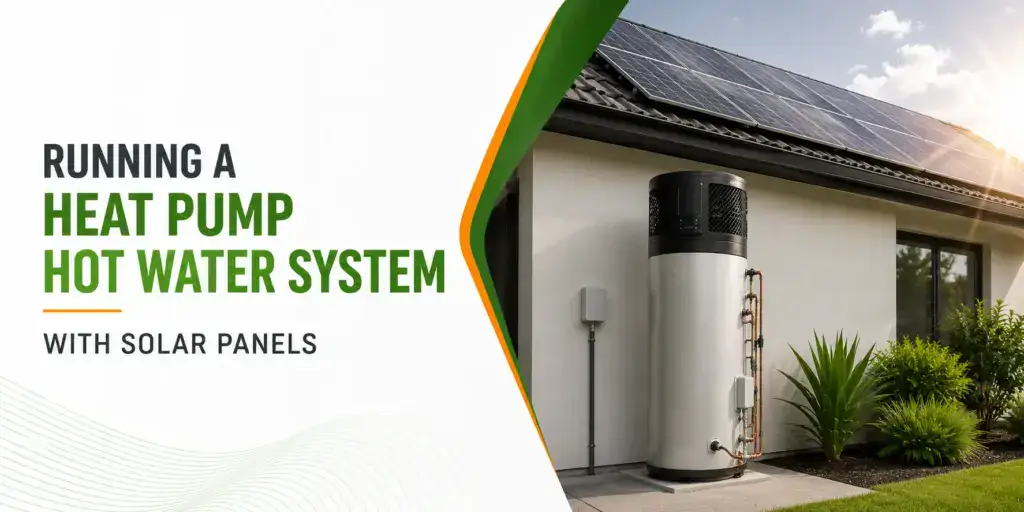
Sydney homeowners are seeking ways to reduce their power bills. With the sun beating down on New South Wales, the […]

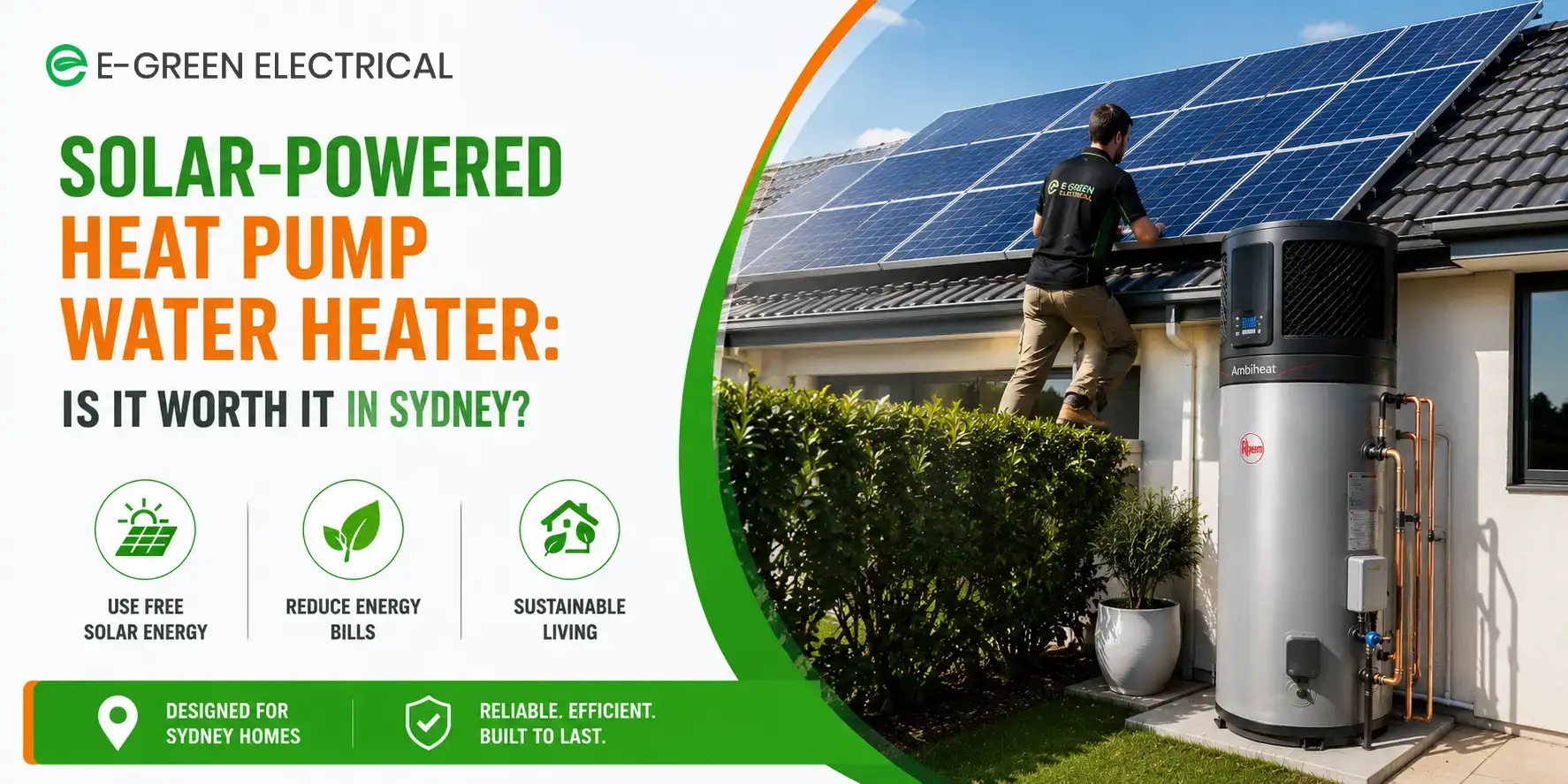
Sydney homeowners are seeking ways to reduce their power bills.
With the sun beating down on New South Wales, the shift toward smarter energy is happening fast. One of the most effective ways to do this is by pairing a heat pump hot water system with solar panels.
This combination isn’t just a trend; it’s a practical way to turn your roof into a private utility company.
Sydney’s climate is almost perfect for this setup. We have mild winters and plenty of clear days. When you combine the efficiency of a heat pump with the free energy from the sun, the math starts to look very good for your wallet.
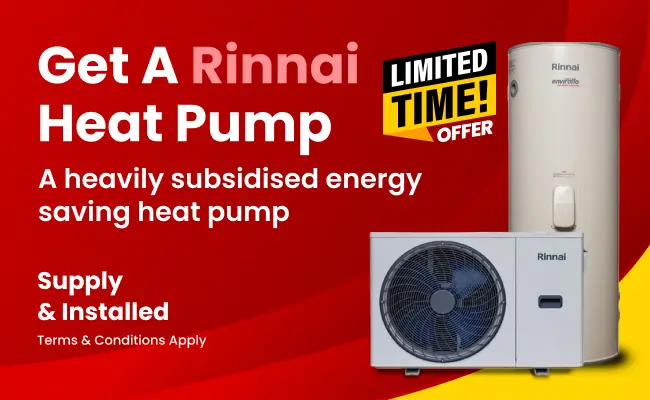
Think of a heat pump as a fridge working in reverse. Instead of pumping heat out to keep your milk cold, it pulls heat from the surrounding air to warm up your water.
It doesn’t use an electric element to create heat directly. Instead, it uses electricity to move heat from one place to another. This represents a significant shift in how we perceive home appliances.
The process involves a refrigerant that evaporates at very low temperatures. Even on a cool Sydney evening, there is enough ambient heat in the air to turn that liquid into gas. A compressor then squashes that gas, which raises its temperature significantly.
That intense heat is transferred to your water tank. Because the system is moving heat rather than making it, it can be three to four times more efficient than a standard electric tank.
Traditional electric systems are energy hogs. They simply blast an element with high voltage until the water gets hot. Gas systems are better, but gas prices are volatile and require venting and piping that can be messy.
A heat pump fits into the same footprint as your old tank but sips power like a laptop instead of gulping it like a furnace. It is quiet, it is clean, and it works around the clock.
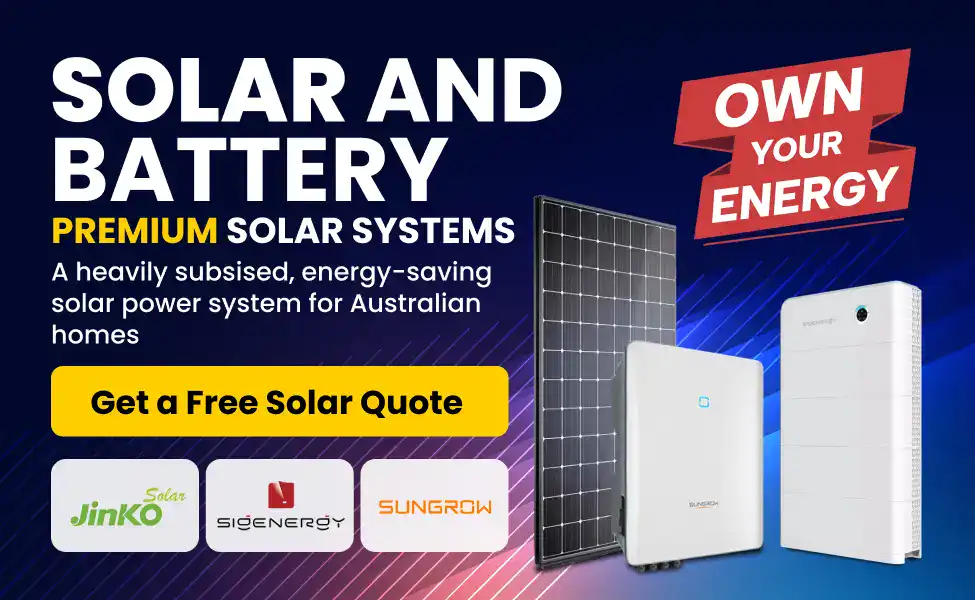
Most people in Sydney are familiar with solar panels. You see them on every second roof from Cronulla to Castle Hill. These are Photovoltaic panels. They catch photons from the sun and turn them into Direct Current electricity. An inverter then turns that into Alternating Current for your home to use.
When choosing a solar system, you will usually come across two main panel types.
Monocrystalline panels are the dark, sleek option seen on many modern Sydney roofs. They are more efficient, perform better in high temperatures, and generate more power from less roof space. For homes pairing solar with a heat pump, they are often the preferred choice.
Polycrystalline panels are typically blue in colour and more budget-friendly. They are slightly less efficient, so they need more roof space to produce the same output, but they can still be a solid option for households with larger roofs and lower upfront budgets.
For most Sydney homeowners, monocrystalline panels usually offer better long-term value, especially when maximising daytime power for heat pump heating.
Sydney gets about 2,600 hours of sunshine a year. That is a goldmine of energy. The latitude provides a high angle of the sun for most of the year. Even in July, you can generate a significant amount of power. The key is catching that energy while the sun is up. This is where most people struggle. They make power at noon but use it at 7:00 PM. That mismatch is why we need a smart way to store or use that energy immediately.
Beyond the free energy, solar panels increase the value of your property. In New South Wales, homes with solar are often seen as more desirable because they offer a layer of protection against rising grid costs. When you have a high-demand appliance like a hot water system, having your own power source turns a monthly liability into a managed asset.
The connection between solar panels and a heat pump hot water system is not simply a matter of having both installed on the same property.
The real integration happens through system controls that coordinate when the heat pump operates. In a standard setup, a heat pump turns on whenever the water temperature in the tank falls below a set level, regardless of the electricity source.
In a solar-integrated setup, the operating logic is adjusted so the heat pump runs when solar production is highest.
This is usually managed through a timer, a smart energy controller, or a Smart Grid-ready connection that links the solar inverter to the heat pump. When the panels begin generating surplus electricity — meaning more power than the home is currently using — the controller signals the heat pump to activate.
At that point, the unit uses that excess solar electricity to power its compressor, draw warmth from the surrounding air, and transfer that heat into the stored water.
The insulated tank then holds that thermal energy for use later in the day, effectively turning your hot water cylinder into a heat battery.
Instead of exporting valuable daytime solar power back to the grid for a small credit and then buying electricity later to heat water, the system captures that energy on-site and stores it in a form your household will actually use.
That is what makes the integration practical, efficient, and financially smart.
To get the most out of your setup, you need to think about where everything goes. It is not just about finding an empty spot. It is about optimising for air, sun, and sound. Here are the key factors you need to weigh before the installers arrive:
A heat pump is essentially an air breather.
It pulls in ambient air to extract heat and then exhausts cold air. Because of this, you cannot tuck it away in a tight, enclosed space like a small shed or a cramped crawlway.
If the unit cannot breathe, its efficiency will plummet because it will end up trying to pull heat from the cold air it just spat out. In Sydney, most people install them along the side of the house, ensuring there is at least a few feet of clear space around the fan.
For your solar panels, the direction they face determines how much fuel your heat pump gets for free. North-facing is the gold standard in the Southern Hemisphere because it captures the most sun throughout the day.
However, since a heat pump usually runs in the middle of the day, you must ensure there are no shadows from nearby gum trees or neighbouring apartment blocks hitting your panels between 10:00 AM and 3:00 PM.
Even a small amount of shade can significantly drop the power output of the entire string of panels.
You want the tank to be as close to your bathrooms and kitchen as possible.
The further the water has to travel through the pipes, the more heat it loses along the way. If the unit is on the opposite side of the house from the shower, you will end up wasting water and energy waiting for the hot stream to arrive.
If a long run is unavoidable, make sure your plumber uses high-quality insulation on the hot water pipes to keep that heat locked in.
While modern heat pumps are much quieter than older models, they still have a fan and a compressor. They produce a low-frequency hum, similar to a split system air conditioner.
For that reason, you should avoid placing the unit directly outside a bedroom window or right next to a neighbour’s outdoor entertaining area.
Finding a spot near a garage or a laundry room wall is usually the best bet to ensure the sound does not become a nuisance during the quiet hours of the morning.
A full 300-liter hot water tank is heavy. We are talking over 300kg. You need a solid, level concrete base to ensure the unit does not sink or tilt over time. Additionally, heat pumps create condensation as they pull moisture out of the air, much like an AC unit.
You need to consider where that water will go. Proper drainage is essential to prevent puddles from forming around the base of your house, which could lead to dampness issues or attract pests.
How well does this actually work? We measure this using the Coefficient of Performance. If a system has a COP of 4, it means for every 1 unit of electricity it uses, it gives you 4 units of heat.
Compare that to a standard electric heater, which has a COP of 1. You are getting 400% efficiency.
In Sydney’s temperate climate, heat pumps perform exceptionally well. They do not have to fight through freezing temperatures like they would in the Blue Mountains or Canberra.
Even in winter, Sydney rarely drops below 5 degrees during the day. Most modern units can still extract heat at negative 10 degrees, so a Sydney winter is easy.
You will see some seasonal variation. In summer, your water will heat up incredibly fast.
In winter, the cycle might run for an extra hour. But because the solar panels are still providing power, the cost difference is negligible. You can expect your hot water energy consumption to drop by 60% to 80% compared to an old school electric tank.
Let’s talk money. A heat pump is more expensive upfront than a basic electric tank. You might pay between $3,000 and $5,000 for a quality unit, including installation.
A solar system might cost another $5,000 to $9,000, depending on the size. It sounds like a lot, but the rebates in NSW are generous.
The Federal Government offers Small-scale Technology Certificates (STCs). These act as a point-of-sale discount.
On top of that, the NSW State Government has various energy-saving schemes that provide additional incentives for upgrading from old, inefficient systems. Some Sydney residents have managed to get their heat pump installed for a very low cost by trading in these certificates.
Your running costs could drop to nearly zero. If you timed it right, you could go months without paying for hot water. When you consider that hot water usually accounts for about 25% of a household’s energy bill, the system pays for itself in just a few years.
It’s a rare case where the environmentally friendly choice is also the smartest financial one.
The technology is proven. The rebates are available. The sun is free. By making the switch, you are not just buying an appliance.
You are investing in a more sustainable and affordable future for your home. If you have a roof and you like hot showers, this is a clear choice. It is time to stop burning cash to heat water and start using the energy that is already hitting your roof every day.
It doesn’t actually plug straight into the panels. Both the heat pump and the solar panels link to your home’s power board. Think of it like a shared pool. Your panels feed electricity through an inverter into the house, and the heat pump pulls from that supply. To get them working together, you use a timer or a smart monitor. These tools tell the heat pump to start up when your roof is making plenty of free power.
This is just a unit that can talk to your solar system. It has specific connections to take signals from a solar inverter or an energy manager. When your panels make more electricity than the house needs, the system tells the heat pump to turn on. It helps you use your own energy right away instead of sending it back to the grid.
Yes, but it depends on the sun. If your panels make more electricity than the heat pump needs, it runs on 100% solar. On a very cloudy day or at night, it pulls the extra power from the grid. Most people time their heating for the middle of the day. You want to soak up that free energy while it’s available to keep costs down.
These units are efficient because they move heat rather than making it. An old electric tank uses a massive amount of power. A heat pump usually only needs between 500W and 1,500W. Most solar setups in Sydney cover this easily during the day. It is a light load for a modern rooftop system.
The system stops once the water reaches a certain set temperature. It won’t keep running just because the sun is out. Some units let you boost the temperature during peak sun hours to store more heat for later. If the tank is full, your extra solar power just goes to your other appliances or back to the grid.
A simple timer often works fine in Sydney. Since we get reliable sun, you can just set the unit to run between 10 am and 3 pm. It is a cheap and easy fix. A smart controller is the “pro” choice. It tracks your solar output in real time. If a big cloud rolls over, it can pause the heat pump so you don’t pay for grid power.
They sure can. Days are shorter, but Sydney still gets enough clear light for solar to be useful. Plus, our winters are mild. The heat pump doesn’t have to work very hard to pull heat from the air. You’ll still get plenty of hot water from the sun even when it is chilly.
Sydney homeowners are seeking ways to reduce their power bills. With the sun beating down on New South Wales, the […]
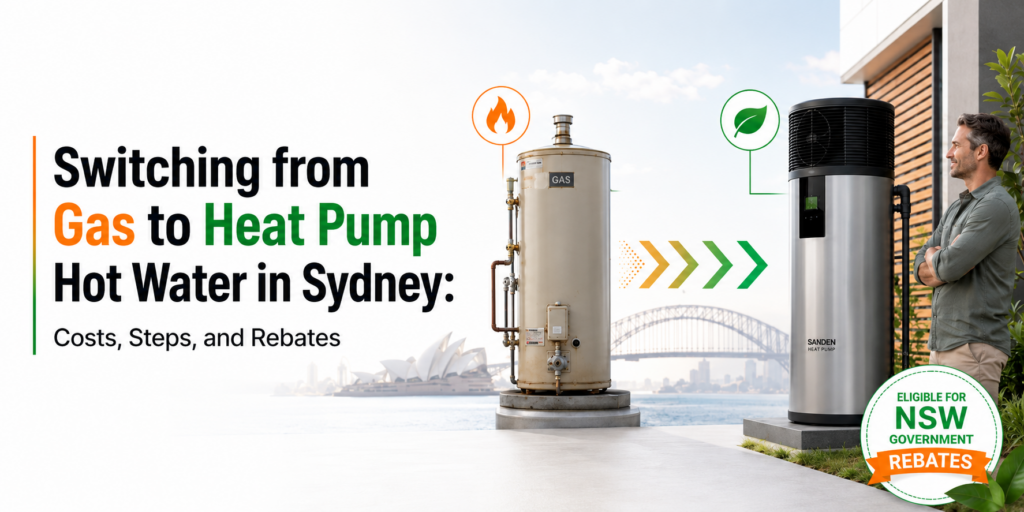
Swapping a gas hot water system to a heat pump is becoming a huge topic of conversation around Sydney dinner […]
Spending over $4,000 on a home appliance is a big deal. It is a commitment that makes most homeowners pause. […]
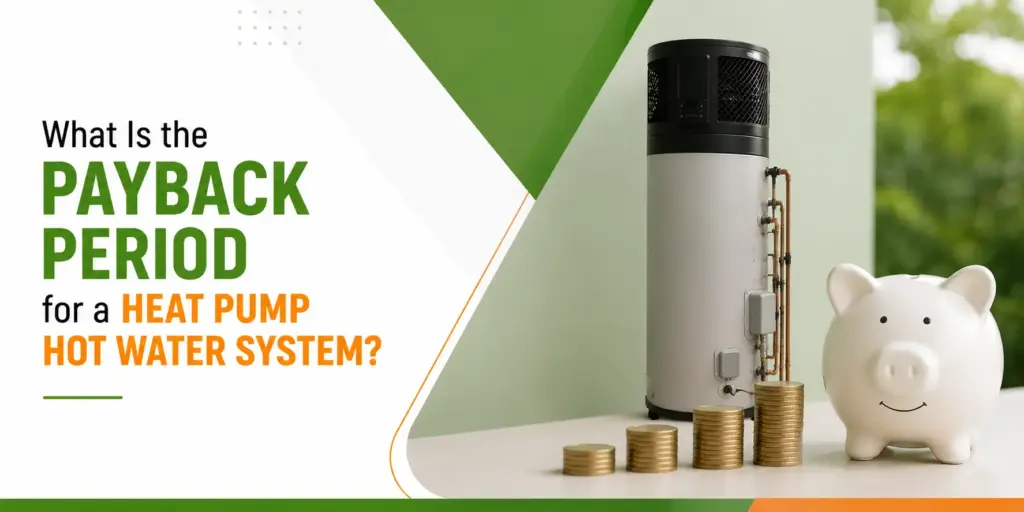
Let’s get straight to the point. You aren’t here for a lecture on thermodynamics or evaporation cycles. You’re here because […]



Our energy efficiency experts are here to answer all your questions and guide you through the products, rebates, and installation process.

Upgrade now and pay later with the Home Energy Saver Program!