
For Sydney homeowners wanting to replace an old electric or gas hot water system, a heat pump can provide a […]

Quick Answer
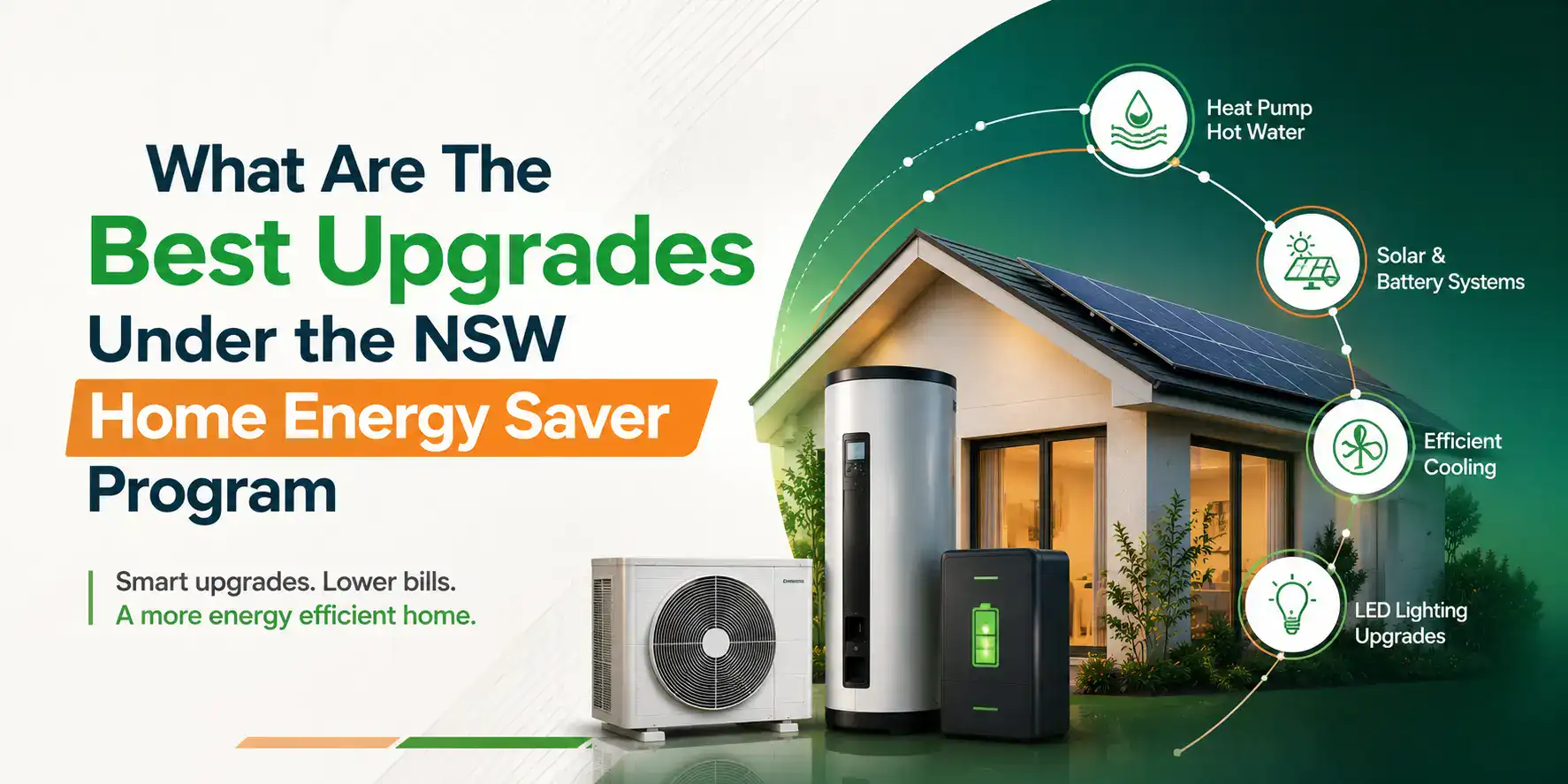
The best upgrades under the NSW Home Energy Saver Program are typically solar and battery systems, heat pump hot water units, and high-efficiency reverse cycle air conditioners. These are the top choices for households because they target the absolute biggest energy drains in a home and can be fully funded through interest-free government-backed finance of up to $15,000.
The upgrades that matter most are the ones that slash your ongoing electricity use and give you immediate cost-of-living relief.
In simple terms, the best improvements are the ones you actually notice on your power bill and in your day-to-day comfort. That is why most people use the NSW energy upgrade loan for a small group of high-impact systems rather than spreading the funds across minor changes.
For most properties, rooftop solar paired with a residential battery sits right at the top of the list.
This setup allows you to generate your own clean electricity during the day and store the excess power for later.
That means you do not have to rely on the main power grid in the evening when energy prices spike. Because it is a larger investment upfront, it is the most common system financed through the scheme’s interest-free support.
While heating water is an everyday necessity, it quietly drains a massive amount of household energy. According to the Australian government, up to 25% of your household power bill goes to hot water, and that’s because you are using old, inefficient heaters.
Upgrading to a heat pump hot water unit lowers this demand because they work by pulling warmth from the surrounding air to heat your water. The entire process uses a fraction of the electricity of a standard system, making it an incredibly popular upgrade that noticeably lowers baseline utility bills.
Heating and cooling your rooms is the single largest contributor to seasonal power bill spikes, using up to 40% of the energy in an average Australian home.
Upgrading to an energy-efficient reverse cycle air conditioner is a massive win for your wallet because these systems don’t burn power to create heat.
Instead, they act like a heat pump by absorbing heat from the outside air and moving it indoors during winter, then reversing the process to pump heat out during summer.
Because moving heat uses a fraction of the electricity of traditional heaters or outdated cooling units, making this upgrade can easily save you between $200 and $600 every single year on your power bills.
Most households focus on these specific Home Energy Saver loan upgrades because they directly target the three biggest sources of home energy use:
Instead of small incremental changes, these upgrades tackle the core areas where your home uses power.
Yes, you can absolutely bundle multiple upgrades together under one loan.
The program is designed to let you tackle your biggest energy drains all at once rather than making you fix things piece by piece.
Here is how combining upgrades works in practice:
First, you look at your overall budget limit. The interest free loan allows you to borrow up to a maximum cap of $15,000.
Next, you mix and match your systems. If a new reverse cycle air conditioner costs you $6,000, you still have $9,000 left under the cap. You can immediately use that remaining balance to add a heat pump water heater or rooftop solar panels during the same installation.
Finally, you pay it off simply. Instead of juggling different bills and payment plans, everything is rolled into a single, predictable monthly repayment with zero interest and zero ongoing fees. This strategy lets you completely overhaul your home’s energy efficiency overnight while keeping your monthly budget entirely manageable.
The best upgrades under the NSW Home Energy Saver Program are the ones that make a real difference to your wallet and your comfort. Solar, heat pumps, and reverse cycle air conditioning consistently come out on top because they eliminate the heaviest power drains in your home.
Rather than trying to change everything at once, most households get the best results by starting with one or two of these core high-efficiency systems and building from there.
For Sydney homeowners wanting to replace an old electric or gas hot water system, a heat pump can provide a […]

If you own or rent a property in NSW, you can make eligible home energy upgrades without paying the full […]
Quick Answer If you are choosing between Reclaim and Rheem, the better option depends on what matters most to you. […]
Quick Overview If you are a commercial property owner, facility manager, or business operator in Australia and plan to install […]



Our energy efficiency experts are here to answer all your questions and guide you through the products, rebates, and installation process.

Upgrade now and pay later with the Home Energy Saver Program!